Bolivia’s Economic Dream Crumbles: The Perils of Unsustainable Policies
(Analysis) Bolivia’s once-promising economic landscape has taken a sharp turn for the worse. The country’s socialist dream, fueled by a natural gas export boom, has begun to unravel.
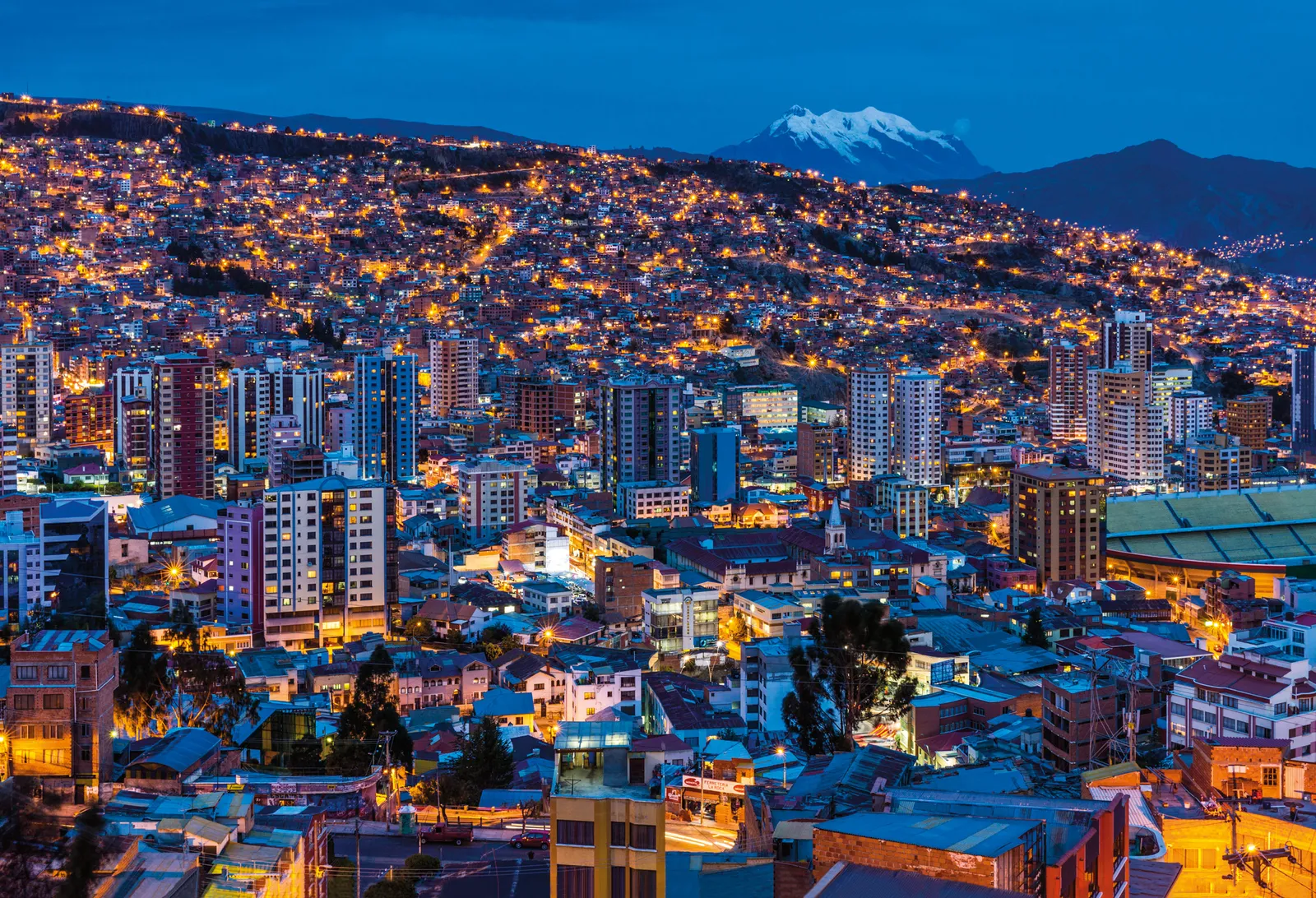
La Paz, the capital city, stands as a testament to the former days of abundance. A sprawling network of cable cars, stretching over 30 kilometers, connects the city’s labyrinthine cliffs and canyons.
The gleaming presidential tower rises 25 stories above the city center. A massive legislative building dominates the skyline, visible from every corner of La Paz. These grand structures were financed by the natural gas export boom.
However, the prosperity they represent has now imploded, taking Bolivia’s dream with it. Mauricio Medinaceli, a prominent economist, states bluntly, “The Bolivian economy is either entering or already in crisis.”
This dire situation stems from a series of miscalculations and unsustainable policies adopted since the turn of the century. A lack of investment and overexploitation of gas fields have hampered production, leading to widespread fuel shortages across the country.
Franklin Molina Ortiz, former Minister of Energy and Hydrocarbons, admits, “We thought we had Qatar in gas. We weren’t looking at the right numbers.”
Fuel subsidies, which make gasoline cheaper in Bolivia than in Saudi Arabia, have drained the country’s international reserves. These subsidies also fuel a parallel market for scarce dollars.
Bolivia’s Economic Struggles
The country’s fiscal deficit has reached record levels, and economists warn of an impending inflationary spiral. Bolivians are feeling the pinch as their purchasing power diminishes.
The consequences of these policies exacerbate the chaos in a region already grappling with unrest. In neighboring Argentina, over half the population now lives below the poverty line.
Venezuela’s citizens are demoralized following a highly contested election and intense government repression. Ecuador faces a wave of violence from transnational drug trafficking gangs, undermining the rule of law and the economy.
Further disruptions could reverberate throughout the region and even reach the United States border. President Luis Arce faces an uphill battle as he denies accusations of staging a coup attempt in June to boost his popularity.
Speculation abounds that he may not complete his term, with voters growing increasingly discontent. Bolivia’s next elections are scheduled for August 2025.
The severity of the situation becomes apparent at gas stations on the outskirts of La Paz. A line of trucks and carts stretches for over a kilometer as the government struggles to maintain the supply of subsidized diesel.
Income in Bolivia has stagnated at 2,800 bolivianos ($405) per month, slightly lower than in 2015, according to the Millennium Foundation.
Long queues form outside state-run supermarkets as families wait for limited supplies of subsidized food products. Strict limits on overseas remittances have left Bolivians with relatives abroad in financial straits.
Isolated protests have been occurring for months, and Bolivian carriers threaten to strike and block roads, effectively paralyzing the country.
Hugo Domingo Ramos, president of a federation of heavy transport companies, declares, “Arce’s government is leading us to economic disaster. There’s no gasoline, no foreign currency, no jobs. We’re in an emergency situation.”
President Arce’s Optimism Amidst Economic Challenges
President Arce, however, projects calm from his elegant meeting room in the presidential tower. He blames his former mentor and ex-president Evo Morales for the crisis.
When Morales overhauled the natural gas sector in 2006, he raised taxes so high that major oil companies simply produced from wells they had already drilled rather than investing in increased production or exploration.
The government also used overly optimistic calculations about how much gas it had discovered and paid little attention to the investments needed to maintain stable production in the coming decades.
Production then began to fall, and Bolivia became a net energy importer in 2022. This collided with the growing demand for subsidized energy that the Bolivian state can no longer afford.
Arce remains confident that Bolivia is on the verge of a turnaround. He claims that thanks to explorations initiated during his tenure, the national oil and gas company will be able to start producing from a mega-field as early as 2026.
Economic Recovery Strategies and Challenges in Bolivia
Investments in steel production, agriculture, and biofuels are beginning to bear fruit and will help the country overcome adversity, he says. The Bolivian president is also busy building biodiesel plants capable of recycling even household cooking oil into fuel.
According to him, three of these plants will replace 60% of Bolivia’s diesel consumption by the end of 2026. Arce insists, “We’re fine. We’re growing. It’s a temporary crisis.”
However, not everyone believes the president’s promises. The mega-field mentioned by Arce still needs further exploration to determine its commercial viability.
Bolivia failed to develop its vast lithium reserves when prices were high, according to Diego von Vacano, a Bolivian who teaches political science at Texas A&M University and was an informal consultant to Arce at the beginning of his term.
Bolivia has signed lithium agreements with Russian companies that have no proven track record in the sector, while avoiding more experienced American and European companies, says Vacano.
For a nation of just 11.3 million inhabitants, Bolivia has enormous natural resource potential that could solve its current economic problems. Independent miners and criminal groups produce billions of dollars in gold without paying taxes.
Limited technology means the country is unable to extract lithium at industrial levels or process iron ore. Bolivia’s vast wind and solar potential remains virtually untapped.
The country’s mountains, jungles, and archaeological sites offer potential to make it a much larger tourist destination than it currently is.
Opposition senator Cecilia Isabel Requena Zarate, who sits on the climate committee, admits, “We could have diversified more.” Analysts and opposition lawmakers argue that fuel subsidies and the artificially strong exchange rate are unsustainable.
Bolivia fixed the exchange rate in 2011 between 6.86 and 6.96 bolivianos per dollar. However, due to the scarcity of dollars, the American currency is quoted at more than 10 bolivianos on the parallel market.
Mauricio Medinaceli, a researcher and former Minister of Hydrocarbons of Bolivia, recommends a gradual elimination of fuel subsidies.
“What is needed now is damage control,” he says. Still, Arce is in no hurry to raise the prices of subsidized fuels, which Bolivians see as an acquired right.
He is not alone: last year, countries spent $616 billion on fossil fuel subsidies to avoid social unrest and sustain their economies. Former President Evo Morales tried to reverse the concessions in 2010 but quickly abandoned the idea in the face of nationwide protests.
Arce is organizing a national referendum for Bolivians to decide for themselves whether the subsidies remain or not. “We want to take this issue to the people,” he says.
Gasoline costs 54 cents per liter in Bolivia, less than the 62 cents in Saudi Arabia and 94 cents in the US, according to Global Petrol Prices, a website that monitors energy costs.
On October 7, Arce ordered the militarization of the border to stop the flow of subsidized fuels and food out of the country, where these goods can be sold at a profit.
It’s not just working-class truck drivers like Paco who suffer from Bolivia’s economic crisis. Wealthy families in La Paz’s elegant southern zone struggle to get dollars to support their children studying abroad.
As a result of the dollar shortage, banks and money transfer services impose strict limits on how much each person can send and how much each Bolivian resident abroad can receive.
It can be a logistical ordeal to send $500 a month to a child studying abroad. Arce’s advice is to buy cryptocurrencies instead of dollars as a way to circumvent the “temporary” currency crisis.
Von Vacana of Texas A&M says, “He buried his head in the sand. His goal is to stay in power.” For years, Bolivia was considered the Latin American socialist country that managed a difficult combination of economic growth and low inflation.
Additionally, it achieved significant poverty reduction. Now, it faces the consequences of unsustainable policies and missed opportunities for diversification.
More: Bolivia news in English, every day from The Rio Times.
This article was produced by The Rio Times’ automated newsroom system. How we use AI · Report an error · Editorial responsibility: Matthias Camenzind, Editor-in-Chief
In depth