Warsh Faces Senate With Powell Still Holding the Chair
Key Facts
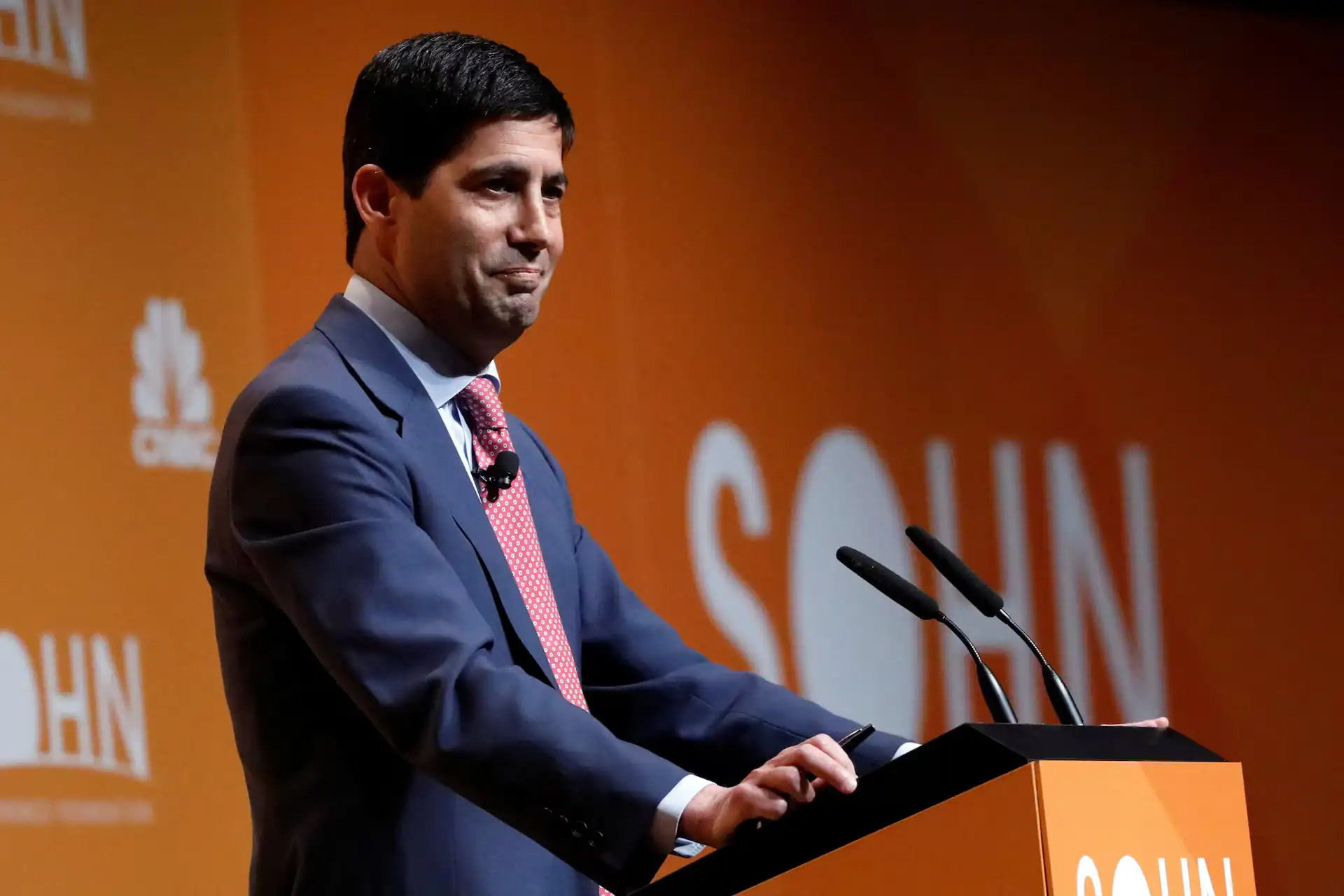
— — Kevin Warsh, President Trump’s nominee to chair the Federal Reserve, told the Senate Banking Committee on Tuesday that the central bank must remain “largely independent” of political influence but must also “stay in its lane” to preserve that independence.
— — Current Fed Chair Jerome Powell’s term expires May 15; Warsh’s confirmation path remains blocked by Senator Thom Tillis (R-NC), who has vowed to halt any Fed nominee until the Justice Department drops its criminal investigation into Powell.
— — Warsh disclosed more than US$100 million in financial assets and operates a solo advisory firm, Vicarage; for Latin American investors, the doctrine he articulated will define US monetary policy — and the dollar — through 2030.
The Warsh Fed independence doctrine articulated Tuesday is the most consequential public statement on US monetary-policy governance since the original 1951 Treasury-Fed Accord. The 56-year-old former Fed Governor and Hoover Institution fellow framed the central bank’s political independence as conditional on the Fed limiting its scope of action.
The Rio Times, the Latin American financial news outlet, reports that the prepared remarks include the line: “The Fed must stay in its lane. Fed independence is placed at greatest risk when it strays into fiscal and social policies where it has neither authority nor expertise.” That formulation is the doctrinal core of his nomination — and the policy distance from Powell that Trump has sought.
Warsh expressed firm commitment to fighting inflation and made only one mention of the labor market in his prepared text. The asymmetry signals a hawkish framing of the dual mandate — one that would resist political pressure for rate cuts on labor-market grounds while accepting structural pressure to limit the Fed’s climate, financial-stability and supervisory functions.
What the Warsh Fed Independence Frame Means
The conditional-independence doctrine has two distinct policy implications. The first is operational: a narrower Fed mandate would shed the climate-risk supervision the Powell-era Board built since 2021, would reduce engagement with social-justice-framed labor-market analysis, and would likely retreat from the central-bank-digital-currency exploration that Powell’s board pursued.
The second is political: by framing scope reduction as the price of independence, Warsh creates a doctrinal basis for accepting White House pressure to drop functions Trump has criticized while deflecting White House pressure on rate-setting itself. Whether that bargain holds in practice will be tested almost immediately if Trump renews his campaign for sharper rate cuts.
For Latin American central bankers watching closely — particularly Brazil’s Gabriel Galípolo, Mexico’s Victoria Rodríguez Ceja, and Colombia’s Leonardo Villar — the Warsh doctrine matters as a precedent. Each has faced executive-branch pressure on rates over the past year. A US Fed chair who articulates conditional independence could weaken the Latin American central banks’ rhetorical defense against similar pressure.
The Tillis Blockade and the Powell Investigation
Republican Senator Thom Tillis of North Carolina, who sits on the Banking Committee, has refused to vote for any Fed nominee until the Justice Department drops its criminal investigation into Powell. The DOJ probe, opened in January, examines whether Powell lied to Congress in summer 2025 testimony about cost overruns on the Fed headquarters renovation in Washington.
A federal judge threw out two DOJ subpoenas last month, effectively invalidating the criminal probe. US Attorney for the District of Columbia Jeanine Pirro has nonetheless vowed to continue. Tillis has called the investigation a politically motivated effort to undermine Fed independence, and Powell himself made an unusual public video statement asserting that the Trump administration is investigating him because it disagrees with the central bank’s rate policy.
If Warsh is not confirmed by May 15, Powell has said he will serve as chair pro tempore until a successor is in place. Trump has threatened to fire Powell if he does not step aside — a power the Federal Reserve Act does not clearly grant the president absent “cause,” and which would itself trigger immediate litigation.
Warsh’s Background and the Disclosure Question
Warsh served as a Fed Governor from 2006 to 2011 under chairs Ben Bernanke and Janet Yellen, voting consistently with the hawkish minority on quantitative-easing decisions. He left to become a fellow at the Hoover Institution and a lecturer at the Stanford Graduate School of Business, building a profile as one of the most academically credentialed monetary-policy critics on the right.
Trump considered Warsh for both Treasury Secretary and Fed chair in late 2024 before settling on Scott Bessent at Treasury and naming Warsh for the Fed in January 2026. Trump described him at the time as the “perfect candidate.” JPMorgan CEO Jamie Dimon publicly endorsed Warsh as a “more prudent long-term choice” than initial frontrunner Kevin Hassett.
The disclosure issue is the unresolved confirmation variable. Warsh’s declaration of more than US$100 million in financial assets, including significant stakes in investment funds and his solo advisory firm Vicarage, will draw extended Senate questioning over the divestment plan and conflict-of-interest screen he intends to operate under as Fed chair.
What This Means for Latin American Markets
A hawkish-doctrine Fed chair has direct implications for Latin American currency and rate paths. If Warsh delivers slower US rate cuts than the FOMC consensus has projected, the dollar strengthens and emerging-market central banks face renewed pressure to defend their currencies through delayed easing — a pattern that would extend the high-real-rate environment Brazil, Mexico, and Colombia have endured since 2024.
The opposite scenario is also possible. If Trump-administration pressure ultimately overrides Warsh’s stated independence and forces sharper rate cuts than US inflation conditions warrant, the resulting dollar weakness would lift Latin American assets but also import US inflation pressure into commodity-linked emerging markets. Either outcome represents a regime shift from the Powell-era predictability.
The Brazilian Copom meets April 28-29 with the Warsh hearing dynamics already informing the rate-decision frame. Mexico’s Banxico meets in early May, and Colombia’s BanRep follows. As Rio Times Morning Call coverage of the March Copom decision documented, the BCB’s 25 basis-point cut to 14.75% — its first since 2024 — left forward guidance deliberately open precisely because of US-policy uncertainty.
What to Watch Next
Three signals matter in the next four weeks. First, whether Tillis lifts his blockade once the DOJ investigation outcome is final. The probe is technically suspended by the federal court ruling, but Pirro’s commitment to continue means the political question is unresolved.
Second, whether Trump escalates against Powell to force the May 15 transition regardless of confirmation status. A direct firing attempt would trigger an immediate constitutional challenge that would dominate market sentiment for months and likely freeze Treasury and equity markets.
Third, the FOMC May meeting — if Warsh is confirmed, his first decision would land within days; if he is not, Powell’s pro tempore decision would set the tone for whatever transition follows. As Rio Times global economy briefing on the hawkish March hold noted, seven of 19 FOMC officials already see no rate cuts at all in 2026, a baseline Warsh would inherit. Either way, the May FOMC will be the most consequential US monetary-policy event since the Trump-tariff Liberation Day in April 2025 — and Latin American markets will price the outcome harder than US assets themselves.
This article was produced by The Rio Times’ automated newsroom system. How we use AI · Report an error · Editorial responsibility: Matthias Camenzind, Editor-in-Chief