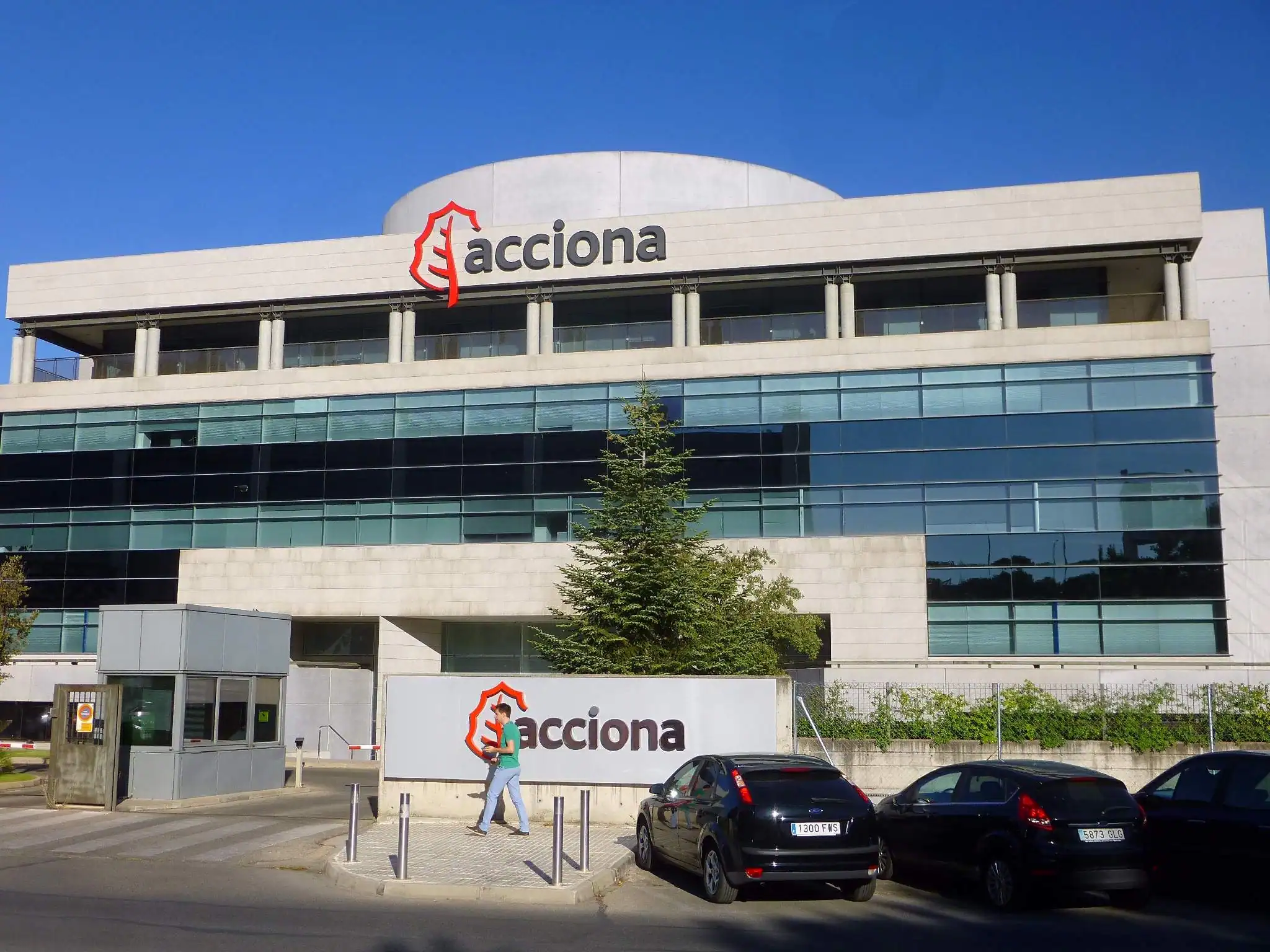
Key Facts
—The result. Spanish multinational Acciona was the sole bidder and winner of the Paraíba state public-private partnership (PPP) for sewage services, auctioned at B3 in São Paulo on May 15, the first sanitation auction in Brazil this year.
—The bid. A 1% discount on the maximum public payment, equal to a reference fixed parcel of 483.6 million reals ($87.6 million), plus a variable component capped at 1.91 reals per cubic metre of sewage collected.
—The scope. 85 municipalities of the Alto Piranhas and Litoral microregions, a 25-year contract with 3 billion reals ($539 million) in committed investment, structured by Brazil’s BNDES national development bank and Fundação Getulio Vargas.
—The starting baseline. Urban sewage coverage stands at 6.7% in Alto Piranhas and 46.4% in Litoral. The PPP target is to lift coverage to 90% by 2039, the extended deadline granted to Paraíba under the Marco Legal do Saneamento.
—The wider market signal. Three bidders had been expected. The auction had been postponed once from March to allow more time for due diligence. Goiás’s similar Saneago PPP was cancelled days earlier after disqualification and no-shows.
A 1% discount on a 539-million-dollar concession is not a competitive market clearing. It is a foreign infrastructure operator pricing a 13-year build-out against a sovereign-style payment stream, and getting it at sticker price. The Paraíba result is a green light for Acciona. It is also a flashing yellow for everyone trying to read the rest of Brazil’s sanitation pipeline.
What did Acciona actually win?
The Paraíba PPP is an administrative concession structure, not a privatisation. The Companhia de Água e Esgotos da Paraíba (Cagepa) remains the state-owned operator for water supply across the state. Acciona has been delegated the sewage chain only: collection, transport, treatment, and final disposal across 85 municipalities split between the Alto Piranhas microregion in the arid backlands and the more economically active Litoral microregion on the coast. The 25-year contract runs until 2050, with 3 billion reals ($539 million) in committed capex and an additional 3 billion reals projected across operating costs over the life of the deal.
Crucially, the consumer-tariff relationship stays with Cagepa. Acciona’s revenue is a public payment stream from the state of Paraíba, with two components. A reference fixed parcel of 483.6 million reals ($87.6 million) at full term, against which Acciona offered its 1% discount. A variable parcel of up to 1.91 reals per cubic metre of effluent collected. The Rio Times, the Latin American financial news outlet, reports the auction was conducted under the lowest-public-payment criterion, the standard model in Brazilian sewage PPPs since the 2020 Marco Legal do Saneamento.
Why did only one bidder show up?
Cagepa officials had publicly counted on at least three competing bids. The auction was originally scheduled for end-March and was pushed to May after interested parties requested more time. Industry observers cite a combination of factors: aggressive baseline coverage gap (6.7% in Alto Piranhas), demanding 2039 target, semi-arid geography increasing operating risk, and the BNDES-set payment cap that limits upside. The single-bid outcome rhymes with the Goiás cancellation: in the Saneago PPP a few days earlier, one bidder was disqualified and no rivals appeared for the remaining lots.
The contrast with the 2024 Sanepar auction in Paraná, where five bidders competed and discounts on similar lots reached 28.6%, is sharp. Paraná lots offered larger volumes, denser urban geographies, and an integration platform with an existing state operator regarded as a top-tier counterparty. Paraíba offers neither density nor a benchmark operator track record. For investors, this is the test of how thin Brazil’s sanitation bidder pool actually is once the highest-quality lots are awarded.
How does this fit Acciona’s Brazil strategy?
Madrid-based Acciona, operating in Brazil for 27 years, was already one of the few non-Brazilian heavyweights in the post-Marco Legal sanitation market. Its existing portfolio includes the Paraná Sanepar lot 2 (28.6% discount, 2024), an Espírito Santo eight-municipality concession, the Pernambuco sewage block won in late 2025 in consortium with BRK Ambiental, and the under-construction Line 6-Orange of the São Paulo metro. The Paraíba win adds a fourth sanitation PPP and fills the northeast geographic gap, positioning Acciona against a domestic field led by Aegea, Iguá Saneamento, BRK Ambiental, and Equatorial. Sector estimates put the national investment requirement at 800 to 893 billion reals ($144 to $161 billion) through 2033 to meet Marco Legal targets.
The Paraíba PPP in numbers
| Indicator | Reading |
|---|---|
| Committed investment | 3 billion reals ($539 million) |
| Contract length | 25 years (to 2050) |
| Municipalities covered | 85 (Alto Piranhas and Litoral) |
| Reference fixed parcel cap | 483.6 million reals ($87.6 million) |
| Variable parcel cap | 1.91 reals per cubic metre |
| Acciona discount on cap | 1% |
| Comparable Sanepar Paraná lot 2 (2024) | 28.6% discount |
| Universalisation deadline | 2039 (Paraíba extension) |
Roughly one million inhabitants are expected to benefit from the sewage build-out. The contract beneficiary calculation reflects the Marco Legal’s 90% coverage target. Paraíba received an extension to 2039, granted under the law’s economic-viability clause; the standard target is 2033.
What does this say about the 2026 sanitation pipeline?
Brazil’s sanitation calendar still has the Ceará PPP scheduled for the end of May, covering nearly 130 municipalities and an estimated 7 billion reals ($1.26 billion) in investment, plus a Rio Grande do Norte sewage PPP at roughly 3.2 billion reals. Minas Gerais’s Copasa privatisation is the bigger 2026 story, with potential investment commitments of 20 to 30 billion reals depending on structure. Abcon counted six sanitation transactions structured for 2026 combining 543 municipalities, 11 million people, and 27.5 billion reals.
For investors, the Paraíba result reframes the 2026 question: not whether the auctions reach market, but how thin the bidding becomes. With Aegea integrating Sergipe, Iguá consolidating Rio and Sergipe builds, and Acciona absorbing a fourth simultaneous PPP, the pool of operators capable of taking on a new northeast block is shrinking precisely as governments push more lots into the market.
What should investors and analysts watch next?
- Ceará auction (end of May). Bidder count will be the cleanest test of whether the single-bid pattern is structural or Paraíba-specific.
- Copasa privatisation timing. Minas Gerais governor Romeu Zema’s sale of Copasa is the biggest 2026 catalyst for the private sanitation thesis.
- Acciona’s Paraná operating ramp. The 2024 Sanepar lot 2 enters commercial operation phase, the first test of how Acciona executes at scale in Brazil.
- Rio Grande do Norte PPP design. Cagepa-style state-payment structure or operator-revenue concession will signal whether Paraíba’s model travels.
- BNDES auction architecture. A 1% clearing discount points to ceiling prices that may be too aggressive for thin-coverage geographies. Future structuring may rebalance state contributions.
Connected Coverage
This deal sits inside our running Brazil infrastructure cluster. The investment ecosystem context is framed in our Marco Legal sanitation tracker. Acciona’s broader Brazil portfolio, including the São Paulo Line 6-Orange metro, is in our Spanish infrastructure operators readout. The Pernambuco co-bid with BRK is detailed in our Pernambuco PPP analysis. The Copasa privatisation playbook sits in our Copasa sale outlook.
Sources
- Canal Rural — Auction result, 1% discount, payment structure
- Agência iNFRA — Edital scope and BNDES structuring
- CNN Brasil — Three expected bidders, Acciona alone confirmed
- Cagepa — Project scope and Cagepa retains water supply
- Termômetro da Política — TCE-PB review, 2039 deadline, R$6B total lifecycle
- Abcon Sindcon — 2026 pipeline and Marco Legal context
Reported by The Rio Times — Latin American financial news. Filed May 15, 2026.
This article was produced by The Rio Times’ automated newsroom system. How we use AI · Report an error · Editorial responsibility: Matthias Camenzind, Editor-in-Chief
LatAm Markets: Live Signals → — real-time movers, turnover leaders and FX across Latin America.
Read More from The Rio Times
Frequently Asked Questions
Is Cagepa being privatised?
No. Cagepa remains the state-owned operator for water supply across Paraíba and retains the customer relationship for the 85 municipalities. The PPP delegates only sewage collection, treatment, and disposal to Acciona for 25 years.
Why is the discount so small?
Without competitive pressure, a solo bidder rationally bids at or just below the price cap. Acciona’s 1% discount was the procedural minimum to be considered a valid offer against the maximum reference values. Comparable competitive auctions in Paraná cleared at 25 to 29% discounts.
Who pays Acciona?
The state of Paraíba, not the end consumer. The payment has a fixed parcel and a variable component linked to cubic metres of sewage collected. The tariff to households is set and collected by Cagepa.
Is the Marco Legal target realistic?
Industry leaders, including Aegea CEO Radamés Casseb and the Trata Brasil Institute, acknowledge that nationwide 90% sewage coverage by 2033 is unlikely. Paraíba’s 2039 extension shows the law’s flexibility clause being used. Most market participants expect partial achievement by 2033 and full universalisation closer to 2040.