Washington Begins Returning $166 Billion in Illegal Tariffs
Key Facts
— — US Customs and Border Protection opened the Consolidated Administration and Processing of Entries (CAPE) portal at 8 p.m. ET Monday, allowing more than 330,000 importers to begin claiming refunds on roughly US$166 billion in IEEPA tariffs struck down by the Supreme Court in February.
— — CBP estimates approved refunds will be issued within 60 to 90 days; the first phase is expected to process up to US$120 billion, with interest added on top of principal.
— — Brazilian exporters were hit with the heaviest country-specific IEEPA duty — a 40% surcharge layered on top of baseline tariffs producing effective rates as high as 50% — and stand to recover the largest single-country share of South American refund claims.
— Deep Dive
— For the complete picture, see our guide: Trump and Latin America 2026.
The tariff refund portal launched by US Customs and Border Protection at 8 p.m. Eastern on April 20 begins what may be the largest forced repayment in American trade history. Court filings put the total exposure at roughly US$166 billion across more than 53 million shipments, owed to over 330,000 importers of record.
The Rio Times, the Latin American financial news outlet, reports that the system — called the Consolidated Administration and Processing of Entries, or CAPE — runs inside CBP’s existing Automated Commercial Environment platform. It consolidates IEEPA duty refunds with interest in a single batch process rather than requiring importers to dispute each entry individually.
The portal opened exactly two months after the US Supreme Court’s February 20 ruling in the Learning Resources case, which held 6-3 that the 1977 International Emergency Economic Powers Act does not grant a president authority to impose tariffs. As Rio Times reporting on the Supreme Court decision documented, the ruling dismantled the legal foundation of Trump’s “Liberation Day” reciprocal tariff regime imposed in April 2025.
How the Tariff Refund Portal Works
Only designated “importers of record” who paid the duties directly — or licensed customs brokers acting on their behalf — are eligible to file in the first phase. Filers must register an account on the ACE portal and submit bank routing information for electronic payment. Once a claim is validated, CBP recalculates the duties without IEEPA charges and reliquidates the entries to trigger payment.
As of late March, more than 26,000 importers had pre-registered electronically with CBP, representing roughly 78% of the disputed payments. The first processing wave is expected to clear approximately US$120 billion of the total US$166 billion exposure. The Liberty Justice Center, the Texas-based nonprofit that argued the winning Supreme Court case, launched a free Tariff Equity Refund Resource for America (TERRA) to help small importers file without paying intermediaries.
The architecture follows the Court of International Trade order from Judge Richard Eaton on March 4, which directed CBP to refund all importers without requiring individual lawsuits. As detailed in Rio Times coverage of the Eaton ruling, the trade court rejected CBP’s initial four-month timeline request with the line “we live in the age of computers.”
What This Means for Brazilian Exporters
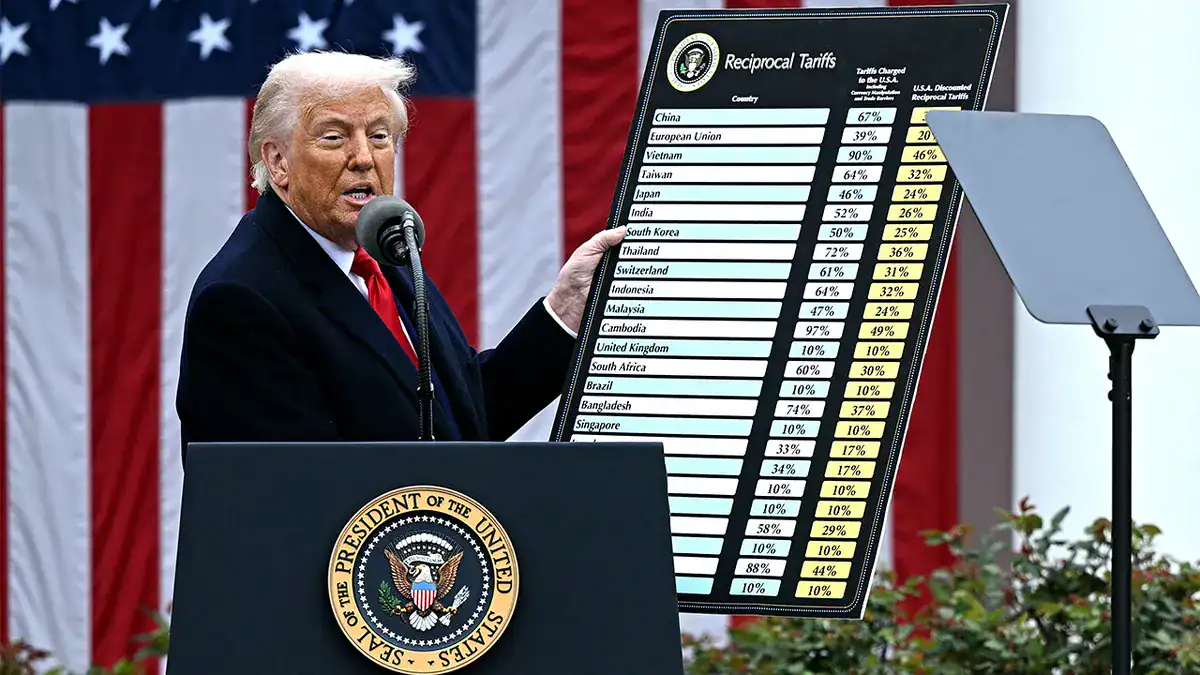
Brazil carried the heaviest country-specific IEEPA tariff burden of any major US trading partner. President Trump’s July 30, 2025 executive order declared a national emergency tied to Brazil and imposed an additional 40% duty on covered Brazilian-origin goods, layered on top of baseline 10% reciprocal tariffs — producing effective levies of 50% on coffee, beef, orange juice, and other key exports.
As Rio Times analysis of the Brazil-Washington tariff arc documented, the 40% surcharge was understood at the time as a coercion tool tied to the prosecution of former president Jair Bolsonaro. The Supreme Court ruling stripped the legal foundation of that pressure mechanism, and Brazilian importers of US goods — alongside US importers of Brazilian coffee, meat and orange juice — can now file CAPE claims for duties paid between July 2025 and February 2026.
Mexico and Canada faced 25% to 35% IEEPA tariffs under the “fentanyl trafficking” emergency declarations, also struck down. The Mexican government has not publicly tallied its exporter exposure, but the figure is multi-billion-dollar given the scale of US-Mexico trade flows under USMCA preferences.
Trump’s Tariff Architecture After IEEPA
The refund process is unwinding only the IEEPA-based duties. Trump moved within hours of the February ruling to rebuild his tariff wall using different statutory authorities. He signed an executive order imposing a temporary 10% global surcharge under Section 122 of the Trade Act of 1974, then raised it to the 15% statutory maximum the following day.
Section 122 caps tariff rates at 15% and limits any imposition to 150 days without congressional approval. As Rio Times coverage of the post-ruling tariff strategy noted, US Trade Representative Jamieson Greer also confirmed Section 301 investigations into Brazil and China remain active. Section 301 has no rate cap and can target specific countries indefinitely.
The result is a transitional period in which IEEPA refunds flow out one window while new Section 122 and Section 301 tariffs flow in another. Treasury Secretary Scott Bessent has stated publicly that effective tariff rates should return to pre-ruling levels within five months of the Supreme Court decision — placing the target window in mid to late July, just as the USMCA review formally opens.
The Brazilian Export Picture After the Ruling
The picture for Brazilian exports has shifted materially — as Rio Times reporting on the post-ruling Brazil tariff landscape documented, approximately 46% of Brazilian exports to the US (US$17.5 billion in trade) now face no additional surcharge under the new tariff regime. Embraer aircraft dropped from 10% to zero, and coffee was partially exempted in November and again in February.
Roughly 25% of Brazilian exports (US$9.3 billion) fall under the new 10-15% global Section 122 levy. The remaining 29% (US$10.9 billion) stay subject to Section 232 national-security tariffs on steel and aluminum, which the Supreme Court ruling did not touch. The CAPE portal therefore returns money paid on the Liberation Day and emergency-decree IEEPA duties — but does not unwind the steel and aluminum measures that have been in place since 2018 with revisions under multiple administrations.
For Vice President Geraldo Alckmin’s economic team, the practical question is now timing. Refund flows arriving over 60 to 90 days strengthen Brazilian exporters’ cash positions ahead of Q3 negotiations on the Section 301 outcome. The Itamaraty and the Ministry of Development have not yet published a Brazil-specific recovery figure, but private trade lawyers in São Paulo are estimating the country-level exposure at US$3 to 4 billion.
What Happens Next
Three milestones will define the next 90 days. First, the speed of the initial CAPE batch — whether CBP can clear the projected US$120 billion in phase one inside the 60 to 90-day window or whether congestion in the ACE platform delays payouts and triggers fresh trade-court motions.
Second, the Trump administration’s Section 301 timing on Brazil. The investigation into Pix instant payments, ethanol, IP enforcement, anti-corruption practices and deforestation has been live since July 2025; a finding could land before the USMCA review window opens July 1, complicating trilateral negotiations.
Third, congressional response on Section 122. The 150-day limit on the current 15% global surcharge expires in late July without legislative extension. As detailed in Rio Times pre-ruling analysis, the underlying constitutional question — whether Congress will reclaim the trade-policy authority the courts have just affirmed belongs to it — remains the structural variable that markets and exporters will price across 2026.
This article was produced by The Rio Times’ automated newsroom system. How we use AI · Report an error · Editorial responsibility: Matthias Camenzind, Editor-in-Chief