Panama Halts Power Sales to Costa Rica in Trade Standoff
Central America · Trade & Energy
Key Facts
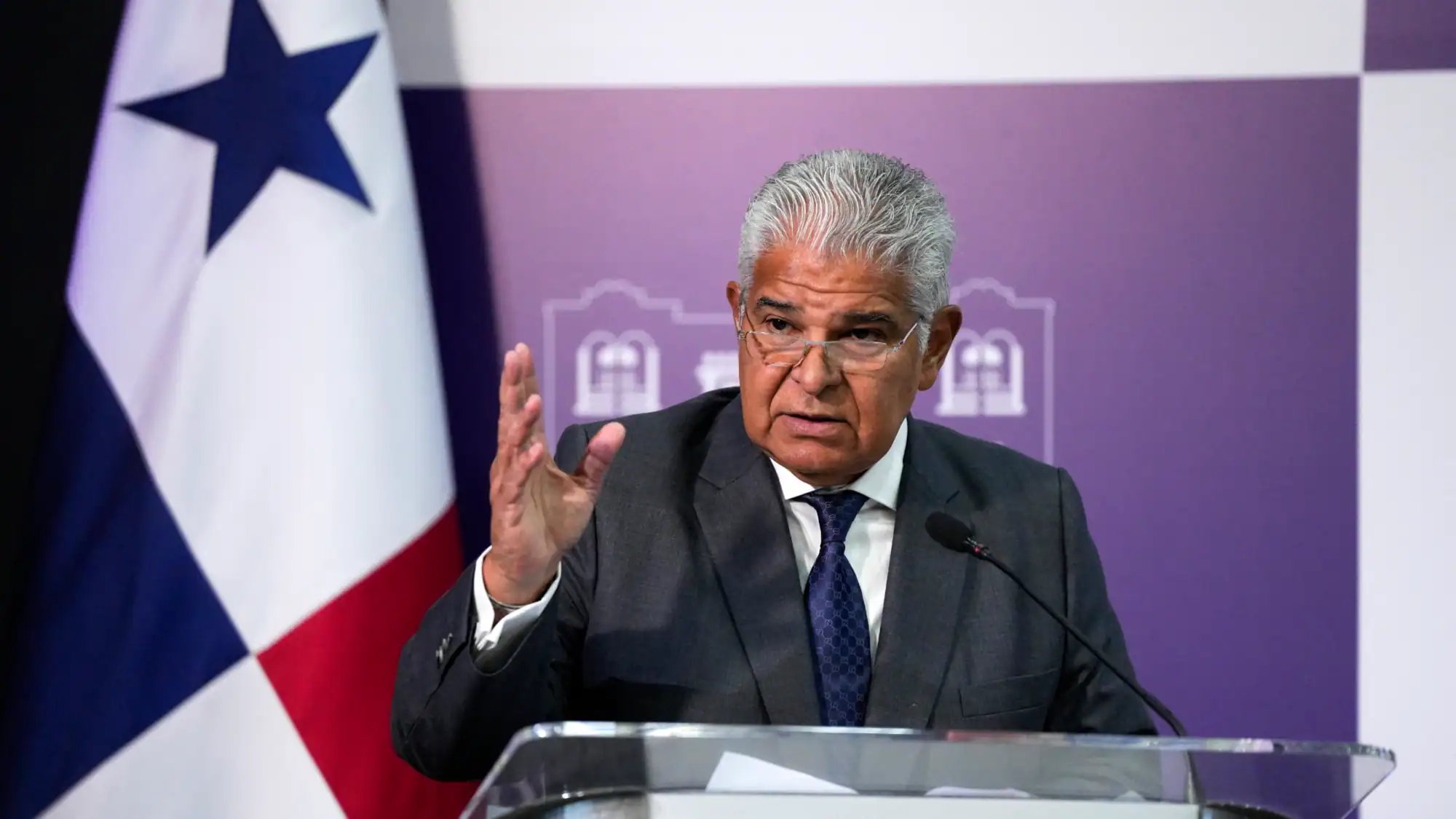
—The announcement:. Panama Costa Rica relations took a sharp turn Thursday when Panamanian president José Raúl Mulino said at his weekly morning press conference that Panama had suspended electricity sales to Costa Rica with immediate effect, stating in plain terms that “for the moment, there is no power sale to Costa Rica, it is that simple,” and invoking the principle of “reciprocity” in international relations as the formal justification for the move.
—The trigger:. The decision followed Costa Rica president Laura Fernández’s May 15 declaration, during her first week in office, that she would activate “all available international mechanisms” to lift the Panamanian commercial blockade applied since 2019-2020 to Costa Rican agricultural exports including bananas, plantains, pineapples, strawberries, dairy products, meats and processed sausages.
—The underlying request:. The Instituto Costarricense de Electricidad, the Costa Rican state electricity utility known as ICE, had filed a formal request with Panamanian authorities seeking expanded access to Panamanian power for 2026; the request was under active evaluation by the Panamanian energy regulator until Mulino instructed Commerce Minister Julio Moltó on Monday to communicate the suspension to the Costa Rican counterpart.
—The trade-dispute history:. The Panama Costa Rica agricultural-import dispute reached the World Trade Organization, where an arbitration panel ruled in favor of Costa Rica in December 2024 finding the Panamanian restrictions invalid; Panama appealed the decision in January 2025, with no resolution deadline set, and the export-losses estimate from former Comercio Exterior Minister Manuel Tovar exceeds 100 million United States dollars to the Costa Rican exporter sector.
—The bilateral-trade scale:. Costa Rican exports to Panama reached approximately 612 million United States dollars in 2025, equivalent to 16.6 percent of total Costa Rican exports to the Central American region, making Panama the country’s second-largest regional trade partner after Guatemala and amplifying the macroeconomic stakes of the dispute.
—Costa Rica’s immediate exposure:. The Costa Rican Foreign Ministry stated that Costa Rica currently holds no firm purchase contracts for Panamanian power and had not projected importing Panamanian electricity for the remainder of 2026; the practical short-term impact on the Costa Rican grid is therefore limited, but the strategic signal toward the second-half-2026 El Niño season is significant.
The energy suspension converts a long-running Panama Costa Rica agricultural-trade dispute into a higher-stakes bilateral crisis just as the region prepares for a forecast El Niño event in the second half of 2026 that would stress Costa Rican hydroelectric output and import dependency.
What did Mulino announce?
The Rio Times, the Latin American financial news outlet, reports that Panamanian president José Raúl Mulino used his Thursday morning weekly press conference to announce the immediate and indefinite suspension of Panamanian electricity sales to Costa Rica, marking the most concrete retaliatory action in a Panama Costa Rica trade dispute that has run for nearly seven years. Mulino justified the move under the principle of “reciprocity,” a foundational concept in international diplomatic relations that allows states to mirror the practical effect of perceived adverse measures by counterparts. The president emphasized that the suspension would apply specifically to the energy file and to “those things that have to do with or touch the relationship with Costa Rica,” signaling a calibrated but expandable response.
Mulino also expressed personal surprise at the public tone adopted by his Costa Rican counterpart Laura Fernández, who took office on May 8, 2026. The Panamanian president stated that he had attended Fernández’s inauguration ceremony in San José and had not expected the public escalation that followed, criticizing what he described as a departure from the traditional Central American diplomatic norms of “discretion, moderation and respect.” Mulino indicated that the Panamanian Cancillería had already formally rejected the Costa Rican characterization of the dispute as “unilateral or arbitrary,” defending the original 2019-2020 restrictions as legitimate measures to protect Panamanian public health, food safety and producer interests.
What is the underlying agricultural dispute?
The trade dispute originated in 2019-2020, when Panama imposed entry restrictions on Costa Rican agricultural products that the Panamanian Ministry of Agricultural Development framed as sanitary and phytosanitary safeguards. The blocked products span bananas, plantains, pineapples, strawberries, dairy products, beef, pork, poultry and processed sausages, covering effectively the entire Costa Rican agro-export portfolio to the Panamanian market. Costa Rica formally challenged the restrictions at the World Trade Organization, and in December 2024 an arbitration panel issued a ruling in favor of Costa Rica, finding the Panamanian measures invalid under the multilateral trade framework.
Panama appealed the ruling in January 2025, and the appeal remains unresolved with no fixed timeline. In the meantime, the Panamanian restrictions have remained in force, and the resulting export losses to the Costa Rican producer sector are estimated at more than 100 million United States dollars by former Comercio Exterior Minister Manuel Tovar, who managed the original WTO case under the previous administration; bilateral negotiations restarted in January 2026 but had stalled in technical dialogue by the time of the May 8 Costa Rican government transition. President Fernández, in her first week in office during an agricultural-sector tour, characterized the Panamanian measures as an “arbitrary commercial blockade” and committed to international escalation.
Why was Panamanian power on the table?
Costa Rica and Panama are both members of the Mercado Eléctrico Regional, the Central American regional electricity market that operates through the Sistema de Interconexión Eléctrica de los Países de América Central transmission line, known by its acronym SIEPAC. The interconnection allows member states to trade electricity on both contractual and spot bases, and Costa Rica has historically imported Panamanian power during dry-season periods when its hydroelectric output is constrained. The Instituto Costarricense de Electricidad had filed a formal request for expanded 2026 access ahead of the second-half El Niño season, with that request under technical evaluation by the Panamanian counterpart utility until the Mulino announcement.
The Costa Rican Foreign Ministry confirmed in response to the Panamanian suspension that Costa Rica currently holds no firm purchase contracts for Panamanian electricity and had not projected importing Panamanian power for the remainder of 2026, framing the practical short-term impact on the Costa Rican grid as limited. The strategic signal is more important than the immediate volume effect: Costa Rica generates approximately 73 percent of its electricity from hydroelectric sources, making the country structurally exposed to El Niño-driven precipitation deficits, and the loss of optionality on Panamanian imports reduces flexibility precisely when the system most needs it.
What is the broader Panama Costa Rica context?
Costa Rican exports to Panama reached approximately 612 million United States dollars in 2025, equivalent to 16.6 percent of total Costa Rican exports to the Central American region. The figure makes Panama the second-largest Central American destination for Costa Rican products after Guatemala, and amplifies the asymmetric exposure of the Costa Rican exporter sector to any sustained deterioration in the bilateral relationship. The 612-million-dollar number also frames the political stakes of the agricultural dispute for the Fernández administration, which campaigned on a “mano dura” approach to crime but inherits the trade file as a defining early-term policy challenge.
The Cancillería Costarricense has separately announced that Fernández will not attend the upcoming Organization of American States General Assembly scheduled to be held in Panama, raising the diplomatic temperature further. The Panamanian Foreign Ministry has called for “fair competition conditions” rather than retreat on the underlying restrictions, suggesting that the energy suspension is intended to apply pressure for a negotiated rather than litigated resolution. The May 31 Colombian presidential election and the broader regional political calendar add to the diplomatic congestion that complicates any near-term settlement.
What should investors and analysts watch next?
- Fernández response posture: Whether the Costa Rican president doubles down on the international-escalation strategy through WTO compliance proceedings, the Organization of American States, or other multilateral venues, or pivots to bilateral dialogue to defuse the energy retaliation.
- El Niño meteorological updates: The European Centre for Medium-Range Weather Forecasts June ensemble, since a confirmed strong El Niño for the second half of 2026 would amplify the Costa Rican import need precisely as Panamanian access closes.
- Mercado Eléctrico Regional alternative supply: Whether Costa Rica can secure expanded firm contracts from Guatemala, Honduras, El Salvador or Nicaragua through the SIEPAC framework to substitute for the lost Panamanian optionality.
- Panamanian appeal-process timeline: Any indication from the World Trade Organization appellate framework on the Panamanian 2025 appeal, since a substantive ruling would force a procedural inflection in the underlying dispute regardless of the energy file.
- Mulino expansion signal: Whether the Panamanian president extends the reciprocity principle to additional bilateral files including container-port access, telecommunications interconnection, or migration cooperation, which would dramatically widen the dispute.
- Central American Bank intervention: Whether the Banco Centroamericano de Integración Económica or the Sistema de Integración Centroamericana institutional framework attempts a mediation role, which would set a regional precedent.
More: Costa Rica news in English, every day from The Rio Times.
Connected Coverage
The dispute extends the political backdrop documented in our coverage of the Laura Fernández inauguration, complements the regional energy stress analysis in our El Niño 2026 Latin America economy guide, and fits the broader Panamanian policy context in our Panama Canal 2026 complete guide.
This article was produced by The Rio Times’ automated newsroom system. How we use AI · Report an error · Editorial responsibility: Matthias Camenzind, Editor-in-Chief
Frequently Asked Questions
What started the dispute?
Panama imposed sanitary and phytosanitary restrictions on Costa Rican agricultural products between 2019 and 2020, blocking bananas, plantains, pineapples, strawberries, dairy products, beef, pork, poultry and processed sausages from the Panamanian market. Costa Rica argues the restrictions are protectionist rather than scientific; Panama defends them as legitimate public-health and food-safety measures.
What did the World Trade Organization rule?
A WTO arbitration panel ruled in favor of Costa Rica in December 2024, finding the Panamanian restrictions invalid under multilateral trade rules. Panama appealed the decision in January 2025. The appeal remains unresolved, with no fixed timeline for a final ruling.
How much does Costa Rica import from Panama in power?
Costa Rica currently holds no firm purchase contracts for Panamanian electricity and had not projected importing Panamanian power for the remainder of 2026, per the Costa Rican Foreign Ministry. The Instituto Costarricense de Electricidad had requested expanded 2026 access ahead of the El Niño season, but that request had not converted into binding contracts before the Panamanian suspension.
What is the Mercado Eléctrico Regional?
The Mercado Eléctrico Regional is the Central American regional electricity market that operates through the SIEPAC transmission line, linking Guatemala, El Salvador, Honduras, Nicaragua, Costa Rica and Panama. Member states can trade electricity on contractual and spot bases, providing a flexibility mechanism that allows countries to balance supply and demand across borders.
Who is Laura Fernández?
Laura Fernández Delgado is the President of Costa Rica, having taken office on May 8, 2026. She has prioritized a “mano dura” approach to crime in her early-term communications and inherited the Panama trade dispute as a defining policy file. Her May 15 commitment to international escalation triggered the Panamanian energy suspension.