Warsh Takes Fed Helm in Trump White House Ceremony Friday

United States · Monetary Policy · Latin America
Key Facts
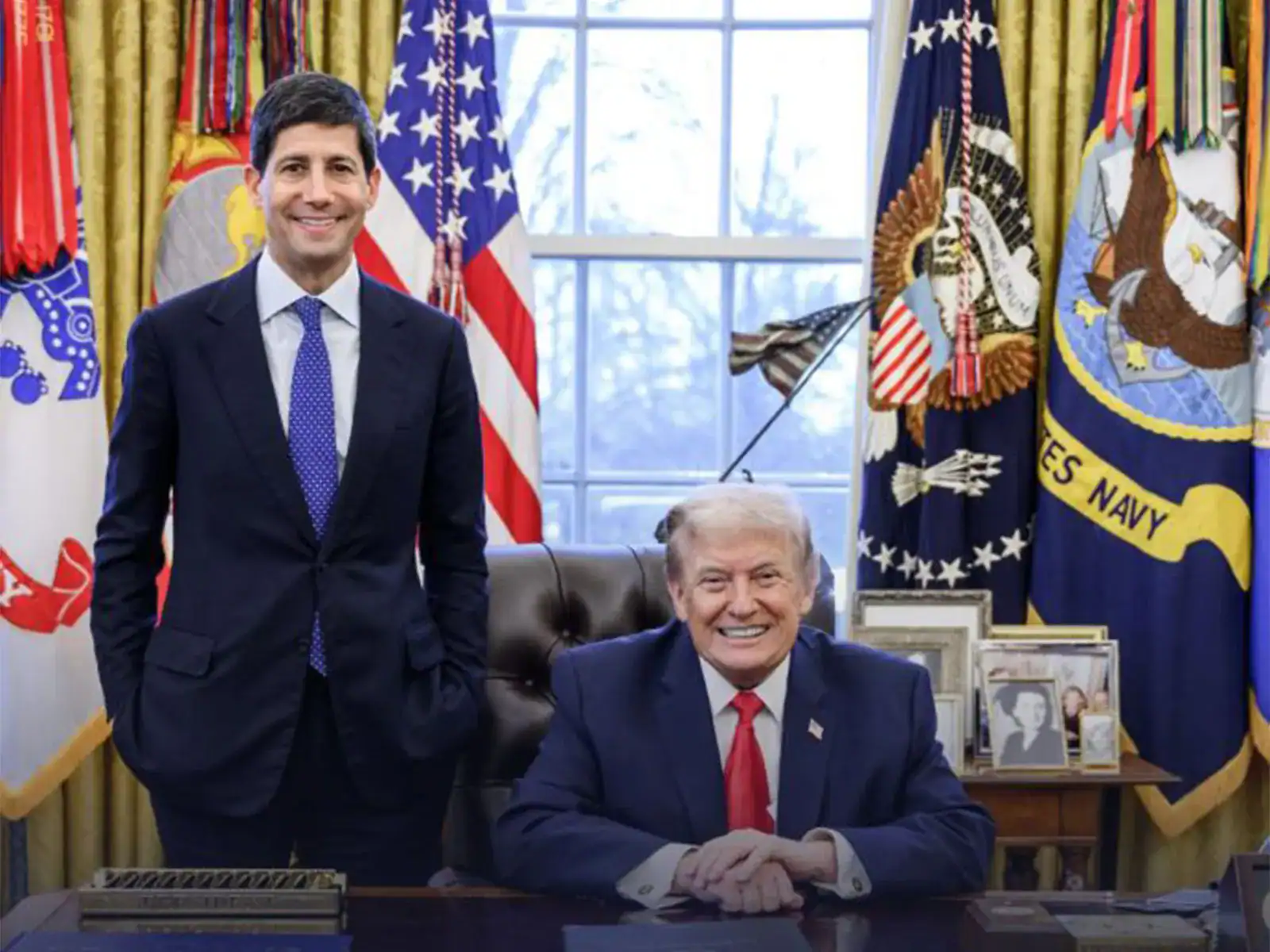
—Ceremony:. President Donald Trump will personally administer the oath of office to Kevin Warsh as the 17th chair of the United States Federal Reserve in a White House ceremony Friday, ending the unusually long transition that began when Trump nominated Warsh in January and Powell’s term as chair expired on May 15.
—Confirmation:. The Senate confirmed the Kevin Warsh Fed chair nomination on May 13 in a 54-45 vote, the most divisive in modern Federal Reserve history, with Pennsylvania Democrat John Fetterman the only senator crossing party lines to support him.
—Setting:. Friday’s event breaks four decades of recent practice in which new Fed chairs were sworn in inside the Federal Reserve building; the last White House ceremony was Alan Greenspan in 1987, and the last presidential attendance was former President George Bush at Ben Bernanke’s installation in 2006.
—Inheritance:. Warsh, 56, takes over a Federal Reserve that has held the policy-rate range at 3.50 to 3.75 percent since the March emergency hikes, with April consumer-price inflation running at 0.6 percent month-on-month and wholesale prices up 6 percent year-on-year, both well above the 2 percent target.
—Powell continuity:. Jerome Powell stays on the Federal Reserve Board as a governor with a term running through January 2028, the first time in nearly eighty years that a Fed chair has returned to the board after leaving the chairmanship, signaling a deliberate dilution of any sharp policy break.
—LATAM signal:. Latin American currencies and rate curves opened the week pricing a meaningful probability that Warsh holds rates steady through year-end rather than easing, a stance JPMorgan and CME FedWatch have built into baseline projections that show roughly 97 percent odds of unchanged at the June 16-17 meeting.
The ceremony’s location and Trump’s personal role mark a deliberate political signal, while the underlying inflation picture sharply constrains the rate-cut path the White House nominated Warsh to deliver, leaving Latin American markets to price the contradiction.
What is happening at the Federal Reserve transition?
The Rio Times, the Latin American financial news outlet, reports that the Kevin Warsh Fed chair transition reaches its formal completion on Friday with a White House oath-of-office ceremony administered personally by President Donald Trump. Warsh succeeds Jerome Powell, whose four-year term as chair expired on May 15 but who remains on the Federal Reserve Board as a governor through January 2028, after the Board named him chair pro tempore for the seven-day gap between the term expiration and the swearing-in. Stephen Miran resigned from the Federal Reserve Board effective on or shortly before the swearing-in, opening the seat that Trump intends to fill with another nominee in the coming weeks.
Warsh’s first meeting as Fed chair is the June 16-17 Federal Open Market Committee gathering, where the policy-rate decision will be the first practical test of the new chair’s framework. The April consumer-price-index print of 0.6 percent month-on-month and wholesale prices up 6 percent year-on-year leave the inflation picture well above the 2 percent target the Fed has missed for more than five years. CME FedWatch puts the probability of unchanged rates at the June meeting at roughly 97 percent, suggesting markets do not expect Warsh to deliver an immediate cut despite the White House’s preference for one.
Why the White House ceremony matters
The location signals more than ceremony, breaking four decades of recent practice in which the vice chair of the Federal Reserve typically administered the oath in the Eccles Building or the press briefing room. The last White House swearing-in for a Fed chair was Alan Greenspan in 1987 with President Ronald Reagan, and the last presidential attendance at such a ceremony was former President George Bush at Ben Bernanke’s 2006 installation. Warsh himself was sworn in as a Fed governor in the Eisenhower Executive Office Building in 2006 by then-Vice President Dick Cheney.
The optics of Friday’s event invite immediate scrutiny over the Federal Reserve’s institutional independence, which Warsh himself emphasized as a personal priority during the April 21 Senate Banking Committee hearing. Powell’s decision to remain on the board as a governor, the first such return in nearly eighty years, functions as a counterweight to the political branding of the transition, since it leaves the Federal Open Market Committee’s center of gravity broadly unchanged in the short term. Latin American currencies traded narrowly through the week as markets internalized both signals together.
What does the Kevin Warsh Fed chair appointment mean for Latin America?
The mechanics of the transmission are well-understood: United States policy-rate decisions set the floor for global dollar-funding costs and therefore for Latin American currency-and-debt pricing. Brazil’s Selic rate, currently elevated to control domestic inflation, trades on a spread to United States Treasuries that has been historically wide through the post-Iran-war oil shock. Mexico’s policy rate, Chile’s monetary policy rate, Colombia’s policy rate and Peru’s reference rate all face the same constraint: an aggressive easing cycle is difficult to sustain while United States rates hold steady, because the resulting currency weakness reignites import inflation.
A Federal Reserve that holds policy rates at 3.50 to 3.75 percent through 2026 keeps the dollar firm, keeps United States Treasury yields anchored, and limits the room Latin American central banks have to cut. Argentina’s case is structurally different because the peso operates inside the International Monetary Fund program and currency-band framework. For the other major Latin American economies, a Warsh Federal Reserve that delivers no cuts in 2026 would leave the regional rate trajectory at the slower end of forecasts, with the Brazilian real, Mexican peso, Chilean peso and Colombian peso trading inside narrower bands than they would under a Powell-style easing path.
What is Warsh likely to do differently?
Warsh has staked out four positions during the confirmation process and prior public commentary. The first two address the immediate policy stance: he is critical of the post-pandemic monetary response and has called the resulting inflation surge “the biggest policy error in 40 or 50 years,” signaling more hawkish framing on price stability than Powell’s late-cycle posture, and he favors accelerated balance-sheet reduction, arguing the Fed should roll off its remaining mortgage-backed securities and Treasury holdings faster than under the current pace, which would tighten liquidity even if policy rates do not move. The other two carve out longer-term room: he has separately argued that artificial-intelligence productivity gains create capacity for cuts later in 2026 if inflation cools, and he has called for revisions to the Federal Reserve’s inflation-measurement framework on the grounds that the Personal Consumption Expenditures index used as the policy benchmark is too rough even when food and energy are excluded.
Whether the framework-revision idea becomes a formal review depends on his ability to build consensus across a board whose median voter is closer to Powell’s approach than to Warsh’s. The institutional inertia of the Federal Reserve traditionally limits the speed at which a new chair can change frameworks; Powell himself spent his first two years adjusting Yellen-era policy at the margins rather than wholesale.
What should Latin American investors and analysts watch next?
- First press conference: Warsh’s tone and word choice at his first post-FOMC press conference on June 17, the most direct read on whether the policy framework shifts in language even when the rate decision itself is widely expected to be unchanged.
- Balance-sheet pace: Any signal from the June meeting on accelerated runoff of the Federal Reserve’s Treasury and mortgage-backed securities holdings, which would tighten dollar funding for emerging markets independently of the policy rate.
- Real-Treasury spread: The spread between Brazilian real two-year DI rates and United States two-year Treasury yields, which captures market pricing of the Fed-Selic relative trajectory.
- Mexican peso volatility: Implied volatility on the Mexican peso, which historically trades as a higher-beta version of broader emerging-market currency stress around Federal Reserve transitions.
- Powell’s voting record: Whether Powell, voting as a governor rather than chairing the discussion, dissents from Warsh’s positions, which would split the board and signal a more difficult consensus-building task ahead.
- New board nominee: Trump’s pick to fill the seat vacated by Stephen Miran, which would add another vote to the policy-setting committee and reshape the median voter going into 2027.
Connected Coverage
The transition follows the framework Warsh outlined at the Senate Banking Committee hearing on April 21, covered in our analysis of Warsh’s Senate testimony, sits against the macroeconomic backdrop laid out in our Iran war and Hormuz crisis guide, and connects to the Latin American macro pipeline tracked in our investing in Brazil 2026 reference.
This article was produced by The Rio Times’ automated newsroom system. How we use AI · Report an error · Editorial responsibility: Matthias Camenzind, Editor-in-Chief
Frequently Asked Questions
Who is Kevin Warsh?
Warsh, 56, was a Federal Reserve governor from 2006 to 2011, when he was the youngest person ever appointed to the Board of Governors at age 35. He served alongside Ben Bernanke through the 2008 financial crisis and resigned after voting against the Federal Reserve’s second round of quantitative easing in 2011. Since leaving the board he has been a partner at the Duquesne Family Office, where he works on macro investments with Stanley Druckenmiller, and a distinguished visiting fellow at Stanford University’s Hoover Institution.
When does Warsh’s policy actually start to bite?
The first concrete decision under Warsh is the June 16-17 Federal Open Market Committee meeting. Markets currently price the meeting as overwhelmingly likely to hold rates unchanged. Substantive framework shifts, if they materialize, are more likely to show up at the September meeting and the year-end Summary of Economic Projections.
Does Powell still influence policy?
Yes. Powell remains on the Federal Reserve Board as a governor with a vote on the Federal Open Market Committee and a term that runs through January 2028. He cited the ongoing investigation into renovations at the Federal Reserve headquarters as one reason for staying, but his continued voting presence gives institutional continuity that would be absent if he had departed the board entirely.
Why does the location of the swearing-in matter?
Recent Federal Reserve chairs have been sworn in inside the central bank itself, by a vice chair or governor, in an arrangement that emphasized the Federal Reserve‘s institutional independence. A White House ceremony with the president administering the oath is a deliberate break from that pattern. The optics matter because markets, foreign central banks and political observers read such choices as signals about how the new chair will balance political pressure against the Federal Reserve’s monetary-policy independence.
How exposed is Latin America to a hawkish surprise?
High. The post-Iran-war oil-shock environment has left Latin American inflation prints elevated and regional central banks reluctant to cut aggressively even at home, but a Federal Reserve that signals a longer holding pattern or accelerated balance-sheet reduction would tighten dollar funding and limit the easing room available. Mexico and Brazil are the most exposed because their bond markets are the largest and most actively traded by global emerging-market funds.