Milei Moves to Privatize Argentina’s Mint as Cash Halves
Key Facts
— Key Points
— —Banknotes in circulation fell to 5,902.3 million units in May 2026, the lowest since June 2020 and a 50.2% drop from the July 2024 peak of 11,859.2 million.
— —Economy Minister Luis Caputo listed Casa de Moneda among 2026 privatization targets expected to raise approximately US$2 billion, alongside AySA, Transener and four energy assets.
— —Headcount at the mint nearly halved to 714 employees by March 2026 from 1,411 in October 2023, with banking union La Bancaria calling a national strike for Wednesday, May 13 over related Central Bank treasury closures.
Argentina’s banknote circulation has fallen by half in less than two years to 5,902.3 million units as President Javier Milei accelerates the privatization of Casa de Moneda, the 1875-founded state mint, inside a 2026 asset-sale wave that Economy Minister Luis Caputo has framed as worth roughly US$2 billion. The cash-circulation collapse, a 50.2% drop from the July 2024 peak of 11,859.2 million units, gives political cover for an asset disposal targeted at seven state firms. The mint workforce has nearly halved to 714 employees from 1,411 in October 2023, and banking union La Bancaria has scheduled a national strike for Wednesday, May 13, 2026 over related Central Bank treasury closures.
The Rio Times, the Latin American financial news outlet, reports that the cash-circulation collapse provides political cover for an asset disposal that the Milei government has been preparing since late 2024. Banknotes in circulation closed at 5,902.3 million units in May 2026, according to Central Bank statistics, the lowest reading since mid-June 2020.
The figure represents a 50.2% drop from the all-time peak of 11,859.2 million units recorded in July 2024. More than 62% of circulating bills, equivalent to 3,696.9 million units, are now in the four highest denominations of 1,000, 2,000, 10,000 and 20,000 pesos. The transition reflects both Central Bank denomination upgrades and the migration of retail payments to digital wallets and the instant-payment network operated by Argentina’s clearing infrastructure.
The 2026 Privatization Wave
Economy Minister Luis Caputo presented the official 2026 privatization list at ExpoEFI in late April, identifying Casa de Moneda alongside water utility AySA, electricity transmission firm Citelec/Transener, the Manuel Belgrano and San Martin thermal power plants, hydroelectric concessions, airport ramp-services firm Intercargo and naval shipyard Tandanor. Caputo set a combined target of approximately US$2 billion in proceeds for the year.
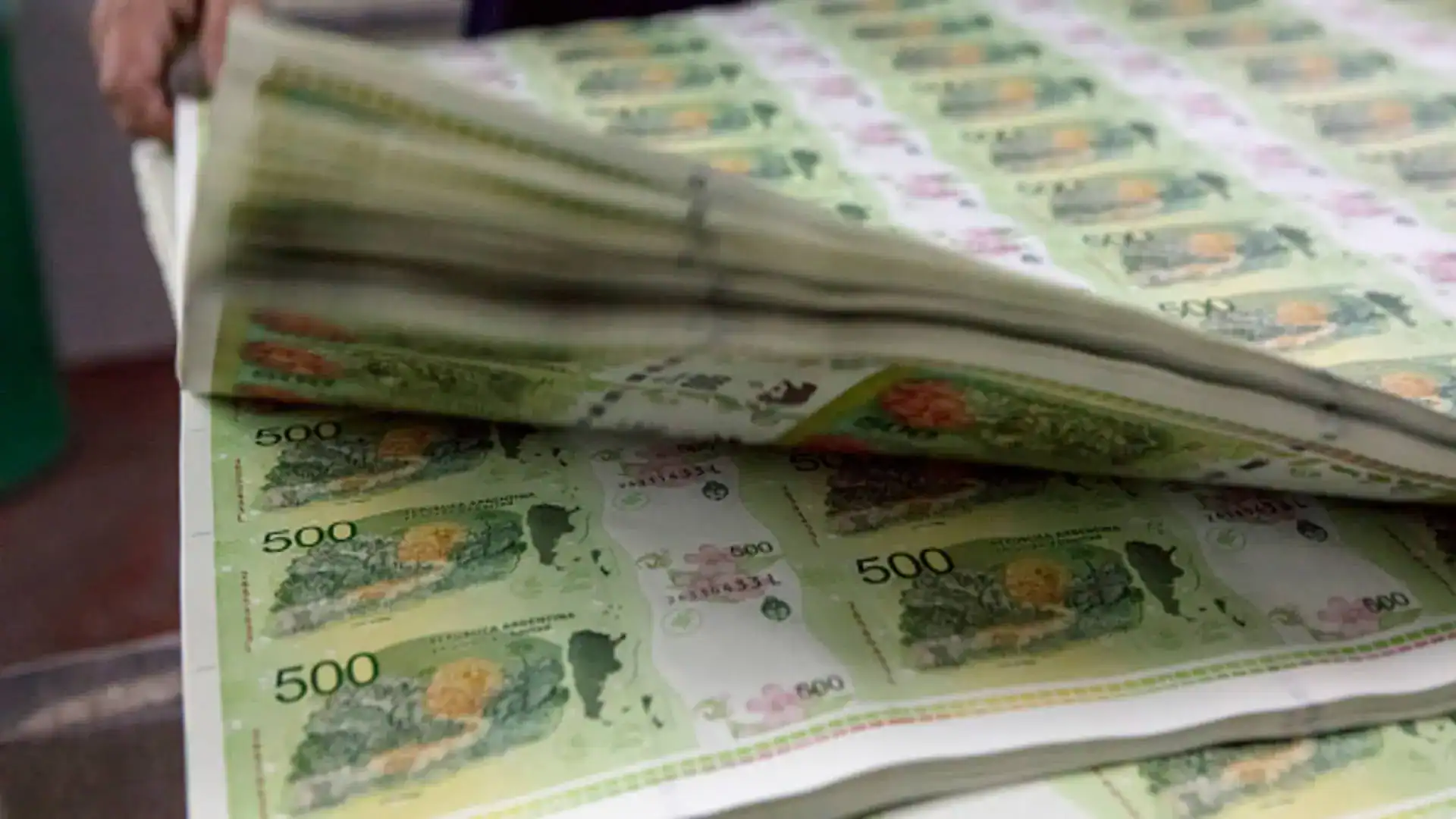
The mint sits inside a broader corporate transformation. December 2025 saw the final state company, Ferrocarriles Argentinos, complete its conversion from Sociedad del Estado to Sociedad Anónima Unipersonal, closing a 12-company restructuring program that included Casa de Moneda alongside Aerolíneas Argentinas, Energía Argentina, Fabricaciones Militares and seven others. Each conversion creates the legal architecture for an eventual auction.
Decree 442 of June 30, 2025 split Casa de Moneda’s operations into business units and reassigned several functions. Tax-stamps and traceability moved to the new tax-and-customs agency ARCA, while the Billetera Virtual digital-payments platform was transferred to state satellite operator ARSAT. The mint was left with three retained functions, namely currency production, treasury and banknote destruction support for the Central Bank, and printed materials for public and private clients, while unused real estate was handed to the state property agency AABE for sale or reassignment.
From 1,411 Workers to 714 in Two Years
The workforce reduction has been the most visible operational change. Casa de Moneda employed 714 people at the end of March 2026 according to Indec’s most recent personnel report, nearly half the 1,411 recorded in October 2023 just before Milei took office.
The shrinkage tracks a deliberate policy direction. The government suspended domestic banknote printing in October 2024, ordered intervention of the mint through Decree 964 on October 31 of that year and named lawyer Pedro Daniel Cavagnaro as interventor for an initial 180-day mandate from November 1, 2024.
Presidential spokesman Manuel Adorni argued at the time that printing low-denomination notes domestically had become uneconomic, citing the cost ratio against imports and the displacement of small cash transactions by electronic payments.
The Foreign Suppliers and the China Contract
| Indicator | Value |
|---|---|
| Banknotes in circulation (May 2026) | 5,902.3 million units |
| Decline from July 2024 peak | −50.2% |
| Casa de Moneda headcount (March 2026) | 714 (from 1,411 in Oct 2023) |
| 2026 privatization target | US$2 billion across portfolio |
| Debt to foreign printing suppliers | Above US$300 million |
A US$300 million-plus liability owed to foreign printing suppliers complicates the auction structure. The creditor list spans Spain’s Fábrica Nacional de Moneda y Timbre, Brazil’s Casa da Moeda, Swiss-German printing-press manufacturer KBA, German ink producer GSI, US supplier Crane, French printer Oberthur, China Banknote Printing and Minting Corporation, and Argentine ink-maker Permaquim.
The new 20,000-peso notes that entered circulation across 2025 were printed in China after the Central Bank blocked Casa de Moneda from bidding on the contract. A final shipment was scheduled to arrive in the country during the second quarter of 2026.
The Union Counter-Pressure
Banking union La Bancaria, led by Sergio Palazzo, has called a national strike for Wednesday, May 13, 2026, affecting the final three hours of public service at the Central Bank and at Banco Hipotecario. The action follows a 24-hour stoppage on April 27 across all BCRA regional treasuries.
The trigger is the Central Bank’s decision to close 12 of the 21 regional treasuries it operates across the interior, a move the union says could eliminate 32 jobs and represents what it calls a hollowing out of essential monetary functions in regional economies. La Bancaria has signaled it may escalate further if there is no movement from BCRA management. The dispute runs in parallel to the Casa de Moneda privatization process and exposes the political resistance that any sale to a private operator is likely to face.
Connected Coverage
The mint sale builds on the AySA water-utility concession published in Resolution 543/2026 on April 28, the first major service utility headed for tender under Milei. The investor universe that turned out for Transener’s auction earlier in 2026, with zero international bidders despite government outreach, will be the cleanest read on whether Casa de Moneda attracts foreign capital. Rio Times analysis is available in Argentina’s AySA water privatization coverage and in the broader Argentina Economy 2026 guide.
The supplier-dependency context is set out in our 2024 coverage of the suspension of domestic banknote production, and the corporate-form precedent in Milei’s switch of Banco Nación to limited-company status.
What to Watch
- May 13 strike: Whether La Bancaria’s three-hour stoppage escalates into a longer industrial action that delays the privatization timetable.
- Tender structure: How the government separates the three retained functions for sale, and whether the foreign-supplier debt is assumed by the buyer or by the Treasury.
- International interest: After the Transener auction closed with no foreign bids, whether printing-industry incumbents from Spain, Brazil or China place offers.
- Currency demand: Whether Central Bank issuance of higher-denomination notes resumes during 2026 or whether digital migration deepens the cash-circulation slide.
More: Argentina news in English, every day from The Rio Times.
Frequently Asked Questions
Why is Argentina privatizing Casa de Moneda?
The Milei government argues the 1875 state mint runs at a structural loss after domestic banknote demand collapsed 50.2% from the July 2024 peak. Casa de Moneda is one of seven assets in a 2026 privatization wave targeting US$2 billion in proceeds.
How many people work at Casa de Moneda today?
According to Indec’s March 2026 personnel report, the mint employs 714 people, down from 1,411 in October 2023. The reduction came through voluntary retirements, severance packages and the December 2025 closure of the legacy Ciccone Calcográfica plant in Don Torcuato.
Who currently prints Argentine banknotes?
Since the October 2024 production halt, Argentina has imported its banknotes. The new 20,000-peso bills introduced in 2025 were printed in China, while smaller denominations have come through Spain and Brazil. The country still owes more than US$300 million to foreign printing suppliers.
What is the May 13 banking strike about?
La Bancaria called a three-hour stoppage at the Central Bank and Banco Hipotecario on Wednesday, May 13, 2026, in rejection of the closure of 12 of 21 regional BCRA treasuries and 32 potential layoffs. It is the second action in three weeks after the April 27 stoppage.
Updated: 2026-05-11T22:00:00Z
Sources: Banco Central de la República Argentina, Indec personnel report (March 2026), Boletín Oficial (Decree 964/2024, Decree 442/2025), Bloomberg Línea, El Cronista, Asociación Bancaria communiqué
This article was produced by The Rio Times’ automated newsroom system. How we use AI · Report an error
In depth
Read More from The Rio Times