Mexico Gets Three New Electoral Council Members; Chávez Joins INE
Key Facts
— —Mexico’s Chamber of Deputies voted 334 to 127 on Tuesday, April 21, to install Arturo Manuel Chávez López, Frida Denisse Gómez Puga and Blanca Yassahara Cruz García as electoral councillors at the National Electoral Institute for a nine-year term running to 2035.
— —Chávez López served as regulation and public-policy adviser to Claudia Sheinbaum when she was mayor of Tlalpan and then head of government of Mexico City, and has no prior experience in the electoral system.
— —Opposition benches from PAN, PRI and Movimiento Ciudadano voted against the package, accusing the Morena bloc of engineering a “fast-track” process two years before the next Mexican presidential election cycle.
The Mexico INE council vote on Tuesday hands the ruling Morena coalition three of the eleven seats on the country’s most consequential electoral referee for the next nine years.
The Rio Times, the Latin American financial news outlet, reports that the Mexico INE council vote late on Tuesday, April 21, delivered three new electoral councillors to the National Electoral Institute with a qualified Morena-led majority. The Chamber of Deputies approved the slate 334 votes in favour to 127 against, with zero abstentions, clearing the two-thirds threshold required under Mexican electoral law.
The three new councillors — Arturo Manuel Chávez López, Frida Denisse Gómez Puga and Blanca Yassahara Cruz García — will take office in the INE general session within 24 hours of the vote and will serve a nine-year mandate ending in 2035. That timeline covers the 2027 federal midterms and the full 2030 presidential election cycle.
Who won the Mexico INE council vote
Chávez López, 99 of 100 on the evaluation examination, is currently director of Talleres Gráficos de México, the federal print and publishing agency. He served as adviser on regulation and public policy to Claudia Sheinbaum during her 2015–2017 tenure as mayor of the Tlalpan district and again during her 2018–2023 term as head of government of Mexico City. Opposition deputies highlighted that he has no prior professional experience in the electoral system — a point Morena’s floor leader Ricardo Monreal rebutted by citing the examination score.
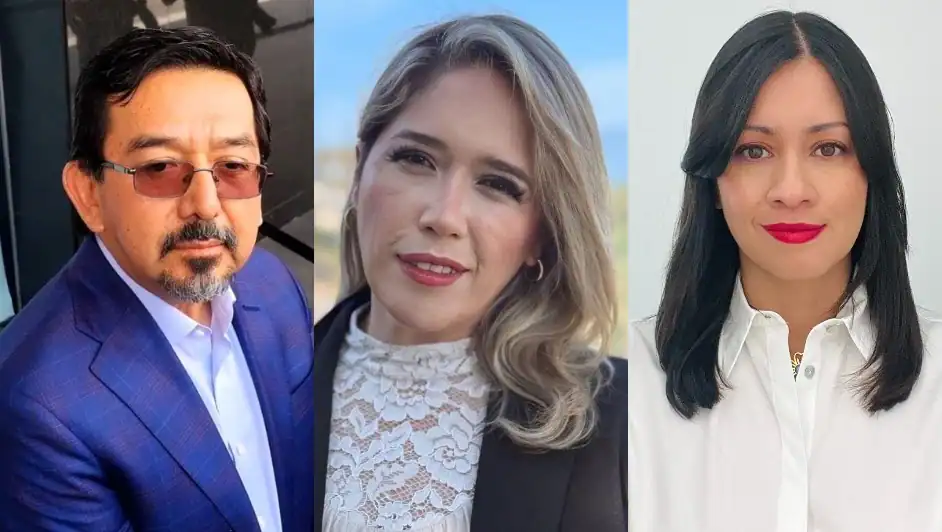
Gómez Puga comes from the Internal Control Body of the Tamaulipas State Electoral Institute, giving her the clearest technical electoral CV of the three. Cruz García is the serving president of the Puebla State Electoral Institute, which has been under scrutiny from both state and federal regulators since the 2024 local cycle.
Two-women-one-man composition was the internally agreed formula inside the Morena, Partido del Trabajo and Partido Verde coalition. The candidate most closely associated with Monreal personally — Armando Ambriz Hernández, a former Mexico City Electoral Tribunal magistrate who had ruled in favour of Monreal’s daughter Catalina in 2024 — was left out of the final three.
Why the opposition called the process a “farce”
Opposition deputies from the PAN, PRI and Movimiento Ciudadano benches voted against the package and used the floor debate to challenge both the process and the candidates. PRI coordinator Rubén Moreira called the selection a “tremenda farsa” and PAN’s Elías Lixa singled out Chávez López and Bernardo Valle — another close Sheinbaum adviser who was dropped from the final slate — as evidence of the palace’s reach into supposedly independent institutions.
The procedural complaint focused on the Technical Evaluation Committee, which met on the night of Friday, April 17, to finalise the shortlists of five candidates for each seat. Opposition benches argued that the overnight schedule and the limited public access to committee deliberations amounted to a “fast-track” process incompatible with the scale of the nine-year mandate being awarded.
The structural concern runs further. Of the INE’s eleven councillors, serving president Guadalupe Taddei — selected by sortition in March 2023 — has also been consistently described as close to the Morena movement. Tuesday’s vote means a clear majority of the INE’s ruling bench now has documented professional ties to the current ruling coalition, a situation unprecedented since the institute’s 1990 founding.
What the Mexico INE council vote means for 2027 and 2030
The INE organises, certifies and validates Mexican federal elections, and it also adjudicates disputes over campaign financing, political-party registration, and media equity. Control of the council is therefore directly consequential for the 2027 federal midterms, in which Morena will defend its current supermajority in the Chamber of Deputies, and for the 2030 presidential contest.
Business and investor reaction has been restrained. Mexican peso trading on Tuesday evening showed no discernible reaction to the vote, and no major rating agency has flagged the INE change as a governance event. That tracks with Sheinbaum’s unusually high approval numbers — she remains the most popular Mexican president on record — and with the fact that the formal electoral calendar is not active this year.
The medium-term watch item is the INE’s handling of campaign-finance disputes in the 2027 midterm preparation, where the three new councillors will be immediately tested. Investors tracking Mexican sovereign and corporate risk treat the independence of the electoral referee as a tail-risk input rather than a day-to-day variable, which is why the Mexico INE council vote only shows up in price when a disputed election lands on the table.
Related coverage: Claudia Sheinbaum: Mexico’s unusually popular president • Mexico economy 2026 outlook • USMCA formal negotiations open May 25 under Ebrard
More: Latin America news in English, every day from The Rio Times.
This article was produced by The Rio Times’ automated newsroom system. How we use AI · Report an error
Read More from The Rio Times