Milei Launches Argentina’s Biggest Electoral Overhaul in 17 Years
Key Facts
— — President Javier Milei announced Tuesday, April 21 from Tel Aviv — closing his third official trip to Israel — that his government will submit an electoral reform bill to Congress on Wednesday, April 22. The package has three components: elimination of the PASO mandatory primaries, an overhaul of campaign finance rules, and the Ficha Limpia clean-record requirement that failed by a single vote in the Senate in May 2025.
— — The bundling is strategic. Ficha Limpia — which bars candidates with second-instance corruption convictions — is politically harder for allies and soft opposition to vote against; PASO elimination is politically easier for La Libertad Avanza but blocked by Pro, UCR, and provincial governors who still need the primaries to sort internal candidacies. Packaging both forces a single vote on the combined framework.
— — The reform must clear Congress in 2026 because any electoral change must be enacted in a non-election year to apply to the following cycle — meaning the bill needs to pass before the 2027 presidential race cycle begins. With LLA holding 95 of 257 seats in the Chamber and below-majority in the Senate, the vote will test Milei’s post-October 2025 legislative coalition.
The Milei electoral reform is not a technical housekeeping bill — it is a structural rewiring of how Argentina selects candidates, funds campaigns, and screens convictions, submitted the week Milei closed the Isaac Accords in Jerusalem and reopened his domestic legislative agenda from the same trip.
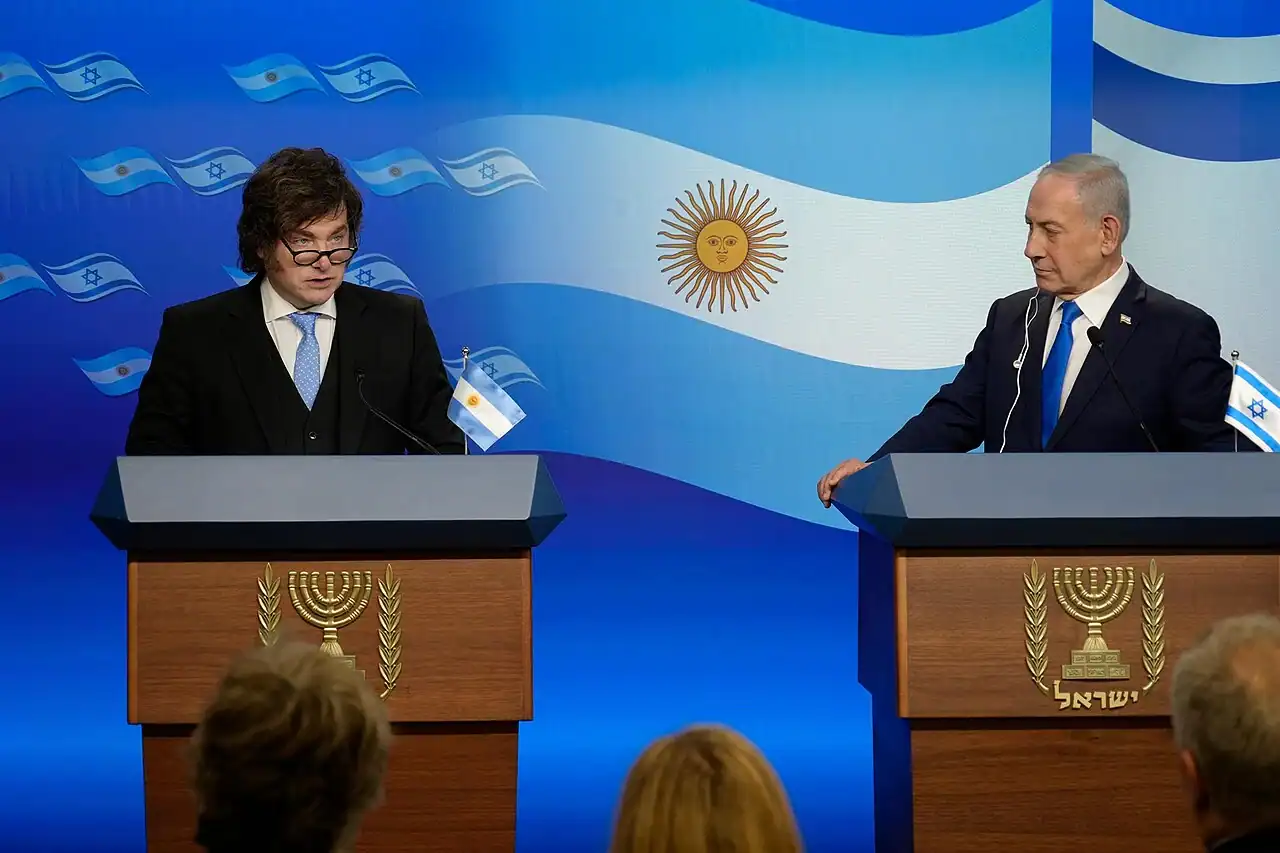
Argentine President Javier Milei announced Tuesday, April 21 that his government will submit a comprehensive electoral reform bill to Congress on Wednesday, April 22 — a package that would eliminate the mandatory PASO primaries, restructure campaign financing, and impose Ficha Limpia rules on all presidential candidacies. The Rio Times, the Latin American financial news outlet, reports that the Milei electoral reform was announced from Tel Aviv at the close of Milei’s third official trip to Israel, returning him to Buenos Aires with a combined domestic and diplomatic victory from a single week abroad.
Milei broke the news on X in his characteristic style. The president wrote that his government is sending the electoral reform to Congress, eliminating PASO to end what he called the “caste’s internal primaries” paid for by Argentine taxpayers.
He added that campaign financing would change so that politics “stops living off your pocket,” and that Ficha Limpia would keep “the corrupt out forever.” He closed with his signature sign-off: “Se acabó la joda. Viva la libertad, carajo.”
The rhetoric tracks. The political calculation behind the bundling is more complicated — and more revealing of how Milei plans to govern through the second half of his mandate.
What’s in the Milei Electoral Reform
The bill has three pillars. First, elimination of the Primarias Abiertas, Simultáneas y Obligatorias — the mandatory open primary system introduced in 2009 that was designed to consolidate the party system and filter out fringe candidacies. Milei’s team argues PASO costs roughly US$150 million per cycle and forces taxpayers to fund intra-party competition.
Second, a campaign finance overhaul that would reduce public financing, lift caps on private contributions, and restructure how audiovisual ad time is allocated. Details remain limited — the Casa Rosada is expected to publish the full text on Wednesday — but the direction is clear: less state money, more private money, tighter reporting.
Third, Ficha Limpia — the clean-record rule that bars candidates with corruption convictions upheld at second instance from running for office or serving as ministers, diplomats, or directors of state-participated enterprises. This is the component with the longest legislative track record.
Why Ficha Limpia Matters Now
Ficha Limpia has haunted Argentine politics for a year. The bill cleared the Chamber in February 2025 with 144 votes after an overnight session. When it reached the Senate in May 2025, it fell one vote short — two senators from Misiones tied to provincial power-broker Carlos Rovira voted against, and Rovira later admitted publicly the vote was cast at the explicit request of the Casa Rosada, which feared the bill would proscribe Cristina Kirchner before her Vialidad conviction was fully ratified.
The intervening year changed the calculus. Kirchner’s Vialidad conviction was fully ratified, rendering the proscription argument moot from the government’s perspective. Milei’s bloc expanded after the October 2025 midterms, and the political window to bundle Ficha Limpia with electoral-system reform opened.
By including Ficha Limpia in the electoral-reform package, the government forces opposition blocs to vote against a popular anti-corruption measure if they want to defeat PASO elimination. That is the entire point.
The PASO Fight and the Provincial Veto
PASO elimination is where the real resistance lives. In 2025, Milei’s government successfully suspended the primaries for that year’s legislative cycle but stopped short of permanent elimination. Pro, the UCR, and much of the provincial governor class oppose full elimination because fragmented opposition parties use the primaries to sort internal candidacies before the general.
Without PASO, those coalitions face a harder coordination problem: nominate by internal convention and risk splintering, or field single candidates through back-room deals and risk legitimacy challenges. Milei’s La Libertad Avanza, by contrast, has a clean command structure through Karina Milei and the political committee.
A senior LLA source told iProfesional that if full elimination cannot pass, the government will pivot to suspending primaries for 2027 — the same maneuver used in 2025. That fallback suggests the government is bargaining for at least a one-cycle suspension even if permanent repeal fails.
The Israel Context
The timing of the announcement — delivered from Tel Aviv on Israel’s Independence Day celebration — is unlikely to be coincidental. Milei spent Sunday in Jerusalem signing the Isaac Accords with Prime Minister Benjamin Netanyahu, a bilateral counter-terrorism and AI-cooperation framework that positioned Argentina as the regional anchor of Trump-aligned diplomacy.
Announcing a domestic legislative push from Tel Aviv lets Milei return to Buenos Aires carrying both a diplomatic win and a legislative agenda — a rhetorical template his government has used before. It also reclaims the news cycle from domestic scandals, including corruption allegations surrounding Cabinet Chief Manuel Adorni scheduled for Congressional testimony on April 29.
The political committee — which includes Karina Milei, Santiago Caputo, Adorni, Interior Minister Diego Santilli, Lower House Speaker Martín Menem, and Senate LLA leader Patricia Bullrich — is scheduled to meet Friday to coordinate the legislative strategy.
The Math: Can It Pass?
La Libertad Avanza holds 95 of 257 seats in the Chamber of Deputies — the largest minority bloc after the October 2025 midterms, but well short of the 129 needed for a simple majority. The Senate is more challenging, with LLA relying on a fluid working alliance with Pro, provincial blocs, and fragments of the UCR.
Ficha Limpia alone would likely pass — the political cost of voting against it is too high for individual legislators outside the Peronist core. PASO elimination alone would almost certainly fail. The government’s bet is that the bundling tips Pro and UCR legislators into supporting the combined package to avoid the visible embarrassment of killing Ficha Limpia a second time.
Milei’s own approval ranking sits at 36.2% in April — the lowest of his presidency — which complicates the optics but does not change the arithmetic. Legislative approval depends on coalition management, not on Casa Rosada polling.
Market and Investor Implications
The electoral reform does not move markets directly — but it is a reliable proxy for Milei’s legislative leverage on the bills that do. Labor modernization, tax code reform, and the new penal code are all queued behind structural legislation like this one. A successful Milei electoral reform vote signals the administration retains enough coalition discipline to push economic liberalization further.
A defeat — or a heavily diluted outcome — would reinforce the current pattern: Argentina’s macro numbers continue improving on Milei’s shock therapy, but the political runway to convert those macro gains into locked-in structural reform narrows each month. Peso, bond, and sovereign-spread markets read the electoral-reform vote as a coalition stress test.
For regional investors, the vote also has implications beyond Argentina. A Milei win here reinforces the Trump-aligned right-wing bloc assembling across Latin America from Buenos Aires to Quito to, potentially, Lima after the June 7 runoff.
What to Watch
Three near-term markers. Wednesday April 22 brings the formal submission to Congress and the full bill text, which will reveal whether Ficha Limpia is identical to the May 2025 version or modified to avoid the Misiones defection pattern. Friday April 24 brings the political committee meeting at Casa Rosada that will set the whip strategy.
Tuesday April 29 brings Cabinet Chief Adorni’s testimony before Congress on the corruption allegations. That hearing will test whether the opposition can peel the Ficha Limpia coalition back by pointing at government-side scandals.
The broader question is whether Milei is governing from strength or from scandal management. The electoral-reform announcement from Tel Aviv suggests both: a genuine policy push timed to bury a difficult domestic week.
If the reform passes in substantially the form announced, it will be the most consequential electoral-system change in Argentina since PASO was created in 2009. If it fails, it becomes the latest evidence that Milei’s shock-therapy governance model struggles when the reform menu moves from economics to institutional architecture.
Related Coverage: Isaac Accords: Milei–Netanyahu in Jerusalem • Milei Approval Ranking April 2026 • Argentina Economy 2026 Guide
More: Argentina news in English, every day from The Rio Times.
This article was produced by The Rio Times’ automated newsroom system. How we use AI · Report an error
Read More from The Rio Times