Mexico and U.S. Fix May 25 Start for Trade Review
Key Facts
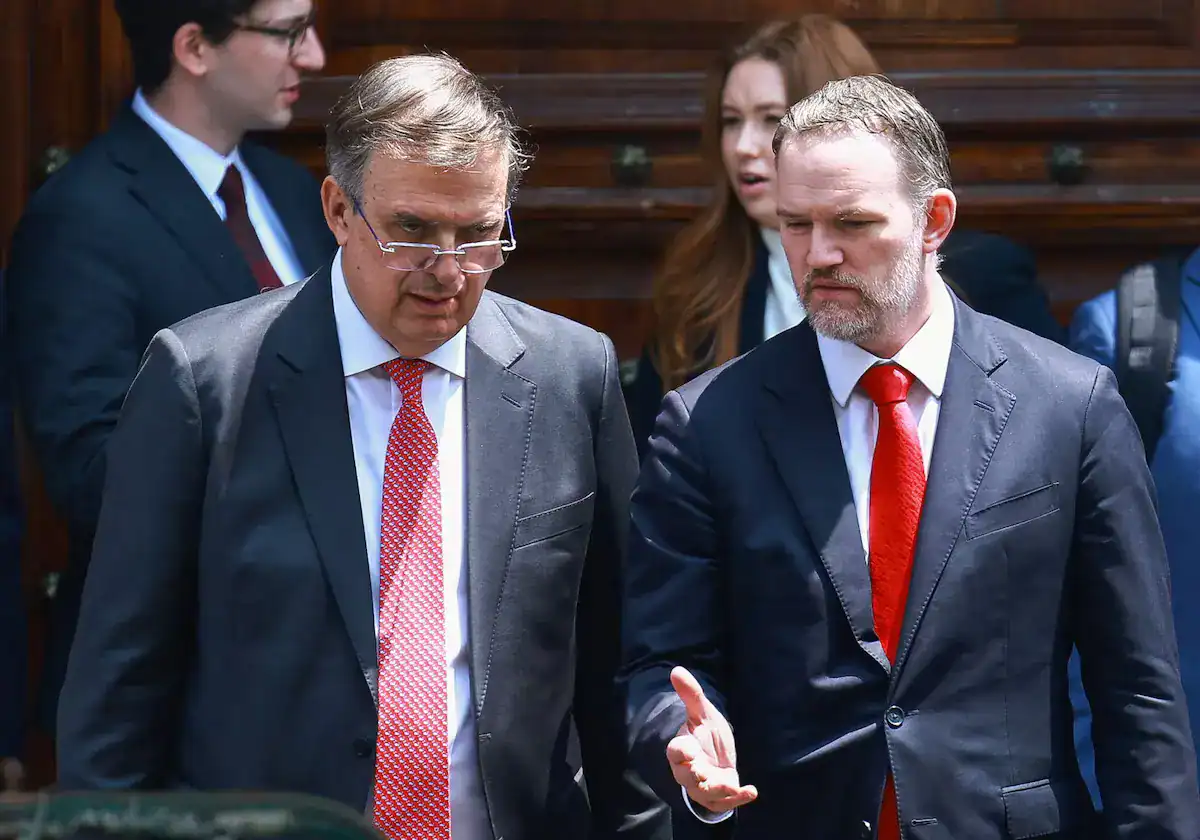
— — Mexican Economy Minister Marcelo Ebrard confirmed Monday that formal USMCA review negotiations will begin the week of May 25, following a full day of preparatory meetings between US Trade Representative Jamieson Greer and President Claudia Sheinbaum in Mexico City.
— — The May 25 start positions the two governments to deliver “substantive progress” before the scheduled July 2026 formal review window, which will determine the continuation of the trade agreement under its sunset-clause framework.
— — Monday’s meetings covered Section 232 steel and automotive tariffs as the highest-priority Mexican concerns; Greer separately met with the Mexican steel industry and with auto-sector CEOs from GM México, Nissan Mexicana, Mazda, BMW, Stellantis and Mercedes-Benz México.
— Deep Dive
— For the complete picture, see our guide: Mexico Economy 2026.
The USMCA formal negotiations calendar announced Monday is the clearest commitment from either government on the trade-review timetable since the process began in Washington earlier this year. “Estamos estimando que las negociaciones formales se van a iniciar en la semana del 25 de mayo, para estar en tiempo y forma,” Ebrard said at the conclusion of talks at the Palacio Nacional and the Club de Banqueros.
The Rio Times, the Latin American financial news outlet, reports that Ebrard described the Greer-Sheinbaum meeting as “bastante cordial” and that the US side “se llevó nota de lo que a nuestro país le preocupa” — a measured but positive characterization that contrasts with the publicly confrontational Trump administration posture of January, when the president said the trade agreement was “irrelevant” and “dispensable.”
Sheinbaum posted on X after the meetings that she had “received the US delegation led by Ambassador Jamieson Greer” and was “continuing to advance positively.” The signal matters: Mexican equity and currency markets had priced in the possibility of a delayed, contentious trade-review launch, and Monday’s calendar fix removes a significant source of tail-risk pricing.
What the USMCA Formal Negotiations Will Cover
The substantive agenda is dominated by the Section 232 tariff regime the Trump administration imposed on steel, aluminum and automobiles, currently running at 25% on most categories. Mexican industry representatives raised the 232 framework as the primary source of competitive damage during the Greer meetings.
Ebrard also framed the negotiations around “strengthening regional supply chains and reducing dependence on Asian markets” — the nearshoring narrative that has provided Mexico’s principal leverage in the bilateral relationship. Grupo Bimbo CEO Daniel Servitje’s 60 US plants and 22,000 US employees were cited by CCE president Francisco Cervantes Medina Mora as the kind of integration story the Mexican business community wants to foreground.
Greer’s agricultural-sector engagement, conducted alongside Secretary of Agriculture Julio Berdegué, covered separate concerns including tomato, cattle and avocado export disputes. The steel and auto tracks are the most acute; the agricultural track is the most complex and most likely to extend beyond the July review window.
The July Review Deadline
The USMCA contains a joint-review clause requiring the three parties to assess the agreement’s continuation at the six-year anniversary — the July 2026 date Ebrard referenced. If the review fails to produce agreement on continuation, the treaty expires in 2036 on a rolling 10-year sunset.
With formal negotiations starting May 25, the US and Mexico have approximately eight weeks to reach substantive agreement before the July review. Canada’s position remains the third variable; Ottawa has been relatively quiet in recent weeks as the Carney government focuses on its own trade-leverage campaign with Washington.
The legal baseline is clear: even a failed July review does not immediately terminate USMCA. But a failure would move the agreement onto the 2036 sunset track with 10 years of declining investor certainty, pushing Mexican manufacturing decisions and auto-industry capital allocation into a multi-year risk-premium regime.
Why the Market Response Was Muted
The Mexican peso traded flat against the dollar Monday at 16.71, with modest strengthening in the overnight session after the Ebrard announcement. The Bolsa Mexicana de Valores IPC index closed the day unchanged at around 52,800.
The muted response reflects two realities. First, Monday’s announcement confirmed an outcome that market pricing had largely assumed — formal talks were widely expected to begin before the July window. Second, the Chihuahua US-agents crisis and the new troop-authorization request dominated the domestic political agenda in a way that limited headline space for the trade story.
Mexican auto-industry equities — Nemak, Gruma and the automaker value-chain suppliers — traded modestly higher on Monday after Greer’s specific commitment to engage with the sector before formal talks. The steel cluster was similarly cautiously positive.
The Latin American Frame
For Latin America more broadly, the USMCA review is the single most consequential trade event of 2026. As Rio Times coverage of Latin American investment conditions has documented, the Mexico nearshoring story is the regional growth engine that every other LATAM economy measures itself against.
A successful USMCA continuation would strengthen Mexico as the primary Latin American beneficiary of US-China decoupling. A failed review would redistribute the nearshoring premium across Brazil, Colombia and potentially Central America — though without the scale of Mexican manufacturing infrastructure, the displacement would be partial at best.
Brazil, Colombia and Argentina are each watching the Mexican playbook closely. Each government has been exploring bilateral trade arrangements with the Trump administration in parallel; none has produced a calendar anchor of the specificity Ebrard secured Monday. Mexico’s institutional capacity to negotiate under pressure remains a regional outlier.
What to Watch
Three signals will shape the May 25 opening. First, the specific venue and delegation composition. Ebrard said negotiators will rotate between Mexico City and Washington; the location of the first formal session and the seniority of the US team will indicate the expected pace.
Second, any interim tariff adjustments before May 25. Section 232 modifications announced ahead of the formal start would signal Washington’s willingness to make concessions as an opening move; a tariff escalation would signal hardball.
Third, Canadian engagement. As Rio Times reporting on the Trump regional framework has outlined, Canada’s participation has been the least predictable element. A formal Canada-US bilateral track opening alongside the May 25 Mexico track would raise serious questions about whether the trilateral framework is actually being renegotiated or quietly dismantled.
Key Topic · USMCA
More: Latin America news in English, every day from The Rio Times.
This article was produced by The Rio Times’ automated newsroom system. How we use AI · Report an error · Editorial responsibility: Matthias Camenzind, Editor-in-Chief