Colombia’s Fajardo Trades Education for Security and Oil in 2026
Key Facts
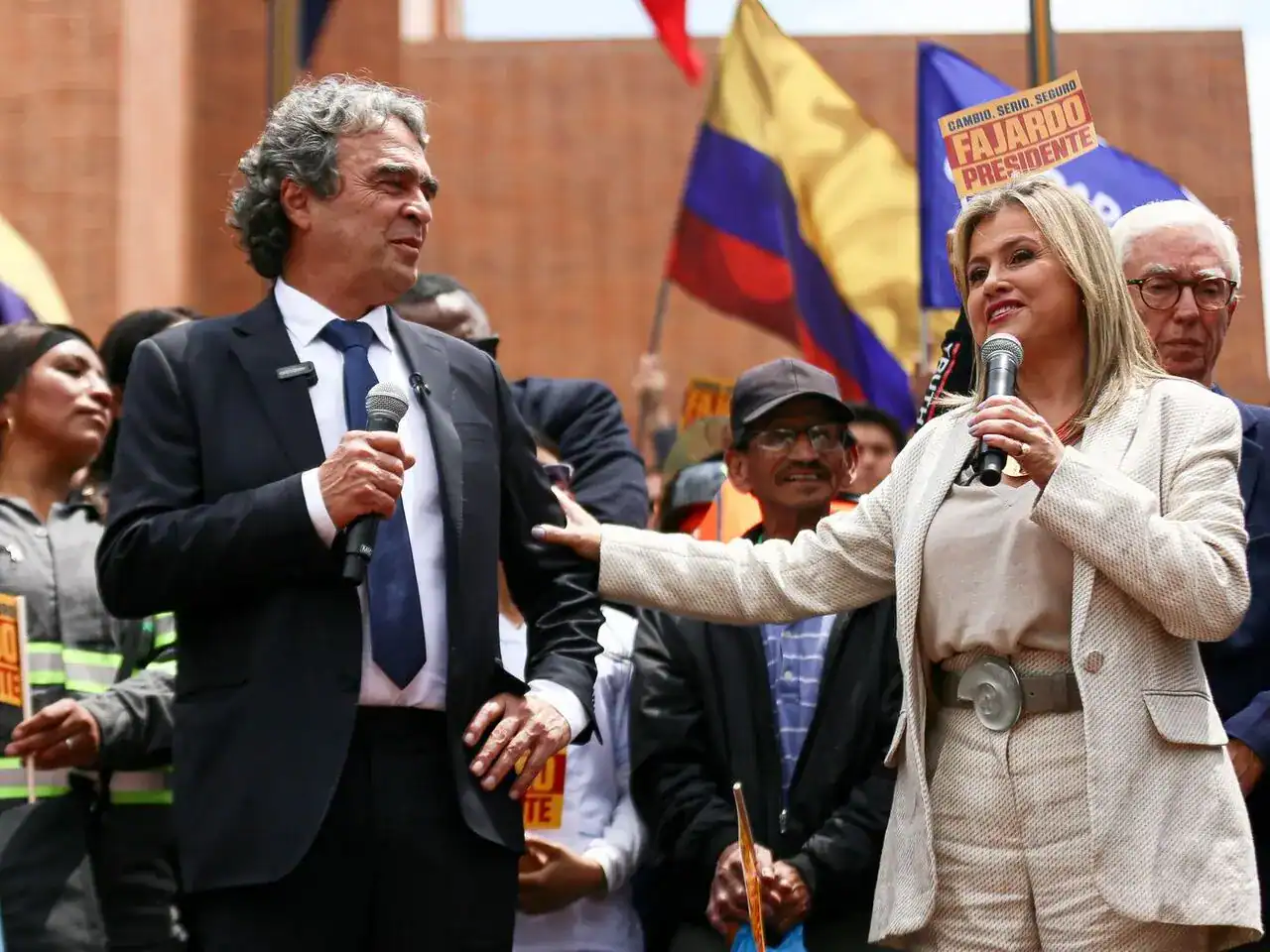
— —Sergio Fajardo’s third presidential campaign, registered on March 13 with running mate Edna Bonilla, has pushed his signature education platform into the background to contest security with the right and economic inequality with the left.
— —The centrist former Medellín mayor has called for the reactivation of oil and gas exploration — a direct break with Gustavo Petro’s energy transition — and for a citizens’ income transfer to anchor the social-policy side of the programme.
— —With first-round voting on May 31, Fajardo polls in the 11.5%–13.4% range alongside right-winger Vicky Dávila and Petro ally Gustavo Bolívar, in a field that also includes Claudia López, Roy Barreras and Abelardo de la Espriella.
The Fajardo Colombia programme for 2026 is an explicit bet that centrism can win a polarised race by disputing security on the right and economic equality on the left.
The Rio Times, the Latin American financial news outlet, reports that the Fajardo Colombia programme has been substantially rewritten for his third presidential attempt. El País correspondent Lucas Reynoso reported from Bogotá on Wednesday that former Medellín mayor and Antioquia governor Sergio Fajardo has moved his signature education agenda into a secondary role, instead running hard at the two issues that divide Uribe and Petro voters — security and the economy.
The strategic recalibration is unusual for Fajardo, a mathematician who built his previous runs around human-capital investment. It is also a direct response to the polling pattern of the last six months, which shows Colombian voters ranking security as their single most important electoral priority.
The Fajardo Colombia programme on security: disputing the right
Fajardo has announced that from day one of a hypothetical August 7, 2026 inauguration, he would assume the constitutional role of Supreme Commander of the Armed Forces to retake territorial control. The centrepiece is Plan Guardián, unveiled in Barranquilla for presentation on August 14, 2026, whose first component is a dedicated anti-extortion programme.
The logic is data-driven. Invamer polling shows a 92% worsening in the perception of public order under the Petro administration, and Fajardo‘s team identifies extortion as the extortion vector reaching small business, transport operators and daily commerce across Colombian cities. Fajardo’s estimate — widely cited in his campaign materials — is that roughly 50% of national extortion originates from inside prisons.
The programme also proposes ending Petro’s “Paz Total” negotiations with armed groups in their current form. Fajardo argues that dialogues should only happen with clear conditions tied to the dismantling of illicit economies and a measurable reduction in violence — a framing that deliberately overlaps with right-wing candidate Vicky Dávila’s security pitch.
The energy pivot: oil and gas exploration reactivation
The most consequential economic break with Petro is Fajardo’s call to reactivate oil and gas exploration, including offshore Caribbean acreage. He has framed the Petro energy transition as a threat to household and corporate energy costs, and warned that Colombia faces a broader energy crisis unless hydrocarbon production is stabilised.
For investors, this is the most market-relevant line in the Fajardo Colombia programme. Ecopetrol has lost roughly a third of its reserves-to-production coverage under Petro’s exploration freeze, and Caribbean offshore blocks licensed under Duque remain largely undeveloped.
Fajardo has stopped short of endorsing fracking, which remains legally and politically radioactive in Colombia, but his framing positions him closer to Dávila than to Petro on every other major energy lever. Caribbean governors and the Atlantic coast business chambers are already treating him as an acceptable centrist option on the energy file.
The social-policy side: a universal income bet
Against the security-and-energy package sit two social-policy commitments designed to contest the Petro bloc. The first is a citizens’ income transfer — Fajardo has not published a specific peso figure, but the instrument is structured to run alongside the existing Ingreso Solidario programme rather than replace it.
The second is a health-system rescue plan, framed around the idea of “salvar la salud” — saving a Nueva EPS that Fajardo argues has been pushed into administrative chaos under Petro. The plan commits to intervening from day one to prevent further collapse, stabilise EPS cashflows and restore basic coverage before any reform architecture is revisited.
On tax, Fajardo has explicitly refused to raise the value-added tax and has said the corporate rate should come down from the current 35% specifically for employers who generate formal employment. That framing, which mirrors language he used in 2022, is designed to neutralise business-community concerns that a centrist government would default to Petro-style tributary expansion.
The 2026 field and Fajardo’s path to the runoff
Fajardo registered his candidacy on March 13 alongside running mate Edna Bonilla, under the banner of Dignidad y Compromiso. The Consulta de las Soluciones, the centrist primary on March 8 that Fajardo declined to join, was won by Claudia López with Leonardo Huerta as her VP. Roy Barreras emerged as the sole candidate of the Frente por la Vida after winning his own inter-party primary.
The field also includes conservative Abelardo de la Espriella, backed by Salvación Nacional, and Iván Cepeda on the Petro-aligned left. Polling by Guarumo/Ecoanalítica in February had Dávila at 15.1%, Bolívar at 11.9% and Fajardo at 11.5%; a subsequent National Consulting Center survey for Semana had Dávila at 13.6% and Fajardo at 13.4%, with Fajardo leading a hypothetical runoff against Dávila 35.1% to 31.7%.
The May 31 first round is 39 days away. The Fajardo bet is that Colombian voters, once inside the booth, recoil from both the De la Espriella right and the Cepeda–Bolívar left hard enough to reward a candidate who can credibly claim both the security brand of the right and the redistribution language of the left — the same ground he missed by roughly 260,000 votes in the 2018 first round.
Related coverage: Colombia 2026: Cepeda–Valencia debate defines the left flank • Petro’s Paz Total collapses after Calarcá peace talks break down • Colombia economy 2026: the investor guide
More: Colombia news in English, every day from The Rio Times.
This article was produced by The Rio Times’ automated newsroom system. How we use AI · Report an error
Read More from The Rio Times