Maduro Mobilizes 4.5 Million Militiamen as U.S. Expands Caribbean Military Presence
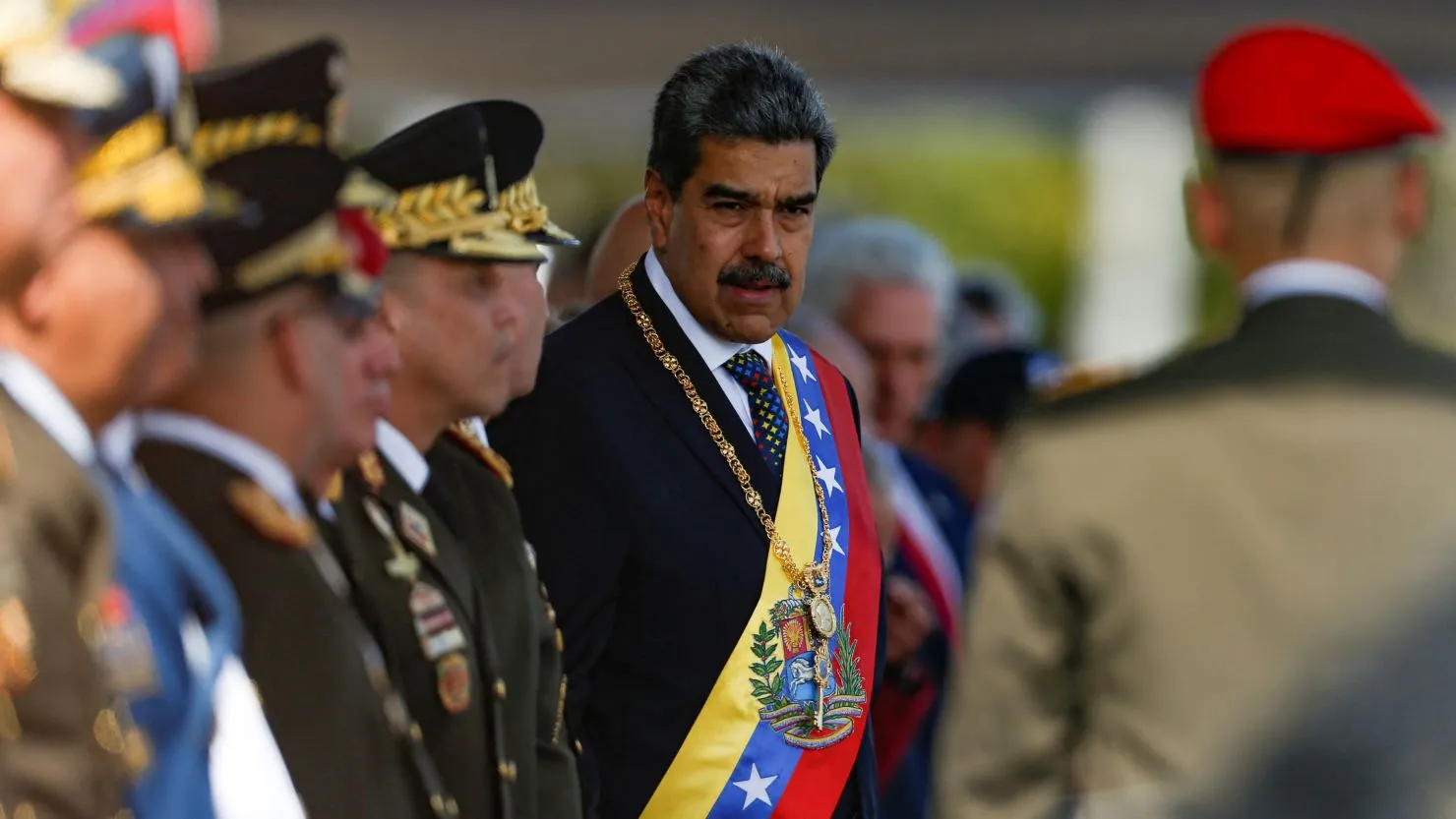
Venezuelan President Nicolás Maduro announced the activation of 4.5 million territorial militiamen across the country, calling it a special security plan aimed at reinforcing national defense.
He presented the initiative during a meeting with governors and mayors from the ruling coalition and described it as a strategy to build a fusion of civilians, police, and armed forces.
Maduro emphasized that the mobilization will integrate workers’ and farmers’ militias, as well as combat groups inside factories and workplaces. He framed the step as a guarantee of peace and sovereignty, declaring that Venezuelans stand ready to resist any offensive.
The president expressed gratitude for solidarity shown by allied nations while accusing Washington of promoting a hostile narrative against his government.
The move comes as U.S. Southern Command increases its presence in the Caribbean. On August 14, the U.S. Navy confirmed the deployment of the Iwo Jima Amphibious Ready Group and the 22nd Marine Expeditionary Unit, totaling about 4,500 personnel.
The mission focuses on counter-narcotics operations in the southern Caribbean, an area Washington has identified as a key trafficking corridor. The U.S. Coast Guard recently reported drug seizures worth over 138 million dollars in these waters.
Venezuela’s Defense Minister, Vladimir Padrino López, accused Washington of creating a pretext for possible actions of force, pointing to the American deployment as evidence of a campaign of pressure.
Maduro reinforced that position and linked the mobilization of the militias to defending the country against what he sees as external threats. The backdrop includes direct pressure from U.S. authorities.
U.S. Reward for Maduro Raises Stakes Amid Regional Tensions
On August 7, U.S. Justice Department official Pamela Bondi announced a 50 million dollar reward for information leading to Maduro’s capture, citing alleged links to international narcotrafficking.
Maduro rejected the accusations and argued that his government enjoys broad support, claiming more than 80 percent of Venezuelans back stability and coexistence. By activating millions of militia members, the government sends a signal both outward and inward.
Outward, it demonstrates resolve to confront what it portrays as foreign aggression. Inward, it strengthens political control by involving workers, farmers, and communities directly in defense structures.
The deployment of U.S. forces in the Caribbean and Venezuela’s mass mobilization of militia illustrate how the struggle over narcotrafficking charges has become entangled with regional power and sovereignty.
While Washington frames its actions as a maritime security operation, Caracas presents them as evidence of a looming threat. Both narratives shape how the conflict is understood, and both carry implications for trade, energy security, and stability in the region.
More: Latin America news in English, every day from The Rio Times.
This article was produced by The Rio Times’ automated newsroom system. How we use AI · Report an error · Editorial responsibility: Matthias Camenzind, Editor-in-Chief
In depth
Read More from The Rio Times