49,000 Small Businesses Vanish as Mexico’s Informal Economy Surges
Key Facts
— —45,279 microenterprises and 3,845 small businesses have closed since December 2022, according to BBVA Research.
— —March 2026 formal job creation hit 32,930 — the weakest March since 2010, excluding the pandemic.
— —Informal employers grew 7.6% in 2024 and 2.1% in 2025, widening the gap with the shrinking formal sector.
A new BBVA Research report reveals that Mexico business closures have wiped out nearly 50,000 micro and small enterprises since late 2022 — and the formal labor market is shrinking with them.
The Rio Times, the Latin American financial news outlet, reports that Mexico’s formal business base is contracting at an alarming pace. BBVA Research, the economics division of Mexico’s largest bank by market share, found that 45,279 microenterprises and 3,845 small businesses have disappeared from the national social security registry since December 2022. The trend accelerated in the first quarter of 2026, with formal employer rolls shrinking an additional 1.9% from the prior year’s average.
Mexico Business Closures Hit the Smallest Hardest
The closures are concentrated among the most vulnerable firms. Microenterprises — those with one to five registered employees — account for more than 92% of the shutdowns, with small businesses of six to 50 workers making up the rest.
BBVA economist David Cervantes Arenillas, the report’s author, noted that these firms face rising labor costs and weak demand simultaneously, leaving them with little capacity to absorb the pressure.
The minimum wage has risen sharply under successive government mandates — reaching 315 pesos per day in 2026, roughly triple the level a decade ago. While these increases have improved purchasing power for workers who keep formal jobs, BBVA warns that sustained hikes in a low-growth, low-productivity environment are pushing employers toward informality or outright closure.
Formal Job Creation at a 16-Year Low
The broader employment picture reinforces the alarm. In March 2026, employers registered just 32,930 new workers with the Mexican Social Security Institute (IMSS) — the weakest March reading since 2010. First-quarter job creation totaled 207,604 positions, down 8.4% from the same period in 2025.
Stripping out gig-economy platform workers — a category Mexico only recently began tracking — annual formal employment growth drops from 1.2% to just 0.5%. That underlying weakness suggests the headline number masks a deeper structural deterioration in the formal labor market that has been building for months.
Manufacturing Contracts, Informality Expands
By sector, manufacturing has now contracted for 15 consecutive months on an annual basis. Commerce posted a monthly decline of 0.49% in March, consistent with slowing consumer demand. Agriculture also remains in negative territory.
Only the services sector showed resilience, growing 0.63% month-on-month and 1.9% year-on-year.
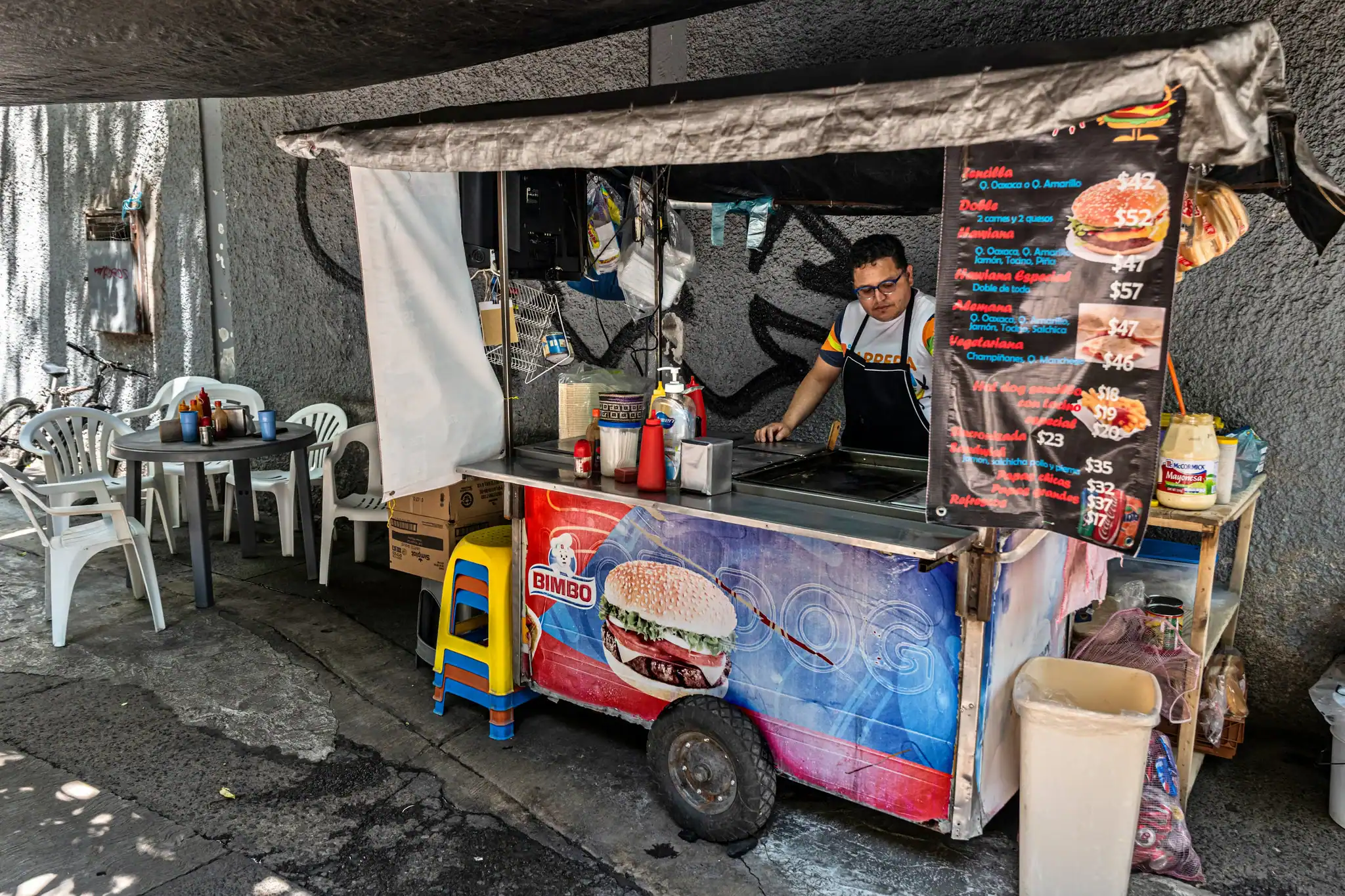
Meanwhile, informal employers are expanding rapidly. According to national labor survey data, the number of employers operating outside the formal system grew 7.6% in 2024 and another 2.1% in 2025. The divergence is stark: as formal businesses shut down, informal operators fill the gap — but without tax contributions, social security coverage, or worker protections.
Investment Drought Deepens the Problem
BBVA tied the employment weakness directly to collapsing investment. Gross fixed capital formation fell 2.2% year-on-year in January, while business confidence has remained below the 50-point threshold — the line separating expansion from contraction — for 13 consecutive months. The report concluded that without a meaningful recovery in investment and a more favorable operating environment, the nearshoring opportunity that Mexico has been banking on will continue to bypass the smallest firms.
Regionally, Mexico City and the State of Mexico led what little job creation exists. The south and southeast — where the Sheinbaum administration has concentrated infrastructure spending — continue to lag. The geographic imbalance mirrors the sectoral one: growth is concentrated in services and urban centers, while manufacturing towns and rural areas bear the brunt of the contraction.
For investors tracking Mexico’s trajectory, the BBVA data adds to a growing body of evidence that the country’s labor market formalization — once a signature achievement of the post-pandemic recovery — is now reversing. The question is whether policy adjustments arrive before the formal business base erodes further, or whether Mexico settles into a structurally higher informality equilibrium that limits tax revenue, productivity growth, and long-term competitiveness.
Related Coverage
Mexico’s Q1 2026 Formal Employment Data •
Nearshoring Mexico 2026: Complete Guide •
Mexico Economy 2026 Guide
More: Latin America news in English, every day from The Rio Times.
This article was produced by The Rio Times’ automated newsroom system. How we use AI · Report an error · Editorial responsibility: Matthias Camenzind, Editor-in-Chief
In depth