Lula’s Lisbon Sarcasm: Give Trump the Nobel, Let the Wars End
Key Facts
— — Lula told reporters in Lisbon on Tuesday, April 21, that the Nobel committee should “just give” Trump the Peace Prize so the US president can “stop the wars,” framing the suggestion as open sarcasm alongside Prime Minister Luís Montenegro at the Palácio de São Bento. The line came hours before Lula returned to Brasília from a three-country European tour.
— — The tour linked Spain, Germany, and Portugal into a coordinated defense of multilateralism. Lula praised Pedro Sánchez for refusing US forces access to Spanish bases against Iran, championed the EU-Mercosur trade pact at Hannover Messe, and positioned Portugal as Brazil’s “great gateway” into the EU single market ahead of the May 1 provisional entry into force.
— — The Nobel reference carries historical weight: the 2025 Peace Prize went to Venezuelan opposition leader María Corina Machado, and the White House publicly attacked the Norwegian committee for overlooking Trump’s claim to have resolved eight wars. Lula’s sarcasm lands the same week the Ramagem expulsion crisis reopened a rhetorical front between Brasília and Washington.
The Lula Trump Nobel Peace Prize exchange is not a throwaway quip—it is the rhetorical closing of a European tour calibrated to signal that Brasília refuses to choose between Washington and Beijing, refuses to treat US tariff pressure as inevitable, and refuses to let Trump’s peace branding go unanswered from the Global South.
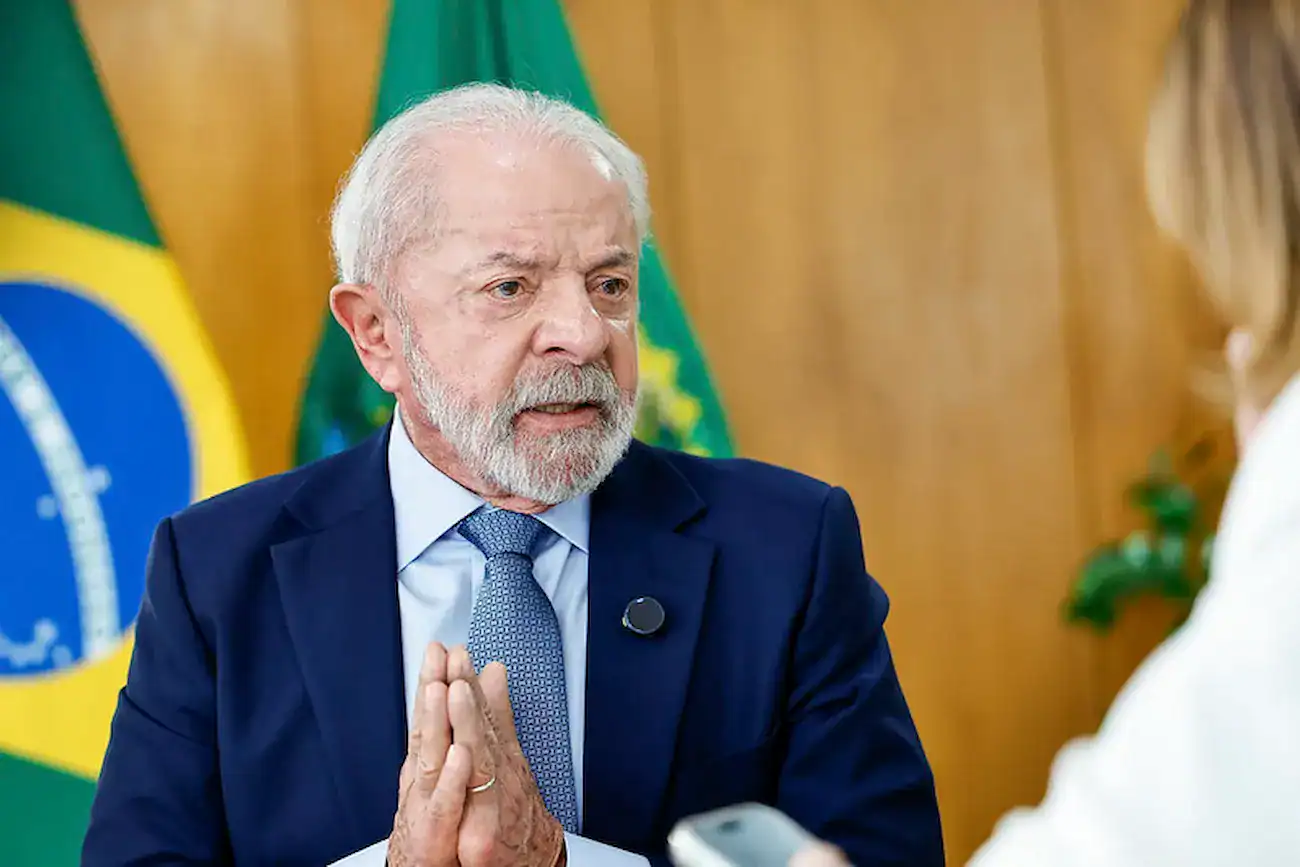
Brazilian President Luiz Inácio Lula da Silva used his April 21 press conference in Lisbon to deliver the sharpest line of his European tour, telling reporters the Nobel committee should “just give” Donald Trump the Peace Prize so the wars can end. The Rio Times, the Latin American financial news outlet, reports that the sarcasm closed a three-country trip through Spain, Germany, and Portugal built around a coordinated defense of multilateralism against what Lula calls the “unilateralism and protectionism” of the second Trump administration.
Standing beside Portuguese Prime Minister Luís Montenegro at the Palácio de São Bento, Lula said every day brings new Trump statements — “I don’t know if they are jokes or not” — claiming credit for ending eight wars while complaining about being passed over for the Nobel. The Brazilian president then offered his punchline: if the prize will stop more wars, the committee should hand it over and let the world “live in peace, calmly.”
The Lula Trump Nobel Peace Prize Line in Context
The Nobel reference is not a one-off joke. Trump has repeatedly said since returning to the White House in January 2025 that he deserves the Peace Prize for resolving conflicts in the Middle East, the Caucasus, Africa, and South Asia — a claim most independent observers describe as significantly overstated. When the Norwegian committee instead awarded the 2025 prize to Venezuelan opposition leader María Corina Machado in October, the White House publicly criticized the decision.
That backdrop made Lula‘s Lisbon sarcasm unusually pointed. He was not inventing a frame but throwing Trump’s own recurring grievance back across the Atlantic. The Brazilian president paired the punchline with a substantive argument: the planet is living through the largest number of armed conflicts since the Second World War, and “not a single institution is capable of saying the word peace.”
That line echoed his Barcelona Forum Democracia Sempre speech on April 18 and his Hannover Messe keynote on April 19. Three venues, one message — which is the entire point of the tour’s choreography.
Multilateralism vs. “Second Cold War”
In the same Lisbon declaration, Lula laid out the policy framework behind the sarcasm. Brazil, he said, is an open opponent of unilateralism and protectionism and is touring the world to push for reform of the UN Security Council and the UN Charter itself. The geopolitics of 1945, he argues, no longer fit 2026.
On the US-China rivalry, Lula was explicit: Brazil rejects any “second Cold War” and has “no commercial preference” between Washington and Beijing. That stance connects the Lisbon statement to the El País interview he gave ahead of the Barcelona summit, in which he told the Spanish newspaper that Trump had “no right to wake up in the morning and threaten a country.”
The Hannover speech extended the same argument into trade. Lula used the German industrial fair to frame the EU-Mercosur agreement as the antidote to unilateral tariff diplomacy, telling the audience that on May 1 a market of 720 million people and US$22 trillion in combined GDP would begin operating under preferential rules.
Why Portugal Matters After the Mercosur Deal
Beyond the Nobel line, Lula’s Lisbon stop carried concrete commercial intent. The president described Portugal as the “great gateway” for Brazilian companies entering the European Union single market once the Mercosur-EU pact takes effect. Montenegro, for his part, reaffirmed Portuguese support for the provisional implementation that begins May 1.
The framing matters for Brazilian exporters. Brazil and Portugal share language, legal familiarity, and more than 4,000 Brazilian-owned companies already operating on Portuguese soil. Lisbon has positioned itself as the softest landing point for Brazilian firms that want European presence without first navigating French, German, or Italian regulatory environments.
Lula also used the press conference to announce a late lunch with Portuguese President Marcelo Rebelo de Sousa, calling it a long-delayed courtesy visit — he was the only head of state invited to the president’s 2016 inauguration who had not visited since.
Middle East and the UN “Insensatez” Argument
In Lisbon, Lula labeled the Iran war a “guerra da insensatez” — a war of senselessness — and said the world’s poorest populations were paying the economic price for what he called irresponsible geopolitical decisions. He reiterated a call for UN Charter reform and argued that the Security Council had lost the capacity to mediate.
The Iran framing dovetails with Brazil’s own diplomatic year. Itamaraty condemned the US-Israeli strikes on Iranian targets in late February, and Brazilian foreign policy toward the Middle East has since become a central fault line of the 2026 election campaign. Senator Flávio Bolsonaro, the opposition’s presidential candidate, has accused Lula of aligning Brazil with authoritarian regimes — a critique Lula answered indirectly in Lisbon by insisting on equidistance from all major powers.
Lula also cited Spain’s Pedro Sánchez approvingly for refusing US forces the use of Spanish military bases to strike Iran — a gesture Lula framed in Barcelona as a model for democracies resisting unilateral military pressure.
Timing: The Tour and the Ramagem Crisis
The Nobel sarcasm landed the same week as a separate US-Brazil rupture. On April 20, while Lula was still in Hannover, the US State Department ordered Brazilian Federal Police liaison officer Marcelo Ivo de Carvalho to leave the United States — a retaliation for the delegate’s role in the brief April 13 detention of fugitive former congressman Alexandre Ramagem in Orlando.
Itamaraty has formally disputed the US decision and, according to CNN Brasil reporting, the Planalto is actively considering expelling US agents working in Brazil under a 2025-renewed bilateral law-enforcement memorandum. The US-Brazil relationship has oscillated between thaw and rupture for more than a year, and Lula’s Lisbon Nobel line reopens the rhetorical front even as his foreign-ministry team negotiates damage control.
The contrast with Argentina is now unmistakable. Javier Milei signed the Isaac Accords with Benjamin Netanyahu in Jerusalem on April 19, positioning Argentina as the anchor of a Trump-aligned counter-terrorism bloc in Latin America. Lula, the same weekend, was in Hannover defending Mercosur-EU and in Lisbon mocking Trump’s Nobel claim — two entirely different regional bets on the shape of the 2026 international order.
What to Watch
Lula returns to Brasília with the EU-Mercosur provisional implementation nine days away and a domestic political calendar that tightens by the week. The 8th PT National Congress opens April 24 and is expected to formalize his fourth-term candidacy. October’s first round is five months out, and the Ramagem expulsion dispute remains unresolved at diplomatic-channel level.
The Nobel line itself is unlikely to produce a direct US response — Trump’s team rarely engages foreign-leader sarcasm at the principal level. What it may produce is a sharper domestic debate in Brazil about whether Lula’s open multilateralist posture costs the country trade leverage at a moment when tariffs, sanctions, and intelligence cooperation are all on the negotiating table.
For international readers tracking the Lula Trump Nobel Peace Prize exchange, the signal is simpler: Brasília is not softening its public line on US unilateralism regardless of how tense the bilateral working relationship becomes. The European tour was the venue. The Nobel reference was the slogan.
Related Coverage: Lula to El País on Trump • Lula Opens Hannover Messe • Isaac Accords: Milei–Netanyahu in Jerusalem
More: Brazil news in English, every day from The Rio Times.
This article was produced by The Rio Times’ automated newsroom system. How we use AI · Report an error · Editorial responsibility: Matthias Camenzind, Editor-in-Chief