Lula to El País: “Trump Has No Right to Wake Up and Threaten a Country”
Key Facts
— — Brazilian President Luiz Inácio Lula da Silva gave El País a wide-ranging pre-trip interview published Wednesday ahead of the April 17 bilateral summit with Spain’s Pedro Sánchez in Barcelona. “Trump has no right to wake up in the morning and threaten a country,” he said, calling for reform of the UN Security Council and an end to its veto power: “The geopolitics of 1945 does not work for 2026.”
— — Lula confirmed he is preparing to seek a fourth term in October 2026 and dismissed concerns about close polls against Senator Flávio Bolsonaro: “The elections haven’t even started. This will be like a Barça-Real Madrid clásico—when the team enters the field, the most competent prevails.” A Quaest poll released the same day showed Flávio Bolsonaro at 42% versus Lula at 40% in a second-round scenario, a statistical tie within the 2-point margin of error.
— — On Venezuela: “If I were Venezuelan and vice president, I would take office and call general elections.” On Cuba: “Seventy years of blockade has no explanation.” On Milei: “I have no relationship with him, nor any interest in one.” On the EU-Mercosur deal entering force May 1: “750 million people, a GDP of $22 trillion—a very successful start.”
Lula chose Barcelona over Washington this month. The interview that preceded the trip frames the choice: rearmament is not the answer, the UN is broken, the clasíco is coming, and at 80 he still has—by his own accounting—40 more years of political energy to spend.
The Lula Trump Barcelona framing in El País’ Wednesday interview is the most pointed Lula has been on the US-led Iran war since the conflict began, and it arrives forty-eight hours before he lands in Catalonia for a two-day run of summits with Pedro Sánchez, Gustavo Petro, Claudia Sheinbaum, and other progressive leaders. The Rio Times, the Latin American financial news outlet, reports that Lula’s decision to replace a planned Washington White House meeting with a Barcelona bilateral and the Foro Democracia Siempre signals a sharp regional realignment in the middle of the Iran-Hormuz crisis.
The Trump Critique and the UN Argument
Lula told El País he had directly told Trump that “two countries governed by two gentlemen of 80 should talk with great maturity,” while characterizing the US president’s approach to trade and security as “a very wrong game.” On the Iran strike: “I don’t know if he realized the price of fuel would rise and the people would be the ones paying.” The deeper critique targeted the UN system directly: “Neither the invasion of Iraq, nor the French-British invasion of Libya, nor Putin’s invasion of Ukraine, nor the Israeli massacre in Gaza passed through the Security Council.”
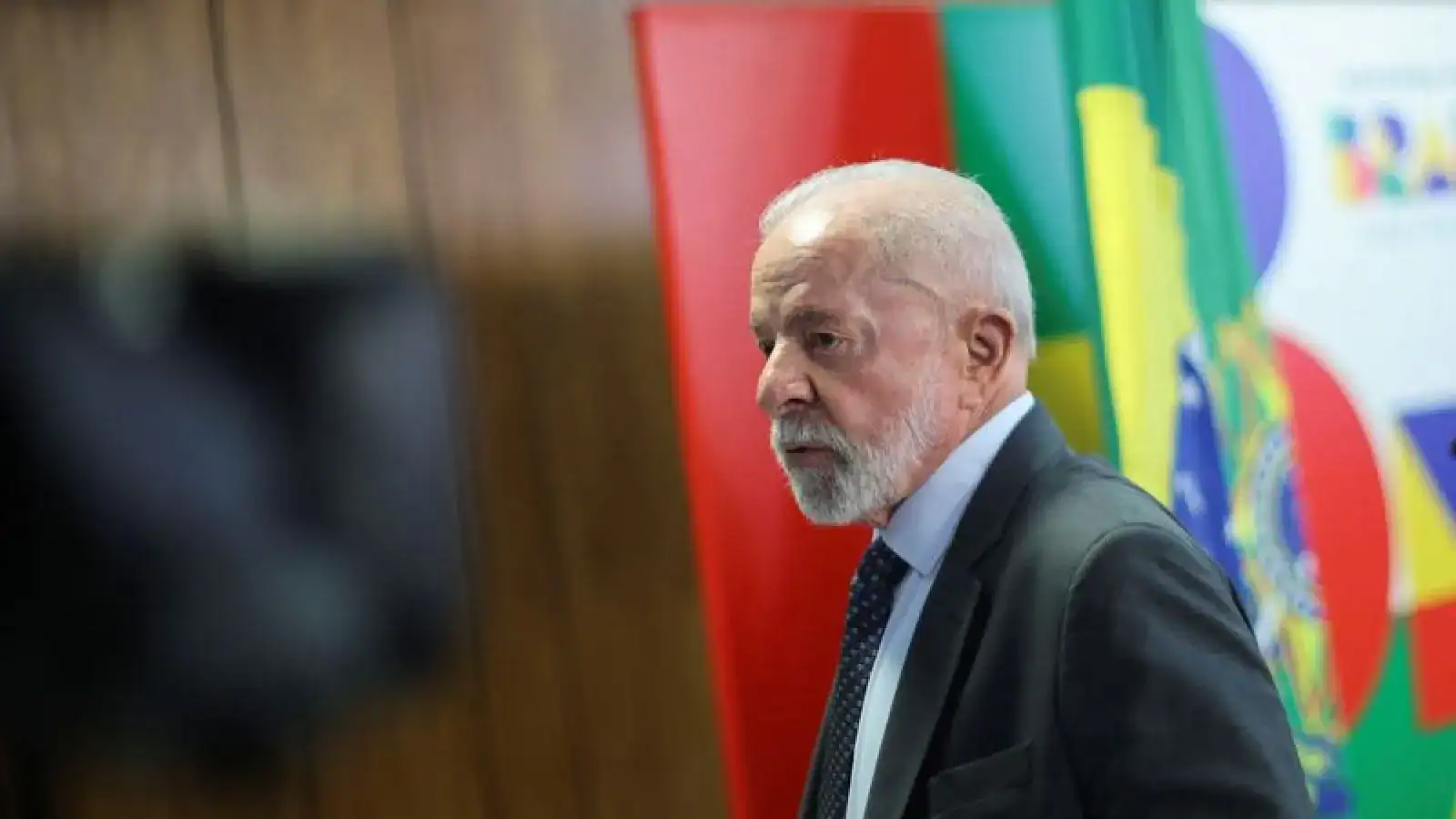
Lula called for abolishing the veto and expanding the Security Council: “In Africa there are countries with more than 120 million inhabitants and none is on the Security Council—neither Brazil, Germany, nor India.” He noted that 2025 saw US$2.7 trillion in global military spending, arguing that “with half of that we end illiteracy, the global energy problem, and hunger for 630 million people.” The line that captures the frame: “The gentlemen of peace have become the gentlemen of war.”
On Venezuela, Cuba, and Milei
Asked whether Venezuela’s government should call new elections now, Lula said the answer was “a problem of Venezuela, not of Brazil” but offered a personal counterfactual: “If I were Venezuelan and vice president, and what happened had happened, I would take office and call general elections. That is what I would do.” The distinction is between process legitimacy and US interference: “What cannot be is that the United States thinks it can administer Venezuela—that does not fit in democracy.”
On Cuba, Lula attacked the seven-decade US embargo: “Seventy years of blockade has no explanation—if those who don’t sympathize with the Cuban regime were worried about the Cuban people, why aren’t they worried about Haiti, which doesn’t have a communist regime? Cuba needs an opportunity.”
On Argentina’s grant of political refugee status to a January 8 coup defendant, he was cold: “I have no relationship with Milei, nor any interest in one; his decisions don’t make me nervous and he has to resolve his problems with the Argentine people.” The closer carried the verdict: “We’ll see what happens when his term ends and what he sowed in Argentina produces.”
The 2026 Campaign and the Bolsonaro Challenge
On the same day El País published the interview, Genial/Quaest released polling showing Flávio Bolsonaro—Senator and son of the jailed former president—at 42% versus Lula at 40% in a hypothetical second round, with a 2-point margin of error. It was the first time the Bolsonaro-family candidate had appeared numerically ahead in the Quaest series, though the match remains a statistical tie. In the first-round scenario Lula leads 37% to 32%, also within margin.
Lula’s answer was sport metaphor: “This will be like a clasíco Barcelona-Real Madrid: the week of the match, everyone thinks they’re going to win, but when the team enters the field, the most competent prevails.” On why the far-right retains strength: “Democracy now owes the people an explanation, because democracy isn’t just receiving the vote on election day—you have to demonstrate that people will work better, earn more, eat better.” The closer: “If we don’t, why should the people believe in democracy?”
What the Barcelona Trip Actually Does
The April 17-18 Barcelona visit is the first-ever Spain-Brazil bilateral summit at head-of-state level, elevating what had been a ministerial-level permanent bilateral commission. Lula travels with 14 ministers and a business delegation, and the agenda focuses on energy, fuels, and energy transition—Brazil already supplies 36.8% of Spanish crude imports. The bilateral on Friday is followed Saturday by the fourth edition of the Foro Democracia Siempre (originally initiated by Chile’s Gabriel Boric and institutionalized by Lula and Sánchez in 2024), bringing together more than a dozen heads of state including Mexican President Claudia Sheinbaum and Colombia’s Gustavo Petro.
The EU-Mercosur trade deal entering force on May 1 adds commercial weight: 750 million people, combined GDP of US$22 trillion. For Lula, the trip is simultaneously a statement about what Brazil chooses not to do with Washington and a preview of how he plans to campaign for the October 2026 first-round vote now framed as the fiscal-handoff election.
Related Coverage: Brazil 2027 Budget Law • IMF Clears Argentina Second Review • Brazil Oil Exports to China Double
More: Brazil news in English, every day from The Rio Times.
This article was produced by The Rio Times’ automated newsroom system. How we use AI · Report an error · Editorial responsibility: Matthias Camenzind, Editor-in-Chief