How a U.S. Raid and an Oil War Are Accidentally Reviving Venezuela’s Economy

Key Facts
— — Venezuela’s GDP may grow 12% in 2026 — the fastest in Latin America — driven by war-elevated Brent prices above $100, the lifting of most US sanctions under the Trump-Rodríguez rapprochement, and the resumption of exports to previously closed markets including Peru’s first Venezuelan crude purchase since 2009
— — The IMF and World Bank announced this week they are restoring formal ties with Venezuela under acting President Delcy Rodríguez — ending a seven-year suspension — while Chevron nears a deal to expand its largest Venezuelan project at Petropiar into the Ayacucho 8 block
— — The recovery paradox: workers still earn under $1 per month, inflation remains in triple digits, the bolivar has lost 10% since Maduro’s capture, and opposition leader María Corina Machado commands 82% support in polls but remains proscribed from running — growth is filling state coffers, not households
— Deep Dive
— For the complete picture, see our guide: Venezuela Crisis 2026.
The Rio Times, the Latin American financial news outlet, reports that the Venezuela economy recovery unfolding in 2026 is the most consequential — and most cynical — macroeconomic story in the Western Hemisphere. Two geopolitical shocks that were never designed to help ordinary Venezuelans are producing GDP growth that the country has not seen in over a decade: the January 3 US special forces raid that captured Nicolás Maduro, and the February 28 Iran war that sent oil prices above $100.
Acting President Delcy Rodríguez — Maduro’s former vice president, now running the country under de facto US oversight — signed a new hydrocarbons law on January 29 allowing private companies to control Venezuelan oil production for the first time since Hugo Chávez’s nationalization era. Chevron, Eni, and Repsol are all operating at full production, and Chevron is negotiating to expand into the Ayacucho 8 block in the Orinoco Belt.
Venezuela Economy Recovery: The Numbers Behind the Boom
The 12% growth projection, cited by columnist Andrés Oppenheimer in Reforma, draws on three converging tailwinds: Brent crude averaging above $100 since the Iran war began, the removal of most US sanctions, and the reopening of export markets including Peru. Oil activity surged 18.2% in Q1 2025, before either the Maduro raid or the Iran war occurred — suggesting that the baseline was already recovering. The Hormuz disruption simply supercharged the trend.
This week, the IMF and World Bank announced the restoration of formal ties with Venezuela after a seven-year suspension — opening the door to technical assistance and potential financing. Rodríguez projected $1.4 billion in fresh oil investment. Venezuela holds 303 billion barrels of proven reserves, the largest on Earth, yet produces only a fraction of its potential after years of PDVSA mismanagement and sanctions collapsed output from 3 million barrels per day in 1998 to roughly 700,000 by 2024.
The Paradox: GDP Booms While Workers Earn Less Than $1
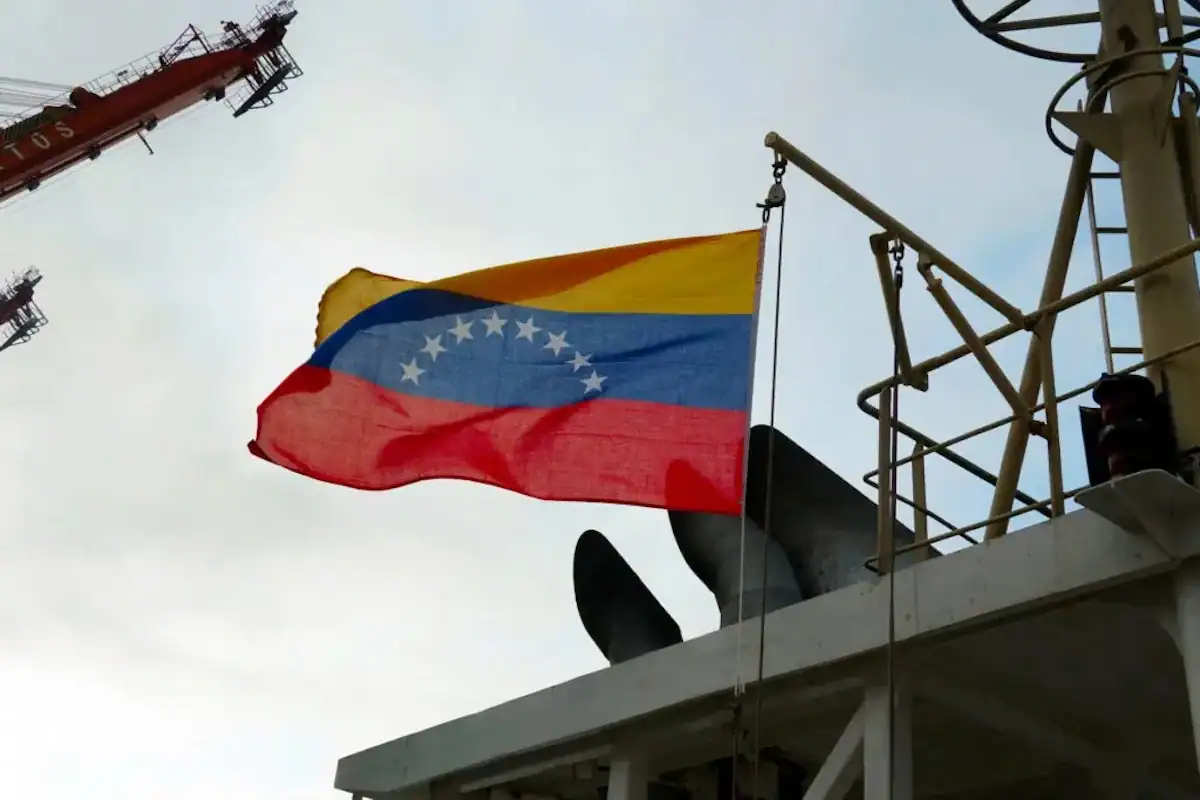
The macro numbers obscure a devastating human reality. Venezuelan workers staged protests on April 9 in Caracas, storming police lines, because the minimum wage remains under $1 per month while inflation still runs in triple digits and the bolivar fell from 300 to 330 per dollar after Maduro’s capture. Remittances from the Venezuelan diaspora — estimated at $4-5 billion annually — remain a larger source of household income than wages for millions of families.
Foreign Affairs described the situation as “Venezuela’s treacherous recovery” — growth and activity surging while the population sees none of the benefits, political prisoners are released slowly, and the opposition leader who commands 82% support in polls remains barred from running. Trump is too distracted by the Iran war to pressure Caracas on elections, and Rodríguez has every incentive to delay them indefinitely.
Live Market IntelligenceCommodities — Live Market Board
Rio Times · Live Market Intelligence
Commodities — Live Market Board
-0.03%
| Instrument | Last | Change | YoY | Prev. | High | Low | Volume |
|---|---|---|---|---|---|---|---|
| GOLD | 4,461 | +1.78% | +33.20% | 4,383 | 4,503 | 4,421 | 139,824 |
| SILVER | 65.59 | +1.26% | +73.05% | 64.77 | 66.98 | 64.81 | 46,406 |
| BRENT | 88.88 | -0.03% | +34.42% | 88.91 | 90.07 | 88.12 | 29,713 |
| WTI | 83.11 | -0.11% | +31.57% | 83.20 | 84.35 | 82.40 | 166,848 |
| COPPER | 6.61 | +0.03% | +46.70% | 6.61 | 6.71 | 6.61 | 39,543 |
| LITHIUM | 75.20 | +1.47% | +62.95% | 74.11 | 75.80 | 75.08 | 89,275 |
| IRON ORE | 161.91 | — | +58.10% | 161.91 | 161.91 | 1 | |
| SOY | 1,184 | +3.20% | +17.05% | 1,148 | 1,199 | 1,168 | 163,179 |
| CORN | 480.50 | +10.02% | +29.34% | 436.75 | 480.75 | 459.50 | 341,248 |
| WHEAT | 655.00 | +3.93% | +29.70% | 630.25 | 657.75 | 631.50 | 128,793 |
| COFFEE | 317.25 | -5.51% | +0.67% | 335.75 | 321.20 | 313.55 | 21,747 |
| SUGAR | 16.43 | -1.79% | -3.01% | 16.73 | 17.11 | 16.22 | 171,992 |
| COCOA | 5,719 | +3.18% | -34.96% | 5,543 | 5,779 | 5,574 | 26,773 |
| ORANGE JUICE | 138.55 | -0.47% | -45.38% | 139.20 | 141.05 | 137.50 | 703 |
| COTTON | 85.03 | +2.33% | +26.78% | 83.09 | 82.90 | 81.96 | 16,546 |
| BEEF | 223.60 | -3.93% | -5.18% | 232.75 | 226.40 | 223.00 | 16,126 |
| CATTLE | 339.10 | -3.16% | -1.82% | 350.17 | 345.50 | 338.60 | 10,164 |
| USD/BRL | 5.16 | +0.01% | -5.13% | 5.16 | 5.18 | 5.14 | — |
What It Means for Latin America’s Energy Map
Columbia University’s Center on Global Energy Policy concluded that the Iran war has “significantly enhanced Latin America’s geopolitical advantage as a reliable source of hydrocarbon resources.” Venezuelan oil ships through the Caribbean and Atlantic to US Gulf Coast refineries — a route entirely free of Middle Eastern chokepoints — and those refineries were specifically designed to process heavy Venezuelan crude.
The consensus among energy analysts: Venezuela could realistically reach 1.5 million barrels per day within 18 months and 3 million within five years, assuming sustained foreign investment of $20-30 billion annually. That investment surge is now beginning, driven not by democratic progress but by war economics and strategic necessity. Venezuela’s recovery is real — and its moral cost is enormous.
More: Latin America news in English, every day from The Rio Times.
This article was produced by The Rio Times’ automated newsroom system. How we use AI · Report an error · Editorial responsibility: Matthias Camenzind, Editor-in-Chief