Embraer Negotiates KC-390 Sales With Up to 10 Countries, Says CEO
Embraer, Brazil’s leading aircraft maker, is in talks with as many as ten countries to sell its KC-390 military transport aircraft, according to official company statements.
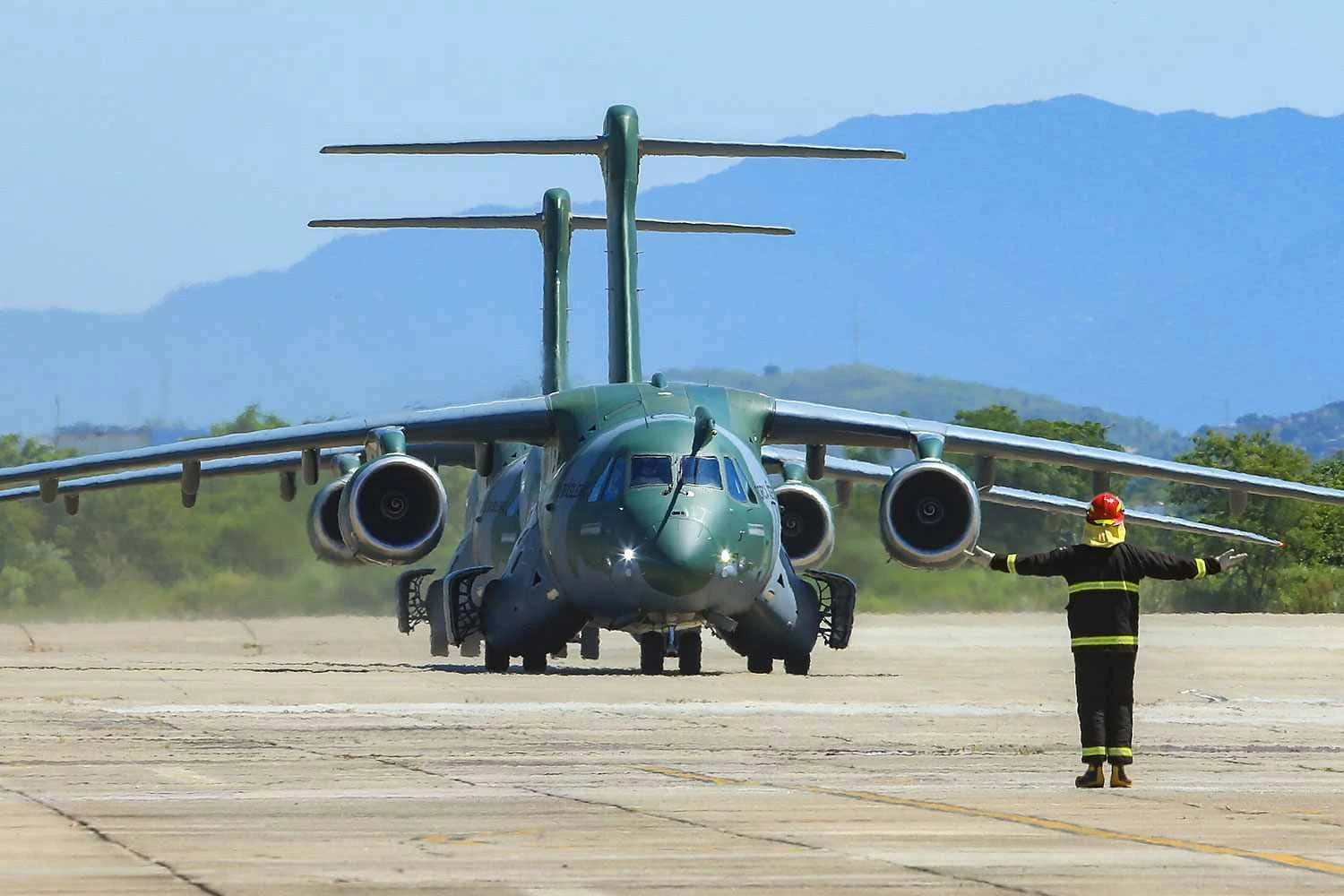
The KC-390, designed for cargo transport, troop movement, medical evacuation, and aerial refueling, has become a strong contender in the global market due to its advanced technology and cost-effective operation.
Recent developments highlight the KC-390’s growing reach. Portugal, a key partner and the first European customer, has expanded its order to six aircraft and secured ten additional purchase options for other NATO members.
The Netherlands has signed on for a new aeromedical evacuation version, while Hungary, Austria, Sweden, Czech Republic, and South Korea have also placed orders or begun deliveries.
Lithuania and Slovakia have entered advanced talks, and Morocco and South Africa have evaluated or shown interest in the aircraft. Beyond Europe, Embraer is negotiating with Poland, Türkiye, Finland, India, and Saudi Arabia.
The company has also signed a cooperation agreement with Turkish Aerospace Industries to explore joint production and technology transfer.
Embraer’s CEO has identified Europe and NATO as the main markets for the KC-390, but sees opportunities in Asia and the Middle East, where many countries need to replace aging cargo fleets.
Embraer’s KC-390 Redefines Military Airlift with Versatility
The KC-390 stands out for its versatility and performance. It can carry 26 tons of cargo, transport up to 66 fully equipped troops, and operate from short or semi-prepared runways. Its fly-by-wire controls and commercial jet engines improve safety and reliability.
The aircraft can also be quickly reconfigured for missions such as firefighting, search and rescue, or in-flight refueling. Portuguese Air Force data shows a 99% mission availability rate, with over 400 flight hours on a single aircraft.
Embraer’s defense division has driven the company’s financial growth. In 2024, Embraer reported record revenue of $6.4 billion, a 21% increase from the previous year, and expects up to $7.5 billion in 2025.
The company forecasts global demand for 500 aircraft in this class over the next two decades and aims to capture a significant share. Production slots for the KC-390 are booked until at least 2035.
Portugal’s move to secure options for other NATO countries reflects concerns about future availability and a desire for closer European cooperation. Embraer is also considering a final assembly line in Poland and exploring U.S. market entry through partnerships or acquisitions.
The KC-390’s rise marks a shift in the military airlift market. Embraer’s approach combines practical engineering, international partnerships, and a focus on customer needs.
As more countries seek modern, reliable, and flexible transport aircraft, the KC-390 offers a strong alternative to older models, strengthening Brazil’s position in the global defense industry.
More: Morocco news in English, every day from The Rio Times.
Live Company IntelligenceEmbraer SA ADR — the full investor dossier
Wall Street view
Valuation & profitability
Price & risk
$59.0952-wk high
$66.87
Revenue trend · 6y
Ownership
Dividend
This article was produced by The Rio Times’ automated newsroom system. How we use AI · Report an error · Editorial responsibility: Matthias Camenzind, Editor-in-Chief