Interim President Stops Peru’s Largest-Ever Defense Contract

Key Facts
— — Peruvian interim President José María Balcázar canceled a US$3.5 billion signing ceremony for 24 Lockheed Martin F-16 Block 70 fighter jets hours before it was scheduled on Friday April 17, arguing a transitional government should not commit the next administration.
— — US Ambassador Bernie Navarro responded within hours by threatening “all available tools” against anyone who negotiates “in bad faith” with Washington — a public rebuke without precedent in modern US-Peru diplomacy.
— — At risk are a recent Major Non-NATO Ally designation, a US$1.5 billion US Army Corps of Engineers contract to build a new Peruvian naval base, and the most substantial Latin American defense alignment with Washington outside Colombia.
— Deep Dive
— For the complete picture, see our guide: Peru Elections 2026.
The Peru F-16 deal was supposed to be signed in a closed-press ceremony on Friday April 17. Lockheed Martin executives had flown into Lima, the Agencia de Compras de las Fuerzas Armadas (ACFFAA) had finalized documentation, and US Ambassador Bernie Navarro met President Balcázar at Palacio de Gobierno that same afternoon.
The Rio Times, the Latin American financial news outlet, reports that hours before the scheduled event, Balcázar canceled. He told radio broadcaster Exitosa that committing US$3.5 billion through sovereign bonds was not something a transitional government with five months left in office should decide. “Committing such a large amount of money for the incoming government would be bad practice for a transitional administration,” he said on RPP.
The decision sent the program back to the cabinet for review and left three foreign bidders — Lockheed, France’s Dassault Aviation and Sweden’s Saab — in procedural limbo. Within hours, the US embassy in Lima issued what may be the most openly confrontational public statement by a US ambassador to Peru in decades.
Washington’s Response and the Stakes of the Peru F-16 Deal
Ambassador Navarro posted on X the same Friday night: as a representative of the Trump administration, he would use “every available tool” to protect US interests against anyone acting in bad faith. The language — lifted almost verbatim into wire coverage from Bloomberg, Reuters and EFE — signaled that Washington is treating the postponement as a negotiation failure, not a procedural pause.
The threat has material substance. Under the Trump administration, Peru received designation as a Major Non-NATO Ally, a status category that unlocks preferential access to US defense technology, joint training, and Foreign Military Financing. Peru also holds a US$1.5 billion contract with the US Army Corps of Engineers to build a new naval base — a commitment that was negotiated in parallel with the F-16 package and is implicitly conditioned on continued defense alignment.
Balcázar pushed back publicly against Navarro’s tone, calling his remarks “not drafted in an adequate form” and asking the ambassador to “help ensure that procurement proceeds transparently and democratically, respecting all international procurement procedures, with France and with Sweden.” That framing — “with France and with Sweden” — is the first signal that Lima may reopen competition with Dassault and Saab rather than proceed with Lockheed as preordained.
How Lockheed Became the Preferred Bidder
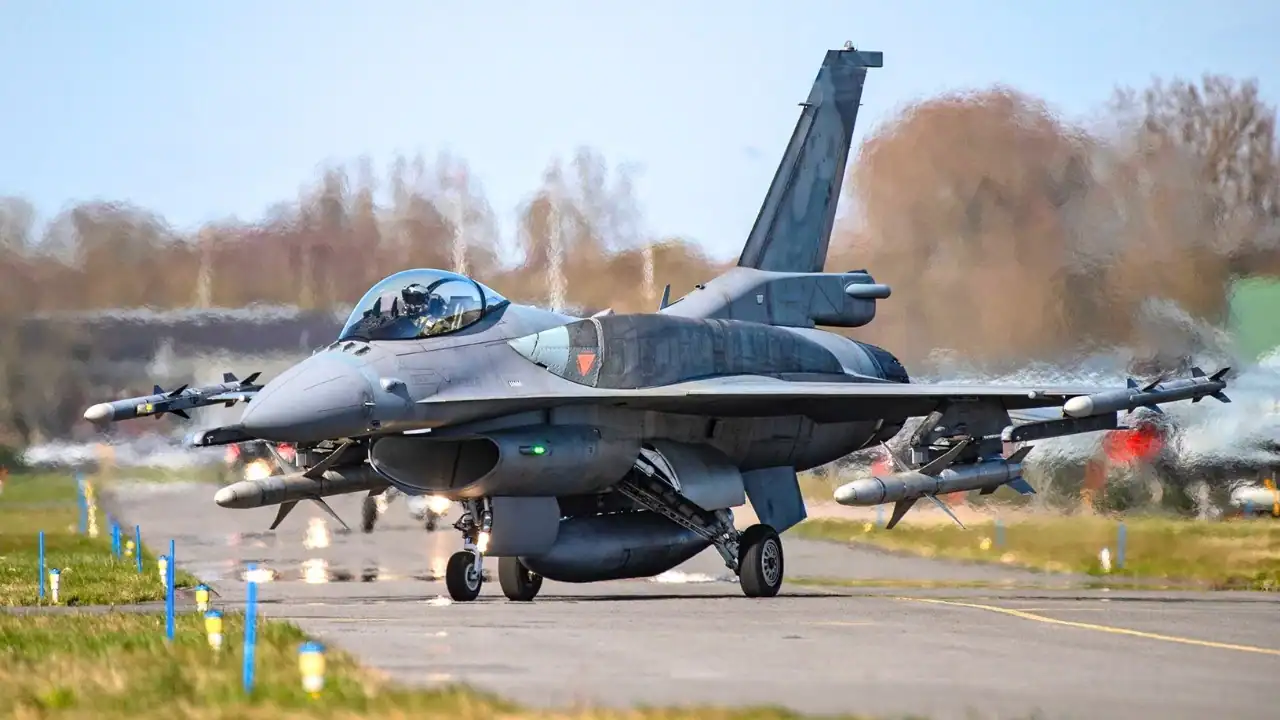
The Fuerza Aérea del Perú (FAP) has been evaluating replacements for its aging MiG-29 and Mirage 2000 fleet since 2012. As documented in prior Rio Times coverage of the May 2025 Washington defense mission, the shortlist narrowed to three finalists: the F-16C/D Block 70, the Rafale F4, and the Gripen E/F. The US Department of State formally approved a US$3.42 billion Foreign Military Sale to Peru on September 15, 2025, initially covering 12 F-16s.
The initial proposals had Lockheed offering only 12 F-16s within Peru’s US$3.5 billion envelope, while Dassault proposed 14 Rafales and Saab 24 Gripens. That numerical gap forced a renegotiation. A Peruvian delegation met Defense Secretary Pete Hegseth in Washington in May 2025, after which the US side improved terms to 24 F-16s in two tranches — US$2 billion for the first 12 and US$1.5 billion for the second twelve.
Saab submitted a formal complaint before the Friday cancellation. Vice President Lars Tossman wrote to Peru’s Defense Ministry noting that Saab had not received any invitation to update or defend its Gripen proposal — its original 2025 offer had expired — and warning that any future decision without a new Gripen evaluation would be procedurally defective. That letter is now part of the administrative record Balcázar cited when calling for transparency.
The Political Dimension
Balcázar is the third consecutive interim president of Peru, sworn in on February 18 after the censure and removal of José Jerí over undisclosed secret meetings. He turned 83 in January and has said he will not stand in the April 12 general election. The runoff is now confirmed between Keiko Fujimori and Rafael López Aliaga, scheduled for June.
López Aliaga has publicly demanded that Balcázar honor the F-16 commitments, warning on X that non-compliance would carry “serious commercial, security, and migration consequences for Peruvians in the United States.” Fujimori’s campaign has not issued a position. Left-wing candidate Roberto Sánchez, still mathematically alive in some scenarios, has questioned whether Peru needs new fighter jets at all.
The Asociación de Oficiales Generales y Almirantes del Perú (Adogen), representing retired flag officers, issued a formal protest on Saturday. “In Peru there are no governments exempt from constitutional responsibility; governing means making critical national-security decisions through the last day of the mandate,” the organization stated.
The Regional Deterrence Calculation
Peruvian military officials have long argued that three of the country’s five neighbors — Brazil, Chile and Colombia — have larger economies and better-equipped air forces. Chile operates F-16 Block 50s, Brazil flies Gripens as its primary platform, and Colombia recently committed to acquiring Gripen E/F aircraft in its own large-scale modernization.
The F-16V Block 70 offers a combat-proven airframe, AESA radar, Auto-GCAS ground-collision avoidance, and integration with AIM-120C-8 AMRAAM and AIM-9X Sidewinder air-to-air missiles. The DSCA package formally approved in September 2025 also included Litening targeting pods, Joint Helmet Mounted Cueing Systems, and an electronic-warfare suite.
Financing was structured as sovereign-bond issuances on the local Peruvian market — US$2 billion in 2025 and US$1.5 billion in 2026, as the Rio Times analysis of fiscal structure detailed last year. Payment timelines run 18 to 25 years. The government targeted delivery of two initial aircraft by July 2026 for a planned Peruvian Independence Day public display.
What Happens Next
Balcázar said the cabinet would revisit the F-16 question “very probably” in the coming week. Three scenarios are live. The first is a revised signing before July that includes new Gripen and Rafale evaluations for procedural cover — the option that would minimize US retaliation.
The second is a genuine deferral to the Fujimori-López Aliaga runoff winner, which risks Lockheed modifying its offer upward on price or downward on scope, as US officials quoted by Bloomberg warned over the weekend. The third is an outright reopening of the tender, which would almost certainly trigger the retaliation Navarro signaled and could threaten the Army Corps of Engineers naval base contract.
Whichever path Balcázar chooses, Peru’s broader US$3.4 billion defense modernization — covering frigates, OPVs, submarines, and transport aircraft in parallel with the fighter tender — now has a credibility deficit with every supplier. As the Rio Times analysis of the congressional approval documented, the program is the largest defense procurement in Peruvian history. The Friday cancellation just made it the most politically contested as well.
More: Latin America news in English, every day from The Rio Times.
This article was produced by The Rio Times’ automated newsroom system. How we use AI · Report an error · Editorial responsibility: Matthias Camenzind, Editor-in-Chief
In depth
Read More from The Rio Times