ELN Declares a Four-Day Ceasefire for Colombia’s Election
Colombia · Politics & Security
Key Facts
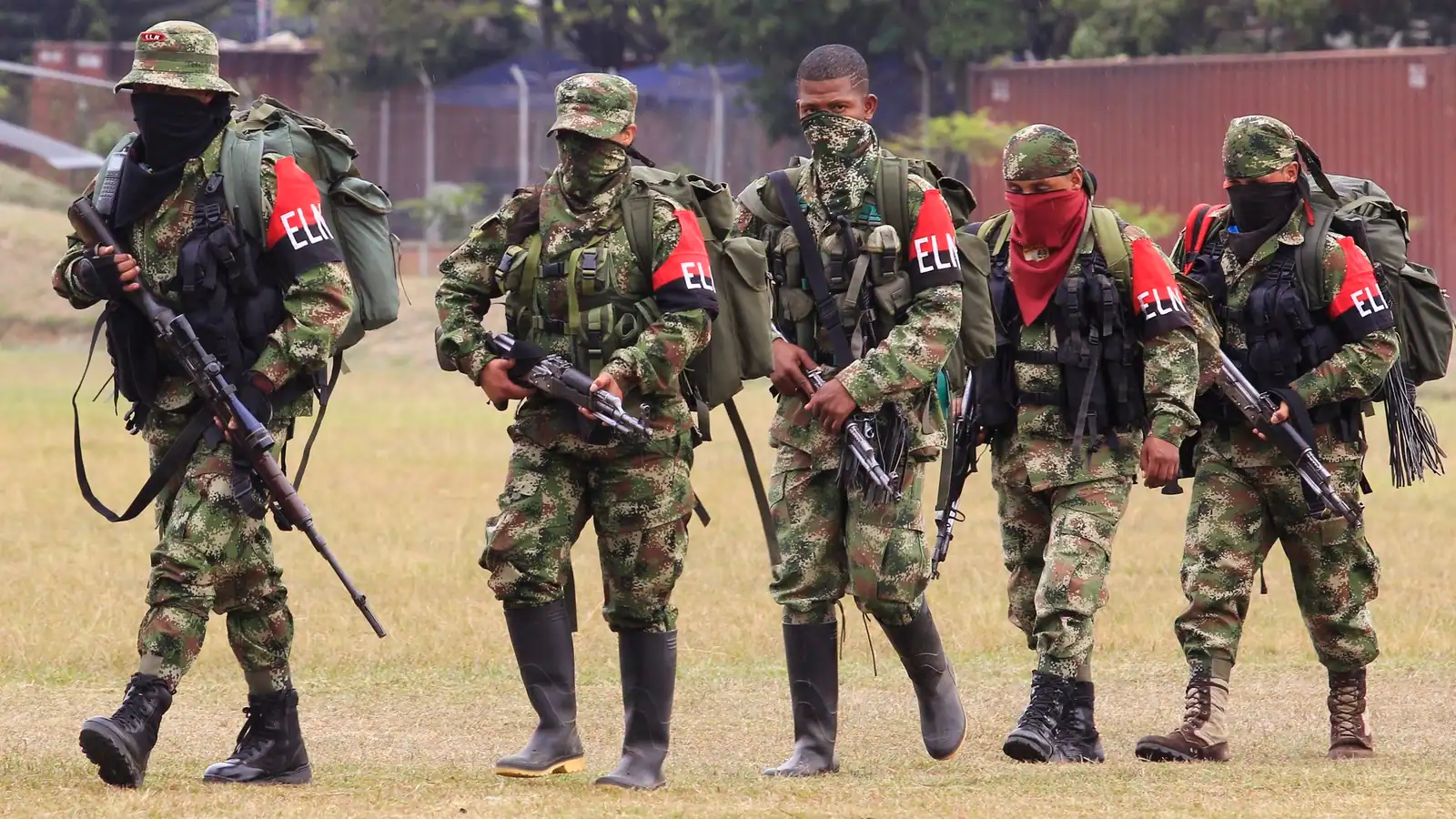
—A four-day truce. The National Liberation Army, or ELN, declared a unilateral ceasefire from midnight on May 30 to midnight on June 2, bracketing Colombia’s May 31 presidential first round.
—A pledge of non-interference. The guerrilla said it respects the free right to vote and ordered its fighters to halt offensive operations against state forces during the window.
—The Clan del Golfo did the same. Colombia’s largest armed group separately announced it would not interfere in the vote, instructing members to stay out of politics.
—Peace talks remain frozen. Government negotiations with the ELN have been suspended since early 2025, after attacks triggered the worst humanitarian crisis in two decades in the Catatumbo region.
—A disputed bombing. The ELN claimed a May 9 military strike near Tibu caused no casualties, contradicting the armed forces, which reported at least seven guerrillas killed.
—A high-stakes vote. The election pits the left’s Ivan Cepeda, who would continue President Petro’s peace approach, against right-wing candidates promising a tougher security line.
A guerrilla group calling a truce so citizens can vote is, on its face, a gesture of restraint. In Colombia, it is also a reminder of who holds power in the territories the state does not fully control. With peace talks frozen and a polarizing election days away, the ELN’s ceasefire is both a courtesy to voters and a signal about its own standing in a violent campaign.
What did the ELN ceasefire announcement say?
The Rio Times, the Latin American financial news outlet, reports that the ELN ceasefire will run from midnight on May 30 to midnight on June 2, covering Colombia’s May 31 presidential first round. In a communique, the National Liberation Army said it respects the free right to vote and would not interfere in the electoral process, ordering its combatants to halt offensive operations against state forces.
The group framed the move as consistent with a long-standing position, saying it has never made it policy to threaten or attack candidates. The gesture is also a familiar one: the ELN has declared similar election-period truces before, a recurring practice during Colombian votes.
Why does it matter for the election?
Because the campaign has unfolded amid serious violence. Candidates have reported intimidation in regions where armed groups hold sway, and the security of rural polling has been a central concern. A pause from the ELN, alongside a similar pledge from the Clan del Golfo, could lower the risk of disruption on voting day in contested territories.
The stakes are high. The vote will choose President Gustavo Petro’s successor, with the left’s Ivan Cepeda, who would extend Petro’s negotiation-based approach, running against right-wing candidates such as Abelardo de la Espriella and Paloma Valencia, who promise to confront armed groups with force. The outcome will shape whether peace talks resume or give way to a harder security line.
Where do peace talks stand?
They are frozen. President Petro pursued dialogue with the ELN under his “Total Peace” policy, but negotiations were suspended in early 2025 after a wave of ELN attacks and clashes with FARC dissidents triggered what observers called the worst humanitarian crisis in two decades in the Catatumbo region, killing scores and displacing tens of thousands.
Tensions remain raw. In its statement, the ELN claimed a May 9 military strike near Tibu, in Norte de Santander, fell into the void and caused no casualties, directly contradicting the armed forces, which said the operation killed at least seven guerrillas and dismantled a security unit of the group’s central command. The dispute underscores how far apart the two sides are.
How are the rival narratives playing out?
The ceasefire lands in a charged information environment. The ELN says it neither threatens candidates nor coerces voters, and invited anyone pressured to vote a certain way to report it to the official monitoring mechanism set up in the peace process. The Clan del Golfo, in its own statement, explicitly barred members from supporting or pressuring for any candidate.
Critics tell a different story. Former president Alvaro Uribe alleged that the ELN and FARC dissident factions were intimidating voters in the Cauca region to favor the leftist candidate, claims the groups reject. With both sides accusing the other of manipulating the vote, the truce itself has become contested terrain in the final stretch.
What should investors and analysts watch next?
- Whether the truce holds: any violation during the May 30 to June 2 window would signal how much control the ELN’s leadership has over its fronts.
- Voting-day security: turnout and incident reports in contested rural areas will test whether the dual pledges from the ELN and Clan del Golfo translate into calm.
- The election outcome: a Cepeda win points toward renewed peace talks, while a right-wing victory signals a tougher military approach.
- Coercion complaints: reports to the monitoring mechanism will indicate how credible the non-interference pledges really are.
- Post-vote posture: whether the ELN extends restraint or returns to operations after June 2 shapes the security backdrop for the runoff.
More: Colombia news in English, every day from The Rio Times.
Connected Coverage
The vote itself is analyzed in our reporting on how Cepeda leads the first round but loses the runoff math. The collapse of dialogue is detailed in our piece on how Petro’s “Total Peace” strategy unraveled, and the campaign’s danger in our analysis of why Colombia’s elections turn deadly.
Reported by Sofia Gabriela Martinez for The Rio Times — Latin American financial news. Filed May 20, 2026 — 16:00 BRT.
This article was produced by The Rio Times’ automated newsroom system. How we use AI · Report an error · Editorial responsibility: Matthias Camenzind, Editor-in-Chief
Frequently Asked Questions
What is the ELN ceasefire?
It is a four-day unilateral truce declared by Colombia’s ELN guerrilla, running from midnight on May 30 to midnight on June 2 around the May 31 presidential first round. The group pledged not to interfere in the vote and to halt offensive operations against state forces.
Who else announced non-interference?
The Clan del Golfo, Colombia’s largest armed group, separately said it would not interfere in the election, instructing members to stay out of politics and barring them from supporting or pressuring for any candidate. Both pledges aim to ease fears of disruption on voting day.
Are the ELN peace talks still active?
No. Negotiations with the government have been suspended since early 2025, after ELN attacks and clashes with FARC dissidents caused a severe humanitarian crisis in the Catatumbo region. The ceasefire is a one-off election gesture, not a resumption of dialogue.
What is the disputed bombing about?
The ELN claimed a May 9 military strike near Tibu, in Norte de Santander, caused no casualties, while the armed forces said it killed at least seven guerrillas and dismantled a unit of the group’s central command. The conflicting accounts highlight the deep mistrust between the two sides.
What is at stake in the election?
The May 31 vote chooses Petro’s successor. The left’s Ivan Cepeda would continue the negotiation-based “Total Peace” approach, while right-wing candidates like Abelardo de la Espriella and Paloma Valencia promise to confront armed groups militarily, making security the defining divide.