The A.I. Metals Boom Could Lift Chile, Peru and Brazil’s Currencies
Latin America · Markets & Commodities
Key Facts
—Barclays sees a currency tailwind. The bank’s 2026 Equity Gilt Study argues that nations rich in AI-critical metals, including Chile, Peru and Brazil, should see their currencies benefit in the coming years.
—Echoes of the 2000s. Barclays compares the moment to the China-led commodity boom of the early 2000s, predicting rising exports, better terms of trade and more investment.
—Copper is the linchpin. Chile and Peru are major copper exporters, and the metal is essential for the power grids, transmission lines and data-center wiring an AI buildout demands.
—Citi is bullish on copper. Citi has conviction in copper rising toward $13,000 a tonne in 2026, citing supply deficits, low inventories and electrification demand.
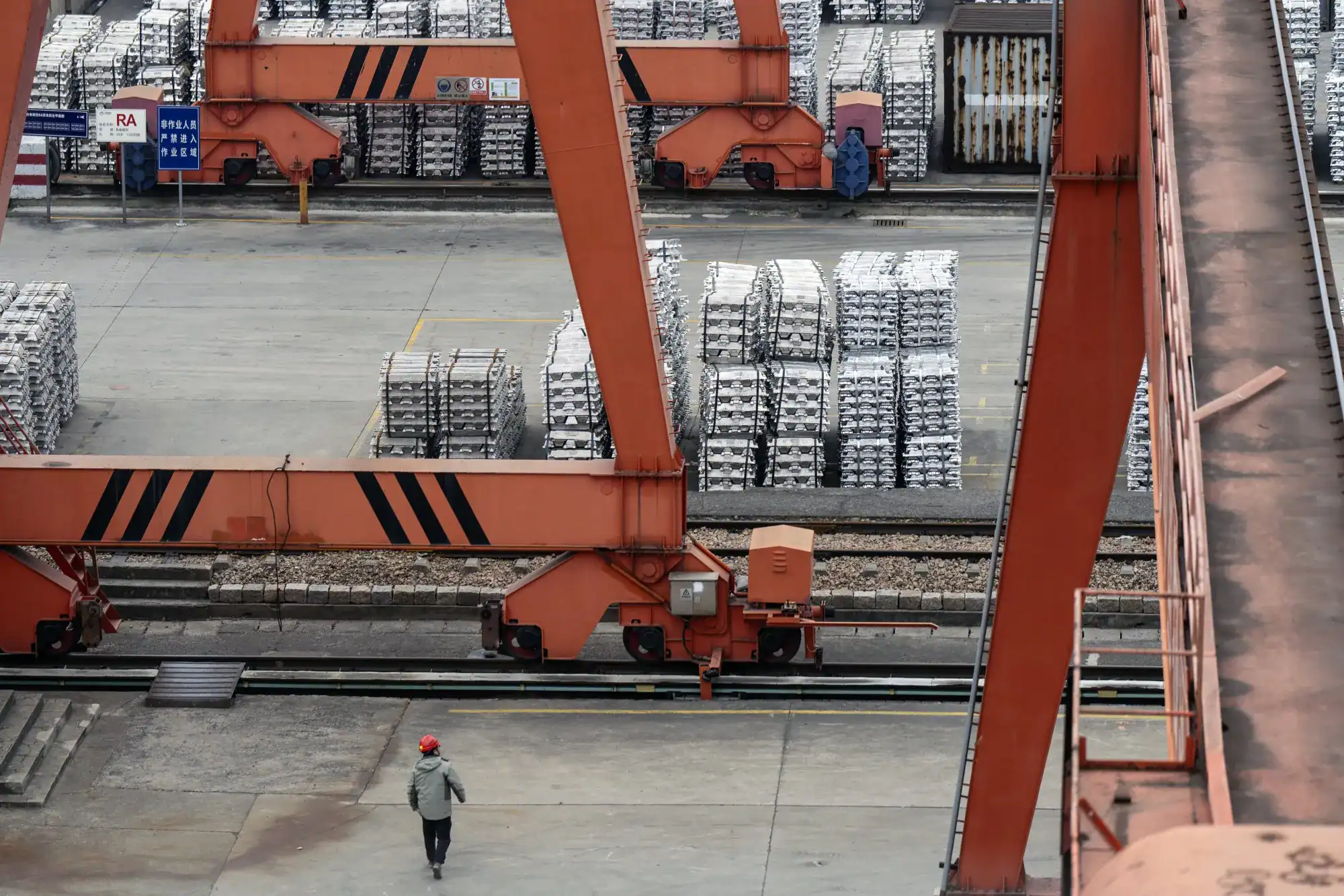
—Aluminum’s “best set-up in 50 years.”. Citi calls the case for aluminum the most bullish in over half a century, as the Iran war traps Middle Eastern supply and pushes inventories toward record lows.
—A two-edged moment. The same oil shock lifting metals also pushes up US yields, a cross-current that complicates the bullish currency call.
Every data center, power line and humanoid robot that the artificial-intelligence boom requires is, in the end, made of metal. That simple fact is turning into an investment thesis for Latin America, where the copper of Chile and Peru and the mineral wealth of Brazil sit squarely in the path of the buildout. Wall Street is starting to price it in.
What is the AI metals boom thesis?
The Rio Times, the Latin American financial news outlet, reports that the AI metals boom is emerging as a fresh bull case for the region, after Barclays argued that countries holding the raw materials behind artificial intelligence stand to gain. In its 2026 Equity Gilt Study, the bank’s strategists named Chile, Peru, Brazil, Indonesia and China as developing economies set to benefit as the AI construction wave feeds into commodity prices.
The mechanism runs through the currency. As demand and prices for these metals rise, Barclays expects the producing nations to enjoy higher exports, improving terms of trade and rising investment, all of which tend to support a currency. The bank drew a direct comparison to the China-led commodity boom of the early 2000s, which lifted resource exporters across the region.
Why is copper at the center?
Because AI runs on electricity, and electricity runs on copper. The metal is essential to power grids, transmission infrastructure and the wiring inside data centers, making it a direct beneficiary of the AI buildout. Chile, the world’s top producer with around a quarter of global output, and Peru, another major exporter, are the region’s most obvious winners.
The price backdrop is supportive. Citi has expressed conviction in copper rising toward $13,000 a tonne in 2026, pointing to supply deficits, low inventories, electrification and a friendlier macro environment. Brazil and Argentina, while smaller producers, are positioning to supply more of the metal as the cycle matures.
Live Market IntelligenceBrazil — Live Market Board
Rio Times · Live Market Intelligence
Brazil — Live Market Board
-0.59%
185,400.81
-0.59%
63,507.11
-1.11%
11,303.01
-0.17%
3,047,849
-1.04%
2,545.46
-0.85%
58,496.57
+0.73%
| Instrument | Last | Change | YoY | Prev. | High | Low | Volume |
|---|---|---|---|---|---|---|---|
| IBOV | 185,400.81 | -0.59% | +21.85% | 186,502.64 | 168,310 | 167,142 | — |
| USD/BRL | 5.16 | +0.01% | -5.13% | 5.16 | 5.18 | 5.14 | — |
| SELIC | 14.00% | — | — | — | — | — | |
| PETR4 | 41.64 | -0.05% | +35.19% | 41.66 | 41.97 | 41.15 | 41,499,400 |
| VALE3 | 72.97 | +0.83% | +30.75% | 72.37 | 73.54 | 72.66 | 17,658,000 |
| ITUB4 | 38.60 | -1.03% | +4.57% | 39.00 | 39.34 | 38.39 | 29,487,800 |
| BBDC4 | 16.85 | +0.36% | +3.50% | 16.79 | 16.90 | 16.67 | 19,416,900 |
| BBAS3 | 19.37 | +0.47% | +0.73% | 19.28 | 19.44 | 19.16 | 11,069,200 |
| B3SA3 | 14.26 | -0.21% | +12.73% | 14.29 | 14.47 | 14.11 | 33,037,800 |
| ABEV3 | 14.89 | -0.80% | +21.91% | 15.01 | 15.07 | 14.81 | 16,453,100 |
| WEGE3 | 47.59 | +0.49% | +29.99% | 47.36 | 48.08 | 47.36 | 3,364,600 |
| PRIO3 | 59.14 | -0.19% | +50.67% | 59.25 | 59.81 | 58.74 | 3,325,600 |
| SUZB3 | 41.33 | +2.35% | -23.55% | 40.38 | 41.48 | 40.35 | 3,914,900 |
| RENT3 | 34.68 | -0.09% | +0.84% | 34.71 | 34.96 | 34.35 | 7,979,100 |
| AZZA3 | 15.89 | -2.63% | -53.76% | 16.32 | 16.42 | 15.82 | 1,330,300 |
| CSNA3 | 4.30 | +0.47% | -42.65% | 4.28 | 4.41 | 4.26 | 10,076,100 |
| GGBR4 | 24.69 | +2.19% | +51.38% | 24.16 | 24.85 | 24.18 | 7,047,600 |
| ENEV3 | 24.21 | -1.38% | +70.49% | 24.55 | 24.64 | 23.99 | 9,297,000 |
What about aluminum and other metals?
Aluminum has its own, sharper story. Citi has called the current set-up for the metal the most bullish in more than 50 years, estimating prices could average $4,000 a tonne in the second half of 2026. The trigger is the Iran war: the closure of the Strait of Hormuz has trapped Middle Eastern aluminum shipments, driving inventories toward record lows in what the bank describes as a supply-driven shock.
The breadth of the theme matters for the region. Beyond copper and aluminum, the AI and clean-energy transition lean on nickel, lithium and rare earths, minerals in which Indonesia, Argentina and Brazil hold significant reserves. That spreads the potential benefit across more of Latin America than a single-metal story would.
What are the risks to the call?
The same forces cut both ways. The oil shock behind the metals rally is also pushing US Treasury yields to their highest since 2007, and higher US rates tend to draw capital away from emerging-market currencies, partly offsetting the commodity tailwind. The bullish currency call therefore depends on metals strength outweighing the yield squeeze.
There are doubts about the AI story itself. Skeptics note that AI-related demand is still a small share of total copper consumption today, and that part of the price rally is speculative. A slowdown in China, the world’s largest metals consumer, or a broader repricing of the AI boom would undercut the thesis quickly.
What should investors and analysts watch next?
- The copper price: whether copper holds near or above $12,000 a tonne tests the core of the bullish currency case for Chile and Peru.
- The Chilean peso and Peruvian sol: these metals-linked currencies are the most direct expression of the Barclays thesis.
- US yields: further rises in Treasury yields would pressure emerging-market currencies and could neutralize the commodity boost.
- The Hormuz situation: a reopening of the strait would ease the aluminum squeeze, while prolonged closure keeps the supply shock alive.
- China demand: as the largest metals consumer, China‘s growth is the swing factor that could make or break the cycle.
More: Brazil news in English, every day from The Rio Times.
Frequently Asked Questions
What is the AI metals boom?
It is the surge in demand for metals like copper, aluminum and nickel driven by the buildout of artificial-intelligence infrastructure, from data centers to power grids. Barclays argues this will lift the currencies of metals-rich economies including Chile, Peru and Brazil.
Which Latin American countries benefit most?
Chile and Peru, as major copper exporters, are the clearest winners, with Brazil and Argentina positioning to supply more of the metal. Brazil also holds significant reserves of other transition minerals, broadening the potential benefit across the region.
Why is copper so important for AI?
AI infrastructure is enormously power-hungry, and copper is essential for the electrical grids, transmission lines and data-center wiring that deliver that power. Citi expects copper to climb toward $13,000 a tonne in 2026 on supply deficits and electrification demand.
Why is Citi so bullish on aluminum?
Citi calls aluminum’s set-up the best in over 50 years because the Iran war and the closure of the Strait of Hormuz have trapped Middle Eastern supply, pushing inventories toward record lows. It estimates prices could average $4,000 a tonne in the second half of 2026.
What could derail the thesis?
Rising US Treasury yields, now at their highest since 2007, can pull capital from emerging-market currencies and offset the metals tailwind. A China slowdown or a repricing of the AI boom, of which metals demand is still a small part today, would also undercut the call.
Connected Coverage
The yield-side cross-current is detailed in our reporting on how Brazil’s yield curve steepened as US rates hit a 2007 high, and on how the oil shock and US yields split Latin America’s markets. The Chilean copper backdrop is covered in our piece on how copper cushioned Chile’s market against a Fed shock.
Reported by Sofia Gabriela Martinez for The Rio Times — Latin American financial news. Filed May 20, 2026 — 14:30 BRT.
This article was produced by The Rio Times’ automated newsroom system. How we use AI · Report an error
In depth
Read More from The Rio Times