Asia Intelligence Brief — Friday, May 22, 2026
Executive Summary
Asia intelligence brief covers Japan core CPI four-year low, Taiwan arms pause dispute, Indonesia Danantara commodity centralisation, China NDRC tech walkback, Iran-Pakistan diplomacy.
Japan’s core CPI fell to 1.4% in April — a four-year low — complicating the BOJ’s June hike calculus. Taiwan disputed the US arms-pause framing as Cao cited Iran-war munitions and Trump signalled a Lai call. Indonesia confirmed Danantara as sole exporter of palm oil, coal and ferroalloys from September 1, centralising $65bn in flow. China’s NDRC walked back foreign tech-investment restrictions. Iran’s FM met Pakistan’s Interior Minister, and Lee’s state visit to Tokyo was confirmed. Today’s Asia intelligence brief tracks six decisions converging on the Friday tape.
01 · Japan — Core CPI Falls to 1.4%, Four-Year Low; BOJ June Hike Calculus Complicated
Japan’s core consumer price index, excluding fresh food, rose 1.4% year-on-year in April — the slowest pace since March 2022 and below all economist estimates polled by Reuters at 1.7%. Headline CPI also fell to 1.4% from March’s 1.5%, the fourth straight month below the BOJ 2% target. Core-core inflation, stripping fresh food and energy, slid to 1.9% from 2.4%, also below target.
The deceleration was driven by continued government energy and education subsidies — a 10.6% drop in education fees alone weighed on services — plus softer processed-food and rice prices off the high 2025 base. Capital Economics and ING maintained calls for a 25bp hike to 1% at the June 17-18 meeting, citing wholesale prices at three-year highs and the war-driven rebound thesis.
Yen 159.03; Nikkei opened +0.96% leading regional advances.
02 · Taiwan — Taipei Disputes Arms-Pause Framing as Trump Signals Lai Call
Taiwan’s government said Friday it had not been notified of any pause in the planned $14 billion US arms package, after Acting US Navy Secretary Hung Cao told a Senate committee Thursday that some foreign military sales were being delayed to ensure American munitions stocks for the Iran war. Cao said sales would resume “when the administration considers it appropriate.”
Presidential spokesperson Kuo said there was no further information on a potential Trump-Lai conversation, after Trump told reporters he needed to “talk to the person who is running Taiwan.” Lai said publicly the island would not be a “bargaining chip.” The package — PAC-3 and NASAMS interceptors plus $6bn in asymmetric capabilities — would be Taiwan’s largest ever. CSIS estimates US forces expended over half of seven key munitions types in the Iran air campaign.
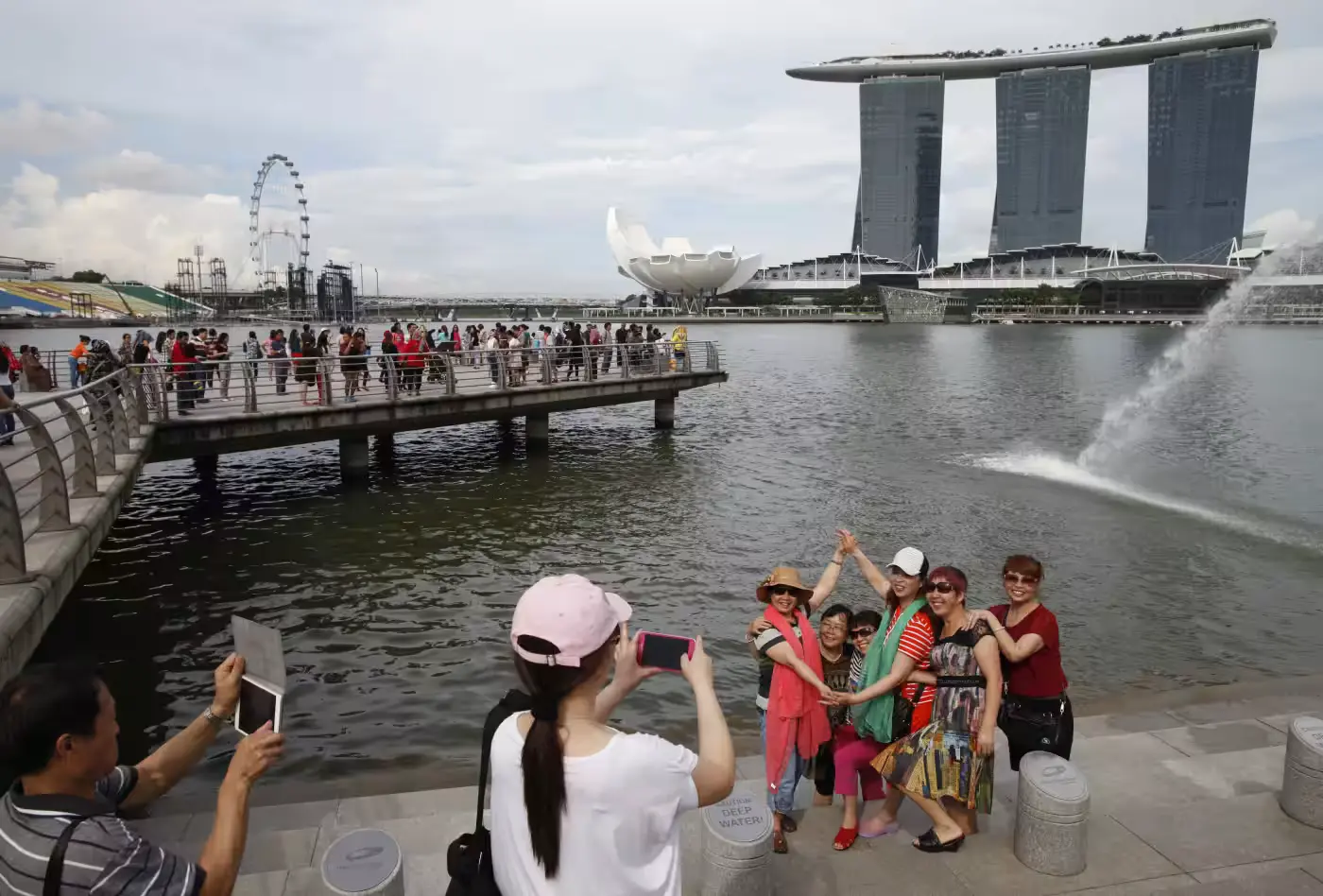
03 · Indonesia — Danantara Sole Exporter of Palm Oil, Coal, Ferroalloys from September 1
President Prabowo Subianto confirmed Wednesday that PT Danantara Sumber Daya Indonesia, a unit of the sovereign wealth fund, will become the sole exporter of palm oil, coal, ferroalloys, and other “strategic mineral resources” from September 1. The three commodities accounted for $65bn in 2025 export value — Indonesia is the world’s largest exporter of all three.
A three-to-six-month transition begins June 1; exporters must report volume, value, and price points.
Danantara CEO Rosan Roeslani said the fund will honour existing contracts but renegotiate prices below global benchmarks. The framework targets under-invoicing and transfer pricing eroding tax, royalty, and FX revenues.
Moody’s revised Indonesia’s outlook to negative earlier this year on resource-nationalism concerns. The Sept 1 implementation reframes Asian palm-oil, coal, and nickel pricing through Q3.
04 · China — NDRC Walks Back Foreign Tech-Investment Restrictions Post-Manus
China’s National Development and Reform Commission spokesman Li Chao told a press briefing Friday that Beijing has “never required Chinese tech firms not to accept foreign investment” — explicitly responding to Bloomberg reports that NDRC had instructed AI firms to refuse US capital. “We support Chinese firms to integrate into the global innovation network,” Li said, adding foreign capital must comply with Chinese law and not harm national security.
The softer tone follows the late-April NDRC decision under foreign-investment security review to unwind Meta’s $2bn Manus acquisition — the first AI-sector prohibition since 2021 — which chilled startup sentiment. NDRC also confirmed documents to accelerate AI implementation.
The walk-back manages the Meta-Manus fallout without abandoning the security framework. Hang Seng +0.81%, CSI 300 +1.3% to 4,845.1.
05 · Iran-Pakistan — FM Talks Friday on War-End Framework; Hormuz-First Track Holds
Iran’s Foreign Minister met Pakistan’s Interior Minister Friday to discuss proposals aimed at ending the US-Israeli war, Iranian media reported. Pakistan continues as primary intermediary after the April 11-12 Islamabad Talks failed but established the 10-point framework. Trump told reporters talks were “in the final stages”; an unnamed Iranian source said gaps had “narrowed.”
The architecture matters because Hormuz was effectively shut since February 28 under IRGC control, with only Iran-approved cargoes — mostly bound for China and India — transiting under escort. The May 6 Rubio statement declaring Operation Epic Fury “concluded” shifted Washington toward the Hormuz-first, nuclear-later framework Tehran pushed.
UAE Hormuz bypass pipeline 50% complete for 2027. Brent $105.62 in Asia trade.
06 · Korea-Japan — Lee State Visit to Tokyo Confirmed Next Week; Shuttle Architecture Operational
South Korea’s President Lee Jae-myung will make a state visit to Tokyo next week, his fourth meeting with PM Sanae Takaichi in six months. The pair met in Andong May 19 — Lee’s hometown — where they agreed to expand cooperation on crude oil and LNG supplies, including joint stockpiling and energy-security coordination against the Iran-war supply shock.
Mineral-supply stabilisation was the parallel track.
The Lee-Takaichi shuttle, established at October 2025 APEC Gyeongju sidelines, now runs as institutional architecture. Tokyo state-visit protocol — Emperor Naruhito and PM Takaichi — formalises what historical disputes had blocked.
Against Taiwan-arms uncertainty and Hormuz-supply dynamics, the Seoul-Tokyo energy-and-minerals architecture is the second-largest Asian alliance block firming as US security commitments shift.
The Read
Six decisions converge on the Friday tape. Japan’s core CPI falls to 1.4%, a four-year low, complicating BOJ June.
Taiwan disputes the US arms-pause framing as Trump signals a Lai call. Indonesia centralises $65bn in palm oil, coal and ferroalloy exports under Danantara.
China’s NDRC walks back foreign-tech-investment restrictions post-Manus. Iran’s FM meets Pakistan’s Interior Minister on the war-end framework.
Lee Jae-myung’s state visit to Tokyo is confirmed for next week.
What to Watch
- Sat · May 23 · Iran-Pakistan intermediary track follow-through
- Tue · May 27 · RBNZ Monetary Policy — hold at 2.25% expected
- Wed · May 27 · Lee Tokyo state visit (preliminary date)
- Jun 1 · Danantara export-centralisation transition begins
- Jun 4 · China May PMI cluster
- Jun 17-18 · BoJ Monetary Policy — 25bp hike to 1% expected
Coverage Tease
Today’s Dossier opens with the Editor’s Leader on Asia’s institutional firming around the Iran-war shock. The Deep Dive maps three scenarios for the Asian energy-and-FX architecture through Q3. The Country Risk Dashboard recalibrates ten Asian economies. Trade and Positioning anchors eight active calls. Power Players names five principals.
FAQ
Why does Japan’s CPI drop to a four-year low matter for the BOJ?
The 1.4% April core print — below all estimates, with core-core below 2% for the fourth straight month — complicates the June 17-18 hike calculus on softer optics, even as wholesale prices hit three-year highs and Capital Economics, ING, and DBS maintain hike calls on the war-rebound thesis. For LATAM allocators, the yen-and-JGB read shapes the cross-border carry trade and supports tactical positioning into the June meeting.
What does the Danantara export centralisation mean for global commodity flow?
Indonesia’s centralisation of palm oil, coal, and ferroalloy exports — $65bn in 2025 flow, world’s largest exporter in all three — under Danantara from September 1 reframes Asian commodity pricing. For LATAM allocators, the resource-nationalism architecture parallels Mexican lithium and Bolivian state-mining dynamics, supporting commodity-exporter sovereign-credit positioning.
How does the Taiwan arms-pause dispute reshape Asian security positioning?
Cao’s testimony that military sales are delayed for Iran-war munitions, against Taipei’s denial of notification and Trump’s “talk to the person who is running Taiwan” framing, leaves the $14bn package in operational ambiguity. For LATAM allocators, the Asian-security-commitment uncertainty supports chip-supply-chain caution and the regional-defence-premium read through Q3.
This article was produced by The Rio Times’ automated newsroom system. How we use AI · Report an error