Turkish Yildirim’s $400M Bid Targets China’s Brazil Nickel Deal
Key Facts
— — Robert Yuksel Yildirim’s CoreX Holding raised its Brazil nickel bid for Anglo American’s Brazilian nickel business to US$400 million in cash — reported by Bloomberg News Tuesday April 28. The renewed offer targets two ferronickel units (Barro Alto + Codemin in Goias) plus two greenfield projects (Jacare in Para, Morro Sem Bone in Mato Grosso). Anglo American declined to comment. Yildirim’s prior $900M offer (financed by UBS) was rejected in February 2025 in favor of MMG (China Minmetals subsidiary) at $500M.
— — Anglo-MMG deal mechanics: $350M upfront cash + $100M price-linked earnout + $50M contingent on greenfield FID = up to $500M total. Yildirim’s $400M is structured as cash-only, comparing favorably against the $350M upfront component of the MMG deal. Anglo’s 2024 Brazilian nickel production: 39,400 tonnes. Barro Alto operates since 2011, Codemin since 1982. Combined Jacare + Morro Sem Bone resources: ~365 million tonnes, plus 300Mt mineral-resources potential.
— — Regulatory delay context: MMG-Anglo closing deadline extended to June 30, 2026 (from November 18, 2025) amid European Commission review. Brussels concerns: deal could enable MMG to divert ferronickel from Europe, hurting European stainless steel. CADE (Brazilian antitrust) also investigating concentration risk — post-deal Chinese-controlled entities could hold up to 60% of global nickel supply. US AISI requested Trump administration intervention. Yildirim’s renewed bid arrives during this regulatory uncertainty window.
The Brazil nickel bid raised by Yildirim’s CoreX Tuesday extends the West-versus-China critical-minerals battle into its most consequential Brazilian phase — testing whether regulatory pressure can reverse a year-old Anglo American sale decision.
The most consequential critical-minerals battle in Latin America just escalated. The Rio Times, the Latin American financial news outlet, reports that the Brazil nickel bid raised by Robert Yuksel Yildirim’s CoreX Holding to US$400 million in cash for Anglo American’s Brazilian nickel business — reported Tuesday April 28 by Bloomberg News — reopens the West-versus-China battle for control of one of the world’s largest ferronickel franchises, exploiting the regulatory-delay window in the existing MMG (China Minmetals) deal.
“China has grabbed this very important asset from the West to take to China and Anglo is the company letting this happen,” Yildirim said previously about the original Anglo-MMG decision. The renewed $400M cash bid — structured to compare directly against the $350M upfront component of the MMG arrangement — signals Yildirim’s continued determination to build a Western-aligned nickel supply chain alternative to Chinese dominance.
The Brazil Nickel Bid Mechanics
Yildirim’s revised offer is US$400 million in cash — a 14 percent increase versus the $350 million upfront component of the existing MMG deal. The cash structure removes the contingency overhang that complicates the MMG arrangement (price-linked earnout + greenfield FID conditions). Anglo American declined to comment on the renewed offer.
Asset scope: two ferronickel operating units (Barro Alto in operation since 2011, Codemin in Niquelandia since 1982) plus two greenfield growth projects (Jacare in Para with ~300 million tonnes mineral resources, Morro Sem Bone in Mato Grosso with ~65 million tonnes potential). Combined 2024 production: 39,400 tonnes of nickel — positioning the Anglo Brazilian franchise as one of the largest ferronickel producers globally.
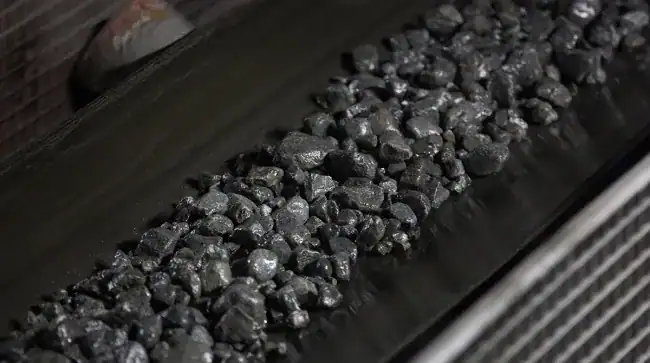
Barro Alto remains the only nickel mine globally certified at IRMA 75 level (Initiative for Responsible Mining Assurance) — a significant ESG credential for institutional buyers seeking sustainability-verified critical minerals. The combined ESG + production-scale + reserves footprint creates an attractive strategic asset for any miner pursuing Western-aligned supply chains.
The MMG Deal’s Regulatory Limbo
The MMG-Anglo $500M deal (announced February 18, 2025) was originally scheduled to close November 18, 2025. In November 2025, both parties extended the closing deadline to June 30, 2026, citing European Commission regulatory review. The Commission flagged concerns that the deal could enable MMG to divert ferronickel from Europe, hurting European stainless steel production.
CADE (Brazilian antitrust) is parallel-investigating concentration risk. Corex Holding (Yildirim’s Dutch entity) filed petitions in both Brussels and Brasilia, arguing that post-deal Chinese-government-controlled entities could hold up to 60 percent of global nickel supply. AISI (American Iron and Steel Institute) requested Trump administration pressure on Brazil to reverse the approval.
The structural read: the regulatory delays + EU + Brazilian + US scrutiny create the operational window for a renewed Yildirim approach to potentially succeed. If Brussels blocks MMG closing or imposes structural mitigations that Anglo-MMG find unacceptable, the original sale agreement could collapse, opening space for a renewed Anglo-Yildirim transaction.
CoreX Holding’s Strategic Position
CoreX Holding is Yildirim’s vertically-integrated industrial conglomerate — founded 2024, headquartered Amsterdam with Istanbul operations and offices in 55 countries with 20,000 employees. Operations span 10 sectors: metallurgy and mining, ports/terminals, green energy, shipping, infrastructure, oil and gas, chemicals, international trade, financial investments, venture capital.
$2 billion total nickel-acquisition program announced 2025: Yildirim is pursuing nickel assets across Colombia, Guatemala, and Africa to build Western-aligned nickel supply. Existing portfolio: ferronickel plants in North Macedonia and Kosovo, majority stake in Compagnie Miniere du Bafing (Ivory Coast), ferroalloy plants in Sweden + Russia, US chrome and chemicals, mining companies in Kazakhstan. Funding sources: $500M Yildirim personal fortune + $800M asset-backed European bank loans + $700M Gulf sovereign-wealth-fund consortium.
Recent CoreX milestone: completed acquisition of BHP’s Carajas copper assets up to $465M in early 2026 — one of the largest Brazilian mining transactions of the year. The Carajas deal demonstrates that CoreX has the operational capacity and Brazilian regulatory familiarity to execute a Brazilian nickel acquisition if the Anglo-MMG arrangement falls through.
What This Means for Critical-Minerals Investors
For Anglo American shareholders (LON:AAL, OTCMKTS:AAUKF), the renewed Yildirim bid creates upside optionality. If EU regulators block MMG closing, Anglo can reopen negotiations with Yildirim at the higher $400M cash level — structurally improving the divestment outcome. Anglo’s portfolio simplification strategy (focus on copper + premium iron ore + crop nutrients) requires the nickel divestment, but the optimal counterparty depends on regulatory outcomes.
For MMG and China Minmetals, the renewed Yildirim bid raises completion risk on the existing transaction. Even if EU regulators ultimately approve the MMG deal with structural mitigations, the protracted review timeline creates uncertainty that could compress the deal’s strategic value to MMG. Chinese state-owned mining acquisitions in Latin America face systematically heightened Western regulatory scrutiny through 2026-2030.
For Brazilian critical-minerals positioning, the Yildirim-MMG battle defines Brazil’s strategic alignment in the West-China critical-minerals competition through 2030 — Brazil holds roughly 17 percent of global nickel reserves, with the Anglo franchise alone representing approximately 60 percent of Brazilian production capacity. Whether the Anglo Brazilian assets ultimately go to Chinese or Western buyers will materially shape EV-battery supply-chain composition through 2030. Combined with the broader Mercosur-EU trade deal sustainability provisions and US-allied critical-minerals frameworks, Latin American critical-minerals positioning remains one of the most consequential structural battles in global energy transition through 2030.
More: Brazil news in English, every day from The Rio Times.
This article was produced by The Rio Times’ automated newsroom system. How we use AI · Report an error
Read More from The Rio Times