UN Sec-Gen Race 2027: Three Latin Americans vs Trump’s Veto
Key Facts
— —Three Latin Americans are formally in the race to succeed António Guterres as UN Secretary-General: Michelle Bachelet (Chile), Rafael Grossi (Argentina), and Rebeca Grynspan (Costa Rica).
— —Only one non-regional candidate is running: former Senegalese president Macky Sall, nominated by Burundi after Senegal itself declined to endorse him. The field of four is the smallest in recent UN memory.
— —Under the informal regional-rotation norm, Latin America is next in line. Of the three candidates, Grossi enjoys cross-regional endorsements from Argentina, Italy, and Paraguay; Bachelet kept her candidacy alive via Brazil and Mexico after Chile’s new president José Antonio Kast withdrew Chilean backing.
— —Any nominee needs to survive a Security Council process where the United States, China, Russia, the UK, and France all hold a veto. Washington has signalled reservations about Bachelet and analysts expect Trump to treat the selection as a political test.
Three Latin American candidates, one African, and a Security Council under Trump. The next UN Secretary-General will not just be chosen on merit — the selection is the clearest test yet of whether multilateralism still functions when Washington is in opposition.
The Rio Times, the Latin American financial news outlet, reports that the UN Secretary General succession race formally entered its public phase this week with interactive dialogues at UN Headquarters in New York. Four candidates have been nominated since the selection process opened on November 25, 2025: three from Latin America, one from Africa.
The winning candidate will take office on January 1, 2027, for a five-year term. The 2016 race that produced Guterres had 13 contenders. This cycle has four — a signal, analysts say, that fewer states are willing to spend political capital on a race where the outcome will turn on Security Council arithmetic rather than General Assembly campaigning.
Why the next UN Secretary General is expected to come from Latin America
The informal regional-rotation norm, which has shaped every secretary-general selection since 1971, now points to Latin America. Guterres, a former Portuguese prime minister, represented Western Europe. He followed Ban Ki-moon of South Korea (Asia) and Kofi Annan of Ghana (Africa).
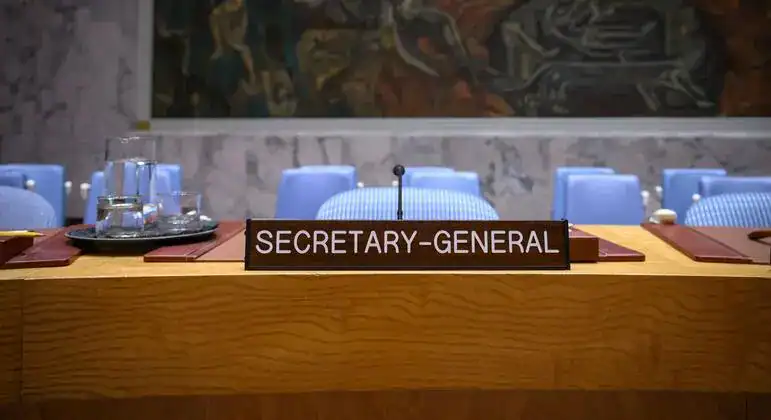
Latin America’s last secretary-general was Javier Pérez de Cuéllar of Peru, who served from 1982 to 1991. That forty-year gap is the longest any region currently eligible has gone without producing a chief of the organisation.
The International Crisis Group‘s Richard Gowan noted that Latin American officials have a deep bench inside the UN system going back to the Cold War. “It’s a region that is seen as being amongst the UN’s most reliable supporters,” he said.
Three of this year’s four candidates are regional. The fourth — Senegal’s Macky Sall — was nominated by Burundi, not his own country, and does not have African Union backing.
Rafael Grossi: the Argentine with the cross-regional coalition
Grossi, 65, has been Director-General of the International Atomic Energy Agency since December 2019. He was nominated first by Argentina and has since picked up formal endorsements from Italy and Paraguay — the only candidate with three sovereign nominations from different regions.
His career is defined by nuclear diplomacy: inspections in Iran, visits to Zaporizhzhia during the Russian occupation of Ukrainian nuclear facilities, and the long negotiation track with North Korea. That profile cuts both ways.
The IAEA work has given him direct relationships with all five Security Council permanent members. It has also made him visible on files where Trump has strong views.
Grossi has framed his campaign around institutional continuity. “Even in times of division,” he has argued, multilateral institutions can still deliver. It is a pitch designed for the post-pandemic, post-Iran-war UN: not reinvention, but preservation.
Michelle Bachelet: the twice-former president whose home country changed governments
Bachelet was Chile’s first female president and served two non-consecutive terms. She then led UN Women from 2010 to 2013 and served as UN High Commissioner for Human Rights from 2018 to 2022. Her human-rights tenure included critical reports on China’s treatment of Uyghurs in Xinjiang — reports that China attempted to block and that shaped Beijing’s subsequent hostility toward the Human Rights Council.
Her candidacy was originally nominated by then-President Gabriel Boric’s left-wing government. When José Antonio Kast won the December 2025 Chilean election and took office, his administration withdrew Chile’s endorsement. Brazil and Mexico — co-nominators under UN rules — kept her in the race.
US conservatives have signalled reservations about Bachelet, framing her on both ideological grounds and her Xinjiang track record. China’s position is harder to read: public opposition would cost Beijing diplomatic capital, but Beijing has not forgotten. Bachelet’s path through the Security Council is the narrowest of the three Latin Americans.
Rebeca Grynspan: the negotiator with the Black Sea track record
Grynspan, 70, is a former vice-president of Costa Rica and an economist by training. She has been Secretary-General of the UN Conference on Trade and Development (UNCTAD) since 2021. Before that she led the Ibero-American General Secretariat from 2014 to 2021 and served as a UN Development Programme regional director.
Her most-cited credential is the 2022 Black Sea Grain Initiative. As chief UN negotiator, Grynspan helped broker the deal that allowed Ukrainian grain to move through wartime shipping corridors despite Russia’s naval blockade. The agreement stabilised global food prices for more than a year and is the clearest single example in this race of sustained negotiation with adversarial P5 powers.
Gowan’s read is that Grynspan has “very good reviews for the work she’s done around development.” The most powerful countries on the Security Council, he added, tend to view her as competent and non-threatening — the profile that historically survives P5 scrutiny.
What happens between now and December
The public interactive dialogues running this week in New York are a procedural innovation. Historically the selection has been closed-door, with the Security Council running straw polls and negotiating behind the wall. This time, each candidate has presented directly to the General Assembly — Bachelet first, then Grossi, then Grynspan, then Sall.
The hard deadline is late July 2026, when the Security Council is expected to start the straw-poll phase. In 2016, that phase effectively cut off new nominations. The final Security Council recommendation typically arrives in October or November, with the General Assembly formally approving in December.
Additional candidates can still be nominated. Colombia’s former president Juan Manuel Santos, a Nobel Peace Prize laureate, has publicly endorsed “a female candidate” without naming one. Lebanon’s Ivonne Baki and Guatemala’s Sandra Torres were also floated but have not formally advanced.
The Trump variable in the UN Secretary General race
The Trump administration is the critical unknown. A Republican-led Security Council veto could end any candidacy that Washington decides to oppose — and US officials have signalled reservations about both women in the field.
That creates an uncomfortable geometry. Many UN members, including Guterres himself, have publicly called for a female secretary-general after nine successive men in the role. If Washington vetoes both Bachelet and Grynspan on political grounds, the candidate who survives is Grossi — a male career diplomat whose work at the IAEA has included direct cooperation with successive US administrations.
That outcome would not be a neutral one for the gender-balance agenda UN reformers have pushed for decades. It would also not be a neutral one for Latin America.
A Grossi win anchors the regional win for Argentina — a country whose Milei government has publicly aligned with Washington on most foreign-policy questions. A Bachelet or Grynspan win would anchor the regional win for a left-centre or centrist government.
What to watch after this week’s UN hearings
Three things now matter for LATAM investors, chancelleries, and anyone tracking how global governance evolves this year. The first is whether additional candidates enter before the late-July straw-poll cutoff. A stronger African candidate with AU backing could shift the regional-rotation argument.
The second is the first Security Council straw poll. Each P5 member votes “encourage,” “discourage,” or “no opinion.” A “discourage” from a P5 member is a de facto veto signal. The first poll will reveal Washington’s posture on Bachelet and Grynspan specifically.
The third is regional unity. Brazil and Mexico kept Bachelet in the race; whether they, Argentina, and Costa Rica can coordinate around a single Latin American candidate as the field narrows will determine whether the region actually secures its turn, or whether the P5 uses the splintered field to push the selection back to another region entirely.
For Latin America, the stakes are larger than who sits in the 38th floor of the UN building on Turtle Bay. A regional secretary-general would mean real institutional presence at a moment when the UN itself is under pressure from funding cuts, US skepticism, and the rise of smaller, more specialised multilateral forums.
The region has not held this job in forty years. Whether it can hold it again depends on which P5 capitals decide to say yes.
Related coverage: Kast’s Chile government • Venezuela crisis 2026 guide • Brazil mining 2026 guide
More: Costa Rica news in English, every day from The Rio Times.
This article was produced by The Rio Times’ automated newsroom system. How we use AI · Report an error · Editorial responsibility: Matthias Camenzind, Editor-in-Chief
Brazil runoff, Sunday, October 25: Brazil runoff: date, poll closing times and when results start. Latest: Brazil runoff polls, Flávio 51%, Lula 49%.