U.S. and Brazil Begin Tariff Negotiations After the May 7 Summit
Brazil · Trade & Diplomacy
Key Facts
—The first formal follow-up. US Trade Representative Jamieson Greer held a virtual meeting on May 19 with Brazil’s industry and trade minister, Marcio Elias Rosa, the first formal session of the working group set up at the May 7 summit.
—A finance-track meeting in Paris. Finance Minister Dario Durigan met US Treasury Secretary Scott Bessent on the sidelines of the G7 in Paris the same day, advancing the bilateral trade agenda.
—The 30-day deadline holds. Durigan said Bessent asked whether Brazil remained confident in the 30-day timeline set by both presidents, and that he confirmed it; the window runs to around June 6.
—A customs-cooperation deal. The two sides agreed to formalize an intelligence-sharing mechanism between Brazil’s tax authority and US Customs and Border Protection to fight arms and drug trafficking through trade channels.
—The July report still looms. Greer reaffirmed that the US trade investigation into Brazil, covering the Pix payment system, ethanol and deforestation, is due to conclude in July.
—No commitment on a deal yet. A deputy US trade official said the two countries have an open dialogue but would not say whether an agreement on the investigation is possible.
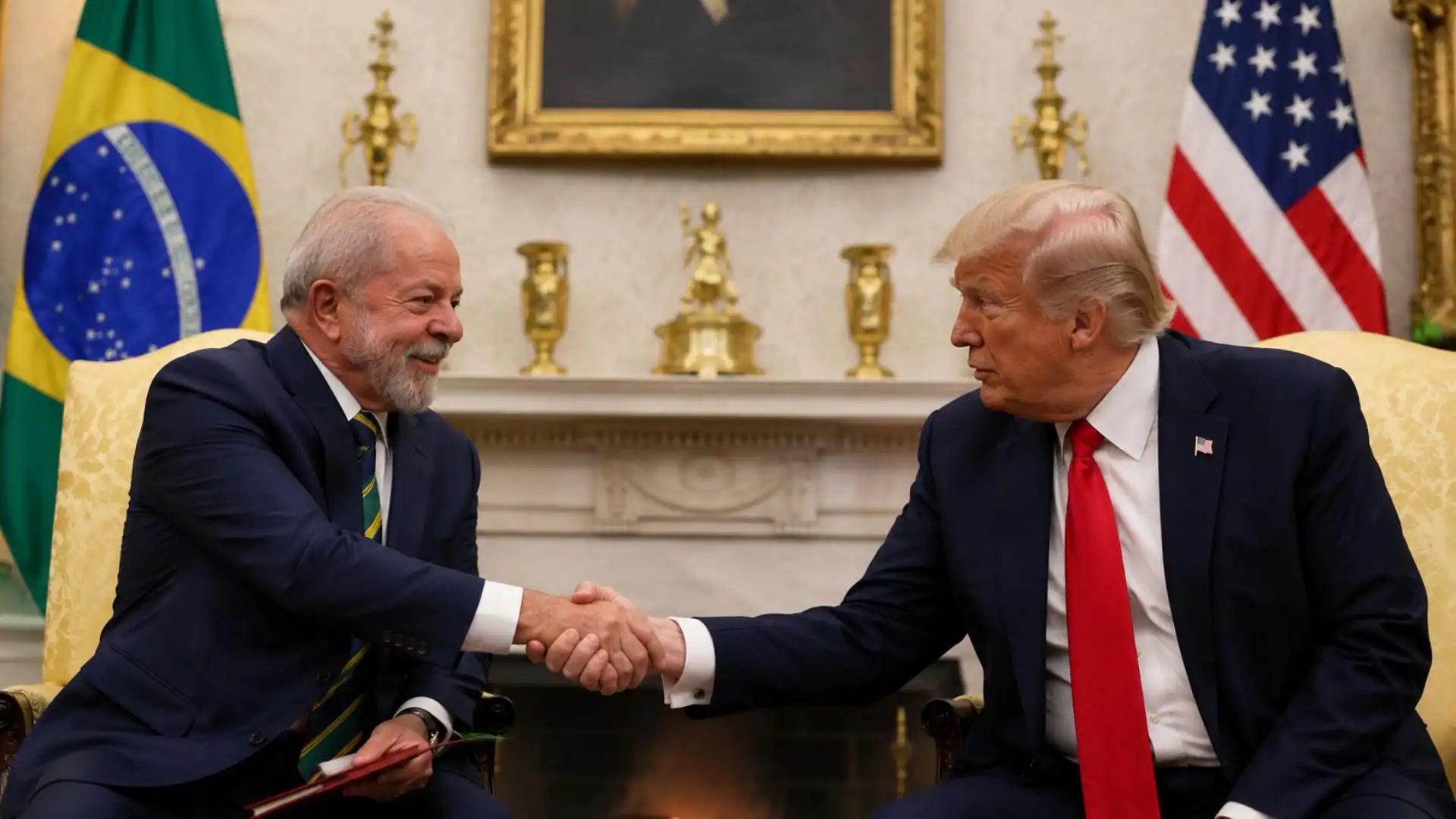
The summit handshake is the easy part. What matters now is whether two negotiating teams can turn a three-hour White House meeting into something durable before a self-imposed clock runs out. The first formal contact since May 7 suggests both sides want to keep the momentum, even as the harder question, the July trade investigation, still hangs over everything.
What happened in the first round of Brazil US trade talks?
The Rio Times, the Latin American financial news outlet, reports that the first formal Brazil US trade talks since the May 7 Lula-Trump summit took place on May 19, when US Trade Representative Jamieson Greer met virtually with Brazil’s industry and trade minister, Marcio Elias Rosa. Greer described it as a follow-up to the White House meeting and welcomed what he called Brazil’s “constructive engagement” on commercial matters.
The two ministers lead the bilateral working group the presidents created at the summit. Their task is to draft a proposal to resolve the residual tariffs on Brazilian exports and the broader US trade investigation, with both leaders reviewing the team-level recommendations.
Why did the finance ministers also meet?
Because a second channel opened in Paris. Finance Minister Dario Durigan met US Treasury Secretary Scott Bessent on the sidelines of the G7 finance gathering on May 19, in what Durigan described as a fluid and consensual conversation. He said the two followed the agenda set by Lula and Trump, discussed the economic fallout of the conflict in the Strait of Hormuz, and advanced the bilateral trade talks.
The most concrete signal came on timing. Durigan said Bessent asked whether Brazil remained confident in the 30-day deadline the presidents had set, and that he answered yes. Bessent offered to step in personally if the finance ministers were needed to push a deal across the line, while leaving the technical detail to the trade teams.
What did the two sides actually agree?
One tangible outcome was on security, not tariffs. Durigan highlighted an agreement to formalize an intelligence-sharing mechanism between Brazil’s federal tax authority and US Customs and Border Protection, aimed at fighting organized crime that moves through commercial cargo. The focus is the trafficking of weapons and drugs that infiltrates trade flows in both directions.
The cooperation builds on an existing “remote targeting” system that lets the two customs agencies exchange advance data on suspect cargo. Brazilian officials say it has produced results: from May 2025 to April 2026 they seized over half a tonne of irregular US-origin weapons, while identifying more than a tonne of synthetic drugs heading the other way.
Where does the trade investigation stand?
It remains the central unresolved issue. Greer reaffirmed that the US trade investigation into Brazil, opened last year, is due to conclude with a report in July. The probe targets the Pix instant-payment system, the wholesale trade hub of Sao Paulo’s 25 de Marco district, and ethanol, and Brazil is separately caught up in a parallel US inquiry into alleged forced labor across 60 countries.
Washington has been careful not to over-promise. A deputy US trade official said at a Washington conference that the two countries maintain an open dialogue, but declined to say whether a deal on the investigation is possible. That report could still become the legal basis for a fresh tariff package, which is exactly what the 30-day talks are racing to head off.
What should investors and analysts watch next?
- The June 6 deadline: whether the working group delivers a proposal within the 30-day window the presidents set is the near-term signal of progress.
- The July report: the conclusion of the US trade investigation is the decisive moment for whether new tariffs land on Brazilian goods.
- The finance-minister track: Bessent’s offer to engage directly suggests the Treasury and Finance channel could accelerate a deal if the trade teams stall.
- The customs mechanism: formal signing of the tax-authority and Customs and Border Protection agreement would be a concrete deliverable separate from tariffs.
- Residual tariffs: some Brazilian products remain under US duties despite the broader rollback, a live irritant Lula has flagged as unjustified.
More: Brazil news in English, every day from The Rio Times.
What are the Brazil US trade talks about?
The Brazil US trade talks aim to resolve the residual US tariffs on Brazilian exports and the broader US trade investigation into Brazil. They follow the May 7 Lula-Trump summit, where the presidents created a bilateral working group with a 30-day deadline to draft a proposal.
Who is leading the negotiations?
On the trade track, US Trade Representative Jamieson Greer and Brazil’s industry and trade minister Marcio Elias Rosa lead the working group. On the finance track, Finance Minister Dario Durigan and US Treasury Secretary Scott Bessent met in Paris, with Bessent offering to engage directly if needed.
What is the 30-day deadline?
At the May 7 summit, Lula and Trump gave their teams 30 days to draft a proposal resolving the tariff dispute and the trade investigation. The window runs to around June 6, and Durigan confirmed to Bessent that Brazil remains confident in meeting it.
What is the customs-cooperation agreement?
It is a plan to formalize intelligence-sharing between Brazil’s tax authority and US Customs and Border Protection to fight arms and drug trafficking through trade channels. It builds on an existing system that has already helped seize US-origin weapons entering Brazil and synthetic drugs heading the other way.
When does the US trade investigation conclude?
Greer reaffirmed the investigation is due to conclude with a report in July. It targets the Pix payment system, ethanol and deforestation, and could become the legal basis for new tariffs, which is what the current negotiations are trying to prevent.
Connected Coverage
These talks follow the framework set when Lula and Trump set a 30-day deadline to resolve the tariff dispute. For the diplomatic backdrop, see our report on how Lula said his bond with Trump may stop new tariffs, and on the strategic-minerals stakes in our piece on how Lula told the US and China that Brazil keeps sovereignty over rare earths.
Reported by Sofia Gabriela Martinez for The Rio Times — Latin American financial news. Filed May 20, 2026 — 11:00 BRT.
This article was produced by The Rio Times’ automated newsroom system. How we use AI · Report an error · Editorial responsibility: Matthias Camenzind, Editor-in-Chief