Peru Confidence Drops as Petroperu Refineries Risk Halt
Peru’s energy and economic outlook deteriorated sharply this week as state oil firm Petroperu faces refinery shutdowns and the BCRP three-month business confidence index fell to 44.6 points in April, the first negative reading in 2 years.
The Iquitos refinery has paralyzed for lack of crude, and Talara (95,000 barrels per day capacity) and Conchán face the same risk if the company cannot secure the $2 billion private loan with state guarantee that former CEO Roger Arévalo Ramírez requested before being replaced on May 2 by Edmundo Lizarzaburu Bolaños.
Petroperu’s accumulated losses of $2.5 billion over four years and total debt of $7.9 billion sit alongside a 12-month confidence reading of 51.2 points near neutral, with the crisis landing as Brent above $100 per barrel forces suppliers to demand cash payments.
Key Points
Key Facts
— BCRP three-month confidence index: 44.6 points in April, down 7.4 from March 52.
— First negative reading since May 2024; lowest level in 28 months.
— Petroperu Iquitos refinery halted; Talara and Conchán at risk of paralysis.
— $2 billion private loan requested with state guarantee; total need $2.5 billion.
— Edmundo Lizarzaburu replaced Arévalo May 2 — 4th CEO in 2026.
A State Oil Company Running Out of Time
The Rio Times, the Latin American financial news outlet, reports that Petroperu’s Iquitos refinery in the Loreto Amazon region paralyzed in late April for lack of crude, with the larger Talara facility in Piura now operating at 60,000 barrels per day against 95,000 nameplate capacity, and the Conchán refinery in Lima also under threat. Suppliers have hardened terms to cash-on-delivery, citing global oil-market stress amid Middle East tensions and Strait of Hormuz risks, while accumulated debt to suppliers has reached $2.5 billion alongside total Petroperu obligations of $7.9 billion (with $3.578 billion of short-term debt). Roger Arévalo told Congress on April 28 that without an immediate $2 billion loan with state guarantee, the country would face fuel shortages within days, warning that “if we don’t take emergency measures, Peru is left without fuel.”
Arévalo was replaced on May 2 by Edmundo Lizarzaburu Bolaños, the 14th CEO in five years and the 4th this year alone, marking continued political instability around the company. Petroperu’s market share collapsed from 51% of national fuel supply in 2013 to 19% in 2026, with sharper concentration in the Amazon (80%) and northern coast (88%), while losing 50% of the Lima market. Q1 2026 showed revenue of $770.1 million (-21.43% YoY) and a $133 million quarterly profit, but liquidity remains the binding constraint as 80% of jungle and 88% of northern coast supply ride on Talara and Conchán continuity.
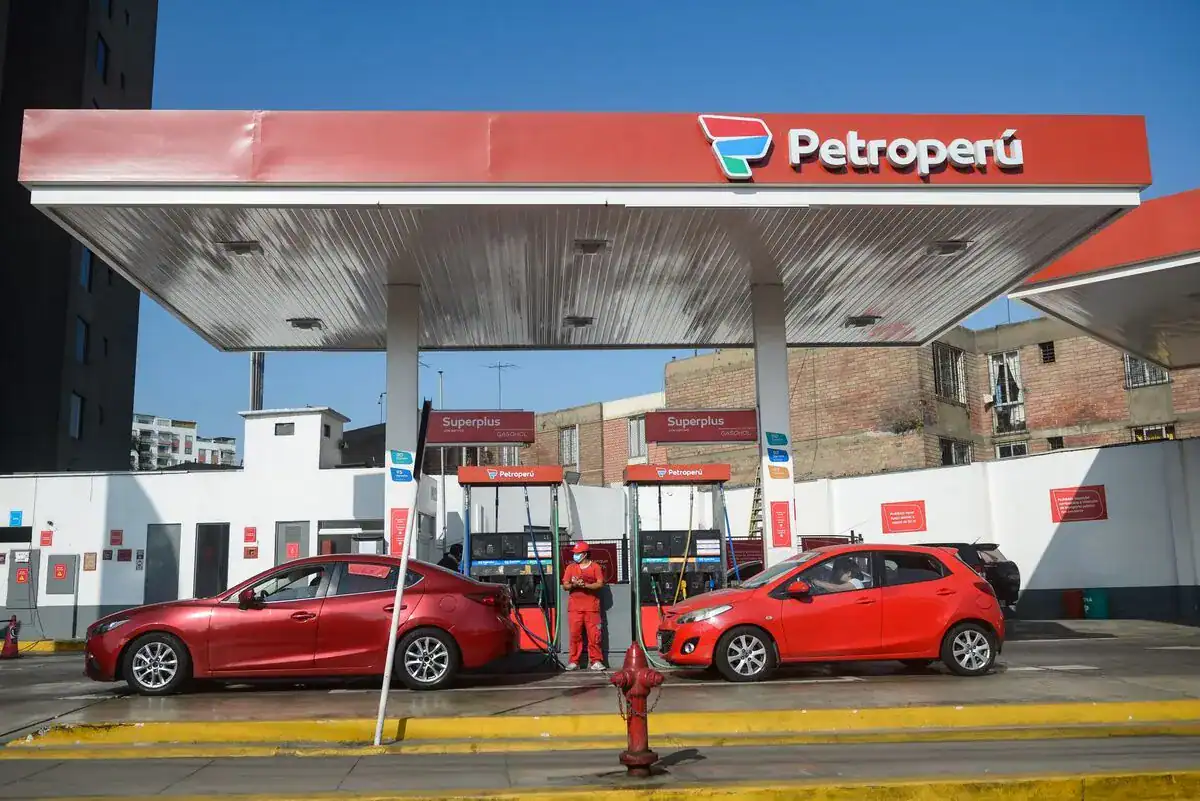
BCRP Confidence: First Negative Reading Since 2024
The Banco Central de Reserva del Perú (BCRP) released its weekly note on May 7 showing three-month business confidence at 44.6 points in April, down 7.4 from March’s 52 and the first sub-50 (negative) reading since May 2024. The 12-month confidence indicator also fell sharply to 51.2 points, dropping nearly 9 points in a single month and approaching neutral territory. All 12 measured indicators across both 3-month and 12-month horizons showed deterioration, with product-demand expectations falling to 55.6 points (-6) and investment-in-firm to 60.5 points, capturing concerns about the April 12 first-round presidential results that opened a contested run-off path with Keiko Fujimori.
The Political Bind
Peru’s Congress simultaneously moved to derogate the executive’s Decreto de Urgencia 010-2025 that had enabled Petroperu’s restructuring path, a 13-bill package agreed in early May that would block private-sector mechanisms and authorize a S/240 million government transfer instead. The Energy Commission suspended debate on May 6, but if the package advances, it would require a complete redesign of the financing strategy. Analysts cited by Gestión attribute the April confidence collapse equally to first-round election noise and to the so-called March black macro shock from oil-price spikes and gas-supply restrictions.
| Indicator | Value |
|---|---|
| BCRP confidence (3-month) | 44.6 pts (-7.4) |
| BCRP confidence (12-month) | 51.2 pts (-8.9) |
| Last sub-50 reading (3-mo) | May 2024 (47.6) |
| Petroperu loan need | $2 billion (private + state guarantee) |
| Petroperu total debt | $7.9 billion |
| Short-term debt | $3.578 billion |
| Q1 2026 revenue | $770.1M (-21.4%) |
| Q1 2026 net profit | $133 million |
| 4-year cumulative loss | $2.5 billion |
| Talara capacity / actual | 95k bpd / 60k bpd |
| Market share national | 19% (down from 51% in 2013) |
| CEO turnover 2026 | 4 in current year |
Connected Coverage
For broader LATAM context, see Chile’s April export data and copper deceleration and Bolivia’s $1 billion sovereign bond placement.
What Happens Next
- Days ahead: Decision required on $2 billion Petroperu loan to prevent Talara and Conchán paralysis.
- Mid-2026: Run-off election scheduled, with confidence indicators expected to remain volatile.
- End-2026: BCRP projecting GDP growth of 3.2% (revised) but downside risks from fuel-supply disruption mount.
More: Latin America news in English, every day from The Rio Times.
Frequently Asked Questions
Why is Petroperu in crisis?
Petroperu has accumulated losses of $2.5 billion over 4 years and total debt of $7.9 billion against a market share collapsed from 51% in 2013 to 19% in 2026. The Iquitos refinery has paralyzed for lack of crude, while Talara (95,000 bpd capacity, currently 60,000) and Conchán face paralysis as suppliers shifted to cash-on-delivery amid global oil-market stress. The company needs $2 billion in private financing with state guarantee, but the Executive’s decreto de urgencia for restructuring was challenged in Congress, with the Energy Commission considering derogation in early May.
What did the BCRP confidence indicator show?
The BCRP three-month business confidence index fell to 44.6 points in April, down 7.4 from March 52 and the first sub-50 (negative) reading since May 2024 when the indicator was at 47.6, while the 12-month confidence indicator also fell sharply, losing nearly 9 points to 51.2 near neutral territory. All 12 measured indicators showed deterioration, with product-demand expectations falling to 55.6 points and investment-in-firm to 60.5 points. The BCRP weekly note attributed the decline to the April 12 first-round presidential results and to the March black macro shock from oil-price spikes and gas-supply restrictions.
Who replaced Roger Arévalo at Petroperu?
The Petroperu shareholders meeting on May 2 named Edmundo Lizarzaburu Bolaños as the new president of the board, replacing Roger Arévalo Ramírez who had warned Congress on April 28 of imminent refinery paralysis without immediate financing. Lizarzaburu is the 4th CEO in 2026 and the 14th in 5 years, reflecting persistent political instability around the company. Workers’ federation Fenpetrol urged President José María Balcázar to immediately deliver the state guarantee for the $2 billion private loan, warning that the management change alone is insufficient without concrete operational measures.
What’s the BCRP forecast for Peru in 2026?
The BCRP raised its 2026 GDP growth forecast to 3.2% from 3.0% in March, citing stronger domestic demand and better performance in construction, commerce and services that compensate for weaker primary sectors. Annual inflation is projected at 2.4%, within the 1-3% target range, although food and fuel-price increases could push it toward the upper limit. Terms of trade are expected to reach a fresh historical high in 2026 driven by elevated copper and gold prices, while the trade balance keeps a 10.3% of GDP surplus, although political and fuel-supply risks now hang over the projection.
Updated: 2026-05-08T17:00:00Z by Rio Times Editorial Desk
This article was produced by The Rio Times’ automated newsroom system. How we use AI · Report an error · Editorial responsibility: Matthias Camenzind, Editor-in-Chief