Argentina Industry and Construction Surge to End 8-Month Slump

Argentina’s industrial production rebounded 5% year-on-year in March 2026 according to INDEC data published May 7, ending eight consecutive months of decline, while construction (ISAC) surged 12.7% YoY in a parallel rebound that vindicated Economy Minister Luis Caputo’s pre-publication forecast.
The seasonally-adjusted print showed industry rising 3.2% month-on-month and construction 4.7% MoM, with the trend-cycle indicator turning positive at +0.6% for industry and +0.7% for construction, while the first quarter still closed with cumulative industrial contraction of 2.3% YoY and the textile sector remained in deep crisis at -33.2% YoY in February per Fita data.
The data reinforces the Milei government’s macroeconomic narrative days after Fitch upgraded sovereign debt to B-.
Key Points
Key Facts
— IPI manufacturing +5% YoY in March; +3.2% MoM seasonally adjusted (INDEC).
— ISAC construction +12.7% YoY in March; +4.7% MoM seasonally adjusted.
— Ends 8-month consecutive industrial decline running July 2025 to February 2026.
— Q1 2026 cumulative industry still -2.3% YoY; textiles at -33.2% YoY in February.
— Capacity utilization 54.6% in February vs 58.6% prior year (INDEC).
Why the Rebound Matters
The Rio Times, the Latin American financial news outlet, reports that the March manufacturing print is the strongest YoY reading in Argentina since mid-2024 and reverses February’s catastrophic -8.7% YoY decline. The 5% rebound comes alongside a 12.7% YoY surge in construction (ISAC), with both indicators turning positive simultaneously after February when industry was -8.7% and construction -0.7%, while INDEC reported that 10 of 16 industrial divisions showed normalized demand in March. Petroleum refining led at +9.5% in Q1 reaching the highest processing volume since 2008, although the aggregate Q1 industrial contraction remained at -2.3% YoY due to the cumulative weight of the prior eight months.
Caputo had previewed the rebound at Expo EFI weeks earlier, and the data confirmed his projections, restoring activity-side credibility to a government otherwise focused on the country-risk drop and Fitch upgrade narrative. The next test arrives with the Estimador Mensual de Actividad Económica (EMAE), where analysts now expect a stronger March print after a flat Q1 average. Capacity utilization in the industry stood at just 54.6% in February against 58.6% in February 2025, leaving room for further normalization without immediate inflationary pressure as the recovery extends.
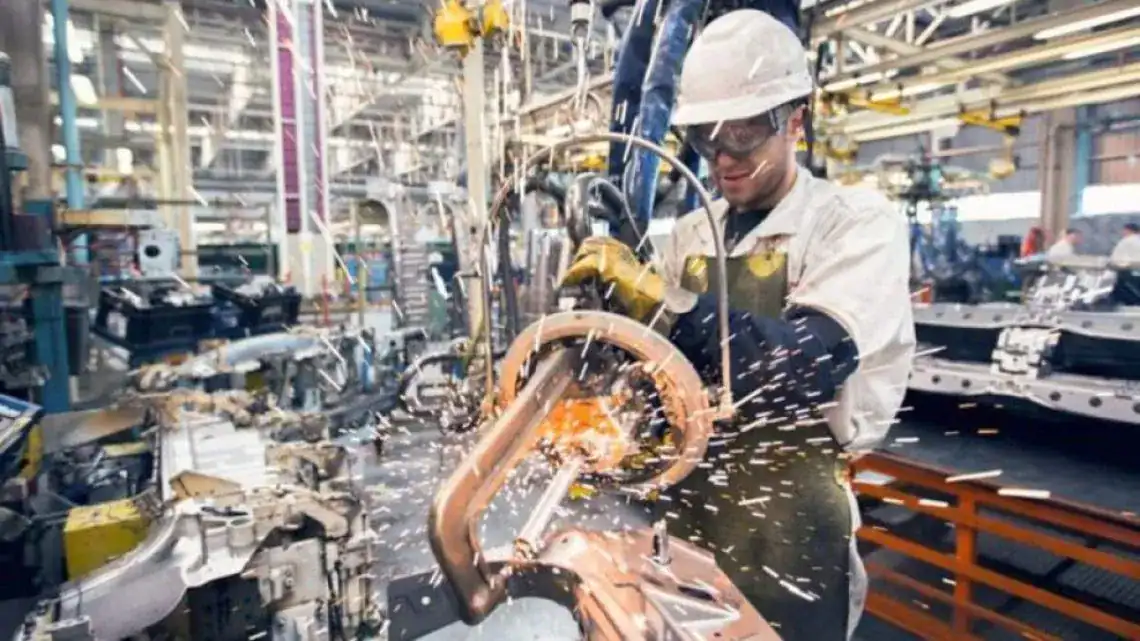
Sectoral Heterogeneity Persists
The headline rebound masks a deeply uneven Q1 pattern, with petroleum refining at +9.5% reaching its highest volume since 2008 and energy and basic-input sectors leading the recovery. Construction’s +12.7% YoY March print stems from the lowest comparison base in February 2025 plus normalized demand for inputs, with the foresto-industrial subsegment in Misiones rebounding +12.8%, while at the opposite end textiles fell -33.2% YoY in February per Fita and agricultural machinery declined -14.7% in Q1. Real wages rose 35.8% YoY in February (INDEC), with the wage index up 5% versus December 2025, supporting consumption recovery despite high underutilization.
| Indicator | March 2026 | Comparable |
|---|---|---|
| Industry IPI (YoY) | +5% | Feb -8.7% YoY |
| Industry IPI (MoM SA) | +3.2% | Feb -4% MoM |
| Construction ISAC (YoY) | +12.7% | Feb -0.7% YoY |
| Construction ISAC (MoM SA) | +4.7% | Q1 +3.9% YoY |
| Q1 cumulative industry | -2.3% YoY | vs Q1 2025 |
| Petroleum refining (Q1) | +9.5% | Highest since 2008 |
| Textile sector (Feb) | -33.2% YoY | Fita data |
| Agricultural machinery (Q1) | -14.7% | Sector recession |
| Capacity utilization (Feb) | 54.6% | vs 58.6% Feb 2025 |
| Wage index (Feb YoY) | +35.8% | +5% vs Dec 2025 |
Connected Coverage
For more on Argentina’s macro momentum this week, see how country risk fell near 500 on the Fitch effect with Buenos Aires placing a record-low bond and the activation of the Milei labor reform RIFL via Decreto 315.
What Happens Next
- Coming weeks: EMAE March release will confirm activity rebound at the aggregate level.
- Q2 2026: Expected acceleration in construction with national highway concessions ramping.
- End-2026: REM analysts project GDP growth at 4.4% (Fitch revised to 3.2%) for the year.
More: Argentina news in English, every day from The Rio Times.
Frequently Asked Questions
What did the INDEC industrial data show?
The Índice de Producción Industrial Manufacturero (IPI) rose 5% year-on-year in March 2026 and 3.2% month-on-month seasonally adjusted, ending eight consecutive months of YoY contraction running from July 2025 to February 2026. The trend-cycle indicator also turned positive at +0.6% MoM signaling a possible stabilization, with February’s prior reading of -8.7% YoY and -4% MoM making March a sharp turnaround. The Q1 2026 cumulative industrial reading still showed -2.3% YoY reflecting the prior decline weight, with 10 of 16 industrial divisions showing normalized demand in March.
How did construction perform?
The Indicador Sintético de la Actividad de la Construcción (ISAC) rose 12.7% YoY in March 2026 and 4.7% MoM seasonally adjusted, with the trend-cycle at +0.7%, while Q1 2026 cumulative construction recorded +3.9% YoY, the strongest segmental reading since the Milei stabilization began. Apparent consumption of construction materials accompanied the rebound, although building permits in February still showed -5.3% YoY suggesting continued caution in private-works pipeline. The foresto-industrial sector in Misiones showed +12.8% rebound in Q1.
Which sectors lagged the rebound?
The textile industry remains in deep crisis with -33.2% YoY in February per Fita, far steeper than the -8.7% headline industry decline that month. Agricultural machinery fell -14.7% in Q1, while permits for new construction in February showed -5.3% YoY contraction, with capacity utilization remaining low at 54.6% in February versus 58.6% the prior year. The unevenness reflects the Milei macro adjustment’s two-speed pattern, where energy and basic inputs accelerate while consumer-discretionary and protected-import-substituting industries continue to compress.
What’s the macro context for the data?
The activity rebound lands days after the Fitch upgrade to B-, country-risk drop to 514 basis points, and Buenos Aires’s $500 million bond at a record-low 7.375% yield. Real wages rose 35.8% YoY in February with the wage index +5% versus December 2025, while the REM analyst panel projects 2026 inflation at 30.5% and dollar at $1,676 by year-end, with GDP at 3.2% per Fitch (4.4% per REM). The combination of activity rebound plus rating upgrade plus tighter sovereign spreads gives the Milei government one of its strongest weeks since the October 2025 midterm victory.
Updated: 2026-05-08T17:30:00Z by Rio Times Editorial Desk
This article was produced by The Rio Times’ automated newsroom system. How we use AI · Report an error · Editorial responsibility: Matthias Camenzind, Editor-in-Chief