Citi’s LATAM Chief: Region Is Better Placed Than Asia or Europe
Key Facts
— — Citi’s chief economist for Latin America, Ernesto Revilla, told Bloomberg Línea that the region is “relatively well positioned compared to other regions, particularly Asia and Europe” for the Iran war shock, citing geographic distance from the conflict, oil-producer status, floating exchange rates, and stronger international reserves than in previous crises.
— — Citi maintains a 12% terminal Selic rate projection for Brazil with risk of upward revision, praises the BC’s “extraordinary prudence,” and expects oil prices to normalize from mid-June as the ceasefire holds. The base case: LATAM growth similar to 2025 with contained inflation because most governments absorb fuel-price shocks fiscally rather than passing them through to consumers.
— — The tail risk: if oil stays elevated long enough to force the market to reprice US interest rate expectations higher, “it could be very disruptive for the region.” Revilla flagged Brazil and Colombia as sharing the same structural problem ahead of their 2026 elections: fiscal trajectories on unsustainable paths where “the market doesn’t care about the color of the party that wins, but about the policies.”
The Citi view in one sentence: Latin America is not the crisis this time. The region is the supplier, the beneficiary, and the hedge—as long as the fiscal math holds and the dollar stays weak.
The Citi Latin America outlook published this week by Ernesto Revilla, the bank’s chief economist for the region, frames the Iran war as a stress test that Latin America is passing. The Rio Times, the Latin American financial news outlet, reports that Revilla’s core thesis is structural: the same floating exchange rates, independent central banks, and commodity-export bases that used to make the region vulnerable to oil shocks now make it a relative winner, because Latin America is a net energy producer positioned far from the conflict zone and closer to the US nearshoring supply chain than any competitor geography.
The Base Case: Oil Recedes by Mid-June
Citi’s base scenario projects oil prices retreating from mid-June as the ceasefire stabilizes, even if it remains fragile. Under this scenario, regional growth stays close to 2025 levels and inflation does not spike meaningfully, because most Latin American governments maintain some degree of fuel-price pass-through control—absorbing the shock through fiscal pressure rather than direct consumer inflation. This explains why countries like Mexico saw tortilla prices rise through fuel-subsidy transmission rather than through headline CPI.
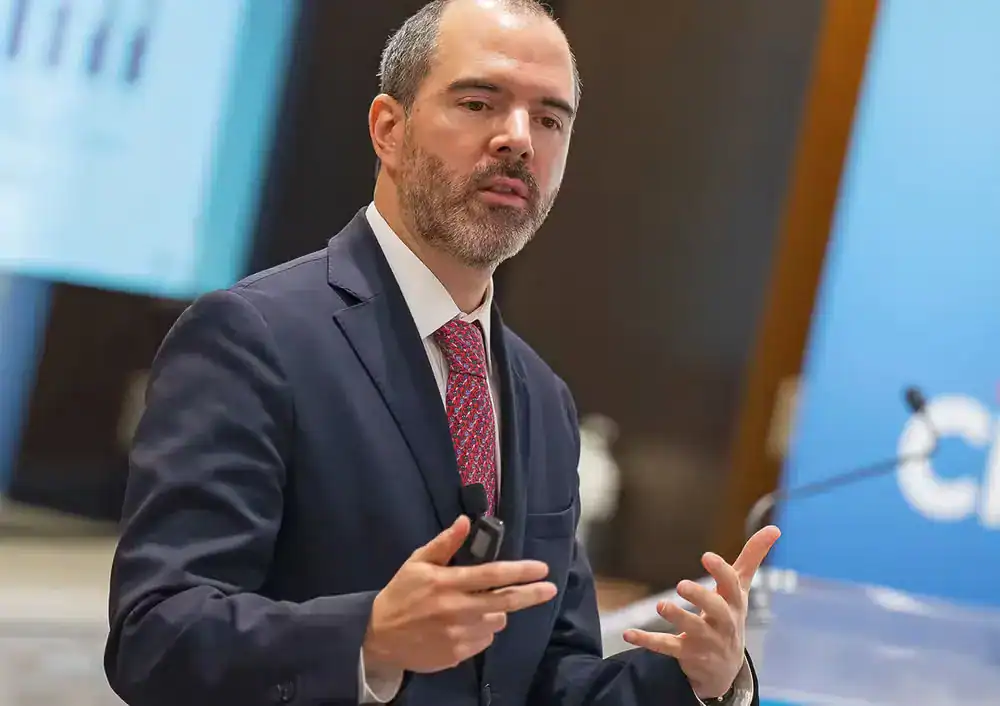
The tail risk is specific: if the war drags on long enough to force markets to reprice US interest rate expectations upward, the entire emerging-market carry trade reverses. “The worst scenario would be if the shock were large enough for the market to have to reprice expectations about US rates,” Revilla told Bloomberg Línea. “If there were a shift to an expectation of higher US rates, it could be very disruptive for the region.”
Brazil: 12% Terminal Selic, Fiscal Risk
Revilla called the Banco Central do Brasil’s monetary management “extraordinarily prudent” and praised its institutional credibility as “an independent conductor of monetary policy.” Citi maintains a 12% terminal Selic projection—well below the current 14.75%—with a caveat that the next analytical round could revise upward. “Given that Brazil was the country that was going to cut rates the most in 2026 before the Iran conflict, there is still room to maneuver once the scenario becomes clearer,” he said.
That 12% terminal call sits in tension with BC director Nilton David’s Washington remarks that the calibration cycle has no pre-committed budget and will end in restrictive territory. The distance between Citi’s 12% and the market’s 12.5-13% consensus reflects differing assumptions about how quickly the Iran premium fades. On fiscal policy, Revilla was direct: both Brazil and Colombia share “an unsustainable fiscal trajectory” heading into their respective elections, and the market demands clear signals from whichever party wins.
The Weak Dollar and the Structural Window
The surprise of 2026 has been dollar weakness. Revilla noted that Latin American currencies have performed “extraordinarily well facing many shocks—tariffs, geopolitical reconfiguration, and the Iran conflict—precisely because of the weak dollar.” Citi expects the dollar to gradually recover its safe-haven role over the next 12 months because “there is no alternative” as a global reserve currency, which means the current window is time-limited for EM carry trades and capital flows.
The broader frame is the most bullish Citi has been on the region in years. With the United States decoupling from parts of Asia and Europe and unable to produce everything domestically, Latin America emerges as “the natural supplier—of traditional commodities but also lithium, rare earths, and manufactured goods.” Morgan Stanley’s parallel call frames the same thesis through nearshoring, critical minerals, and election-cycle reform potential.
Revilla’s closing line captured the shift: “It is good to finally see Latin America not being the center of concerns or vulnerability.” For a region that has spent most of the last two decades as the emerging-market afterthought behind Asia, that sentence from the chief economist of one of the world’s largest banks is the kind of institutional signal that moves allocation decisions.
Related Coverage: Brazil BC Pushes Back on Real Rally • IMF WEO: Latin America Grows 2.3% • Dollar Below R$5 as Brazil Real Rallies
More: Argentina news in English, every day from The Rio Times.
This article was produced by The Rio Times’ automated newsroom system. How we use AI · Report an error · Editorial responsibility: Matthias Camenzind, Editor-in-Chief