Brazil Uses BRICS Chair to Rally Support After U.S. Tariffs, But Unity Remains Elusive
Brazil will host a BRICS leaders’ video summit on September 8, using its 2025 presidency to respond to Washington’s steep new trade barriers.
The Brazilian Presidency confirmed the call, framing the meeting as part of the bloc’s calendar on multilateralism and climate, but officials admit the U.S. tariffs will dominate discussion.
The tariffs themselves are stark. In April, the White House set a 10% baseline duty on imports, then in July added 40 percentage points on Brazil. The change lifted total tariffs on Brazilian exports to 50%, effective in early August.
India faced the same surcharge later in the month, while some partners — such as Saudi Arabia and the United Arab Emirates — saw only the 10% minimum. The uneven treatment split the bloc into winners and losers.
Brazil moved quickly. It filed a case at the World Trade Organization on August 5, arguing the tariffs broke global trade rules. It also summoned the BRICS summit, hoping to rally diplomatic backing and explore stronger trade links among members.
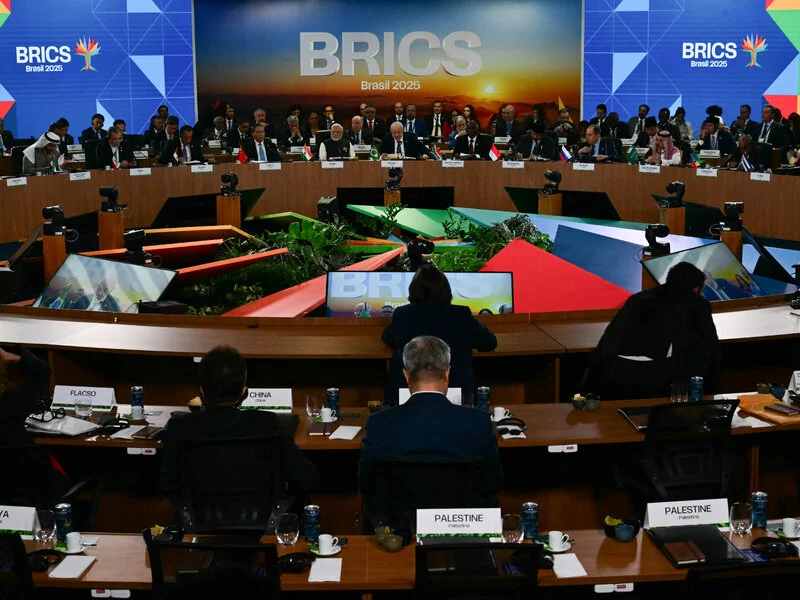
Brasília’s strategy is to combine legal and political channels: challenge the tariffs formally, while showing it can convene emerging economies as a counterweight.
But unity within BRICS remains complicated. Countries hit hardest, like Brazil and India, want a firm response. Others, cushioned by lower tariffs, hesitate to antagonize Washington.
That gap explains why earlier BRICS statements only referred to “restrictive measures” without naming the United States. A coordinated retaliation remains unlikely.
The commercial impact is less abstract. A 50% surcharge makes Brazilian goods far more expensive in the U.S. market. Importers must raise prices or switch suppliers, while exporters weigh cutting margins, redirecting cargo, or scaling back sales.
Because tariff rates vary by origin, cost structures shift unevenly, adding uncertainty to contracts and supply chains. The broader story is about who sets the rules of trade. Washington used executive power to rewrite tariff schedules country by country.
Brazil is countering with a WTO case and by mobilizing BRICS. Whether the bloc can stand behind Brazil remains open, but the attempt shows that trade disputes now spill beyond bilateral lines.
The outcome will not be measured in communiqués. It will show up in customs data, freight orders, and market prices, as companies adjust to tariffs that suddenly rewrote their balance sheets.
For Brazil, the BRICS summit is less about a dramatic declaration and more about building a coalition to resist going it alone.
📌 Read our complete guide: BRICS in 2026: Complete Guide to the 11-Nation Bloc Reshaping Global Trade
More: Brazil news in English, every day from The Rio Times.
This article was produced by The Rio Times’ automated newsroom system. How we use AI · Report an error · Editorial responsibility: Matthias Camenzind, Editor-in-Chief
Brazil runoff, Sunday, October 25: Brazil runoff start time and results schedule. Latest: Brazil runoff polls, Flávio 51%, Lula 49%.