Brazil Focus Survey: IPCA Climbs for Ninth Week to 4.91%

Key Facts
— Key Points
— —The May 11 Boletim Focus lifted the 2026 IPCA forecast from 4.89% to 4.91%, the ninth consecutive weekly increase and the highest reading since the inflation-targeting cycle began in late 2025.
— —The 2027 Selic projection rose to 11.25% from 11.00%, breaking 16 weeks of stability and signaling that markets expect a more cautious Banco Central cutting cycle through the next political mandate.
— —The USD/BRL forecast for 2026 fell to R$5.20 from R$5.25 on stronger oil revenue and capital inflows, while GDP growth held at 1.85% for 2026 and the 2027 figure edged up to 1.76% from 1.75%.
The Banco Central do Brasil’s weekly Boletim Focus, published on Monday May 11, lifted the 2026 IPCA inflation forecast from 4.89% to 4.91% in the ninth consecutive weekly increase and raised the 2027 Selic projection from 11.00% to 11.25% after 16 weeks of stability. Currency projections fell on the front of the curve, with the 2026 dollar forecast slipping from R$5.25 to R$5.20, GDP holding at 1.85% for 2026 and the 2027 figure ticking up to 1.76% from 1.75%. The market is now pricing the Iran-Hormuz oil shock as a persistent inflation driver that will keep monetary policy tighter for longer.
The Rio Times, the Latin American financial news outlet, reports that the Focus reading frames a quiet but decisive shift in market expectations. Four weeks ago the inflation projection sat at 4.10% and the 2027 Selic at 12.50%. The 80-basis-point move in the IPCA estimate and the 125-basis-point change in the longer-end rate path constitute the largest one-month repricing of Brazilian monetary expectations since the Iran-Hormuz crisis opened in late February.
The Conselho Monetário Nacional inflation target for 2026 is 3.0% with a 1.5-percentage-point tolerance band, meaning the upper bound sits at 4.5%. The latest Focus reading of 4.91% sits more than 40 basis points above that ceiling and represents the first time since the new continuous-target regime entered force in January that the median forecast has breached the band by such a wide margin.
The Inflation Curve and What Moved It
The IPCA projection for 2027 held at 4.00% for a second consecutive week, the 2028 estimate stayed at 3.64%, and the 2029 number remained at 3.50%. The convergence path on which the Banco Central built its November 2025 cutting trajectory remains intact, but the speed has slowed materially. The cumulative nine-week increase reflects three compounding drivers: oil prices that rose from US$75 a barrel in late January to above US$100 in March, the diesel tax measures of mid-March that lifted regulated prices, and Lula’s R$30 billion stimulus package announced in late April.
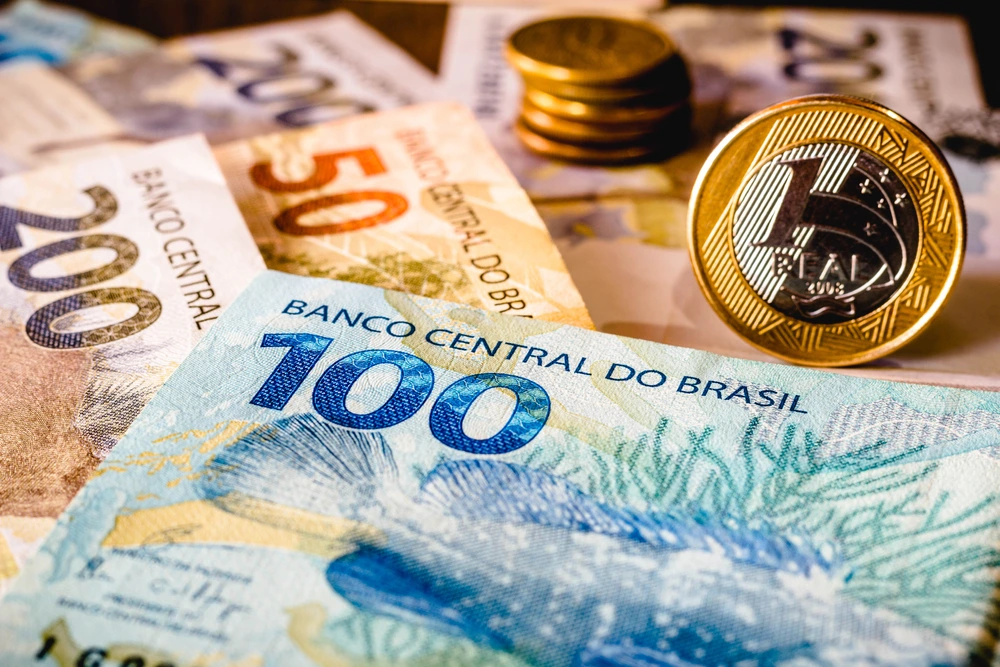
Food prices, the most politically sensitive component for the 2026 election cycle, are the variable receiving the closest attention. The April IPCA-15 print showed food and beverage inflation running at 6.8% year-on-year, the highest reading in 14 months. The fertilizer crisis triggered by the closure of the Strait of Hormuz threatens to feed back into food prices through the 2026-2027 planting season and into the front-month IPCA prints across the second half of the year.
The Selic Path and Copom Optionality
| Indicator | May 11 Focus | Prior week |
|---|---|---|
| IPCA 2026 | 4.91% | 4.89% |
| IPCA 2027 | 4.00% | 4.00% |
| Selic 2026 (year-end) | 13.00% | 13.00% |
| Selic 2027 (year-end) | 11.25% | 11.00% |
| USD/BRL 2026 | R$5.20 | R$5.25 |
| GDP 2026 | 1.85% | 1.85% |
The Selic has stood at 14.50% since the April 29 Copom decision, a 50-basis-point cut from the cyclical peak of 15% that was held from June 2025. The market consensus before the Hormuz crisis envisaged the cutting cycle continuing through 2026 to land at 13% by year-end, with the bulk of the easing then moving into 2027. The May 11 Focus repricing pushes that 2027 endpoint 25 basis points higher and implies one fewer 25-basis-point cut over the next 24 months.
Ex-BCB director Alexandre Schwartsman told Bloomberg Línea last week that he sees the majority of remaining cuts arriving only after the October 2026 election, with the terminal rate landing close to 11% in 2027. The Focus median has now caught up to that scenario. The 2028 and 2029 Selic projections remain anchored at 10%, indicating that the market still believes in eventual disinflation but has lengthened the runway by roughly a quarter.
Live Market IntelligenceBrazil — Live Market Board
Rio Times · Live Market Intelligence
Brazil — Live Market Board
-0.22%
204,970.67
-0.22%
68,929.72
+1.87%
10,983.83
+0.12%
2,848,945
—
2,545.85
-0.80%
59,664.64
-0.12%
| Instrument | Last | Change | YoY | Prev. | High | Low | Volume |
|---|---|---|---|---|---|---|---|
| IBOV | 204,970.67 | -0.22% | +21.85% | 205,430.33 | 168,310 | 167,142 | — |
| USD/BRL | 5.16 | +0.01% | -5.13% | 5.16 | 5.18 | 5.14 | — |
| SELIC | 14.00% | — | — | — | — | — | |
| PETR4 | 41.64 | -0.05% | +35.19% | 41.66 | 41.97 | 41.15 | 41,499,400 |
| VALE3 | 72.97 | +0.83% | +30.75% | 72.37 | 73.54 | 72.66 | 17,658,000 |
| ITUB4 | 38.60 | -1.03% | +4.57% | 39.00 | 39.34 | 38.39 | 29,487,800 |
| BBDC4 | 16.85 | +0.36% | +3.50% | 16.79 | 16.90 | 16.67 | 19,416,900 |
| BBAS3 | 19.37 | +0.47% | +0.73% | 19.28 | 19.44 | 19.16 | 11,069,200 |
| B3SA3 | 14.26 | -0.21% | +12.73% | 14.29 | 14.47 | 14.11 | 33,037,800 |
| ABEV3 | 14.89 | -0.80% | +21.91% | 15.01 | 15.07 | 14.81 | 16,453,100 |
| WEGE3 | 47.59 | +0.49% | +29.99% | 47.36 | 48.08 | 47.36 | 3,364,600 |
| PRIO3 | 59.14 | -0.19% | +50.67% | 59.25 | 59.81 | 58.74 | 3,325,600 |
| SUZB3 | 41.33 | +2.35% | -23.55% | 40.38 | 41.48 | 40.35 | 3,914,900 |
| RENT3 | 34.68 | -0.09% | +0.84% | 34.71 | 34.96 | 34.35 | 7,979,100 |
| AZZA3 | 15.89 | -2.63% | -53.76% | 16.32 | 16.42 | 15.82 | 1,330,300 |
| CSNA3 | 4.30 | +0.47% | -42.65% | 4.28 | 4.41 | 4.26 | 10,076,100 |
| GGBR4 | 24.69 | +2.19% | +51.38% | 24.16 | 24.85 | 24.18 | 7,047,600 |
| ENEV3 | 24.21 | -1.38% | +70.49% | 24.55 | 24.64 | 23.99 | 9,297,000 |
The Currency Counter-Signal
The currency reading is the optimistic counter-narrative inside this Focus release. The 2026 USD/BRL forecast fell to R$5.20 from R$5.25, the 2028 estimate dropped to R$5.35 from R$5.39, the 2027 projection held at R$5.30 and the 2029 reading stayed at R$5.40. The downward revision reflects three structural drivers, namely record commodity export volumes, the Q1 trade surplus of US$23.6 billion that printed last week, and a foreign-investor positioning that lifted Bovespa ownership to a record 62% earlier in the cycle.
The mismatch matters because Brazil’s real economy is benefiting from the commodity windfall while domestic inflation expectations deteriorate. Goldman Sachs has flagged the same divergence in its EM strategy note, calling Brazilian assets attractive on relative value but at risk if the inflation expectations channel finally drags long-end yields higher. The 10-year NTN-B real yield closed at 7.30% on Friday, near the year’s high.
Connected Coverage
The Focus print arrives the same week as the May 11 corporate-earnings dump that included Petrobras Q1 record results and the BTG Pactual Q1 26.6% ROE print. The longer-term policy backdrop is set out in our Brazil Economy 2026 guide, and the oil-shock dynamic feeding the inflation profile is detailed in the Iran War and Hormuz Crisis 2026 guide.
What to Watch
- May 9 IPCA print: the front-month inflation reading that will validate or reject the Focus repricing.
- Copom June 17-18 meeting and the accompanying communiqué that will signal whether the cutting cycle pauses or continues against the steeper inflation curve.
- Trimmed-mean core inflation: the 3.40% reading in April is the variable Copom watches most closely for signs of de-anchoring.
- USD/BRL behaviour: whether the downward Focus revision is validated as Lula’s October 2026 election approaches and political-risk premium typically rises.
- Lula stimulus measures: the next round of MPs after the Novo Desenrola debt-relief programme signed May 4, and whether they add to inflation pressure.
More: Brazil news in English, every day from The Rio Times.
Frequently Asked Questions
What did the May 11 Focus survey say about Brazil’s inflation?
Median analyst projections lifted the 2026 IPCA forecast from 4.89% to 4.91%, the ninth consecutive weekly increase. The figure sits more than 40 basis points above the Conselho Monetário Nacional’s 4.5% upper tolerance band, with the 3% central target now mathematically out of reach for 2026.
Why did the 2027 Selic projection move higher?
The 2027 Selic projection rose from 11.00% to 11.25%, ending 16 weeks of stability. The shift reflects the cumulative impact of the Iran-Hormuz oil shock, the diesel-tax measures of March, and Lula’s R$30 billion stimulus package on the medium-term inflation outlook.
What is the current Selic rate?
The Selic stands at 14.50% after the April 29 Copom decision delivered a 50-basis-point cut from the cyclical peak of 15.00% held since June 2025. The next Copom meeting is scheduled for June 17-18, 2026.
Where do dollar and GDP projections stand?
The 2026 USD/BRL forecast fell to R$5.20 from R$5.25, while 2027 held at R$5.30 and 2028 dropped to R$5.35. GDP growth for 2026 stayed at 1.85% and 2027 rose marginally to 1.76% from 1.75%.
Updated: 2026-05-12T08:00:00Z
Sources: Banco Central do Brasil Boletim Focus (May 11, 2026), Agência Brasil, Exame, InfoMoney, Bloomberg Línea, Goldman Sachs EM strategy note.
This article was produced by The Rio Times’ automated newsroom system. How we use AI · Report an error · Editorial responsibility: Matthias Camenzind, Editor-in-Chief
LatAm Markets: Live Signals → — real-time movers, turnover leaders and FX across Latin America.