Bolivian healthcare workers call general strike in protest against enactment of Health Emergency Law
RIO DE JANEIRO, BRAZIL – The Bolivian National Health Council (CONASA) announced on Thursday that as of last Friday and until February 28th it will go on a general strike against the enactment of the Health Emergency Law.
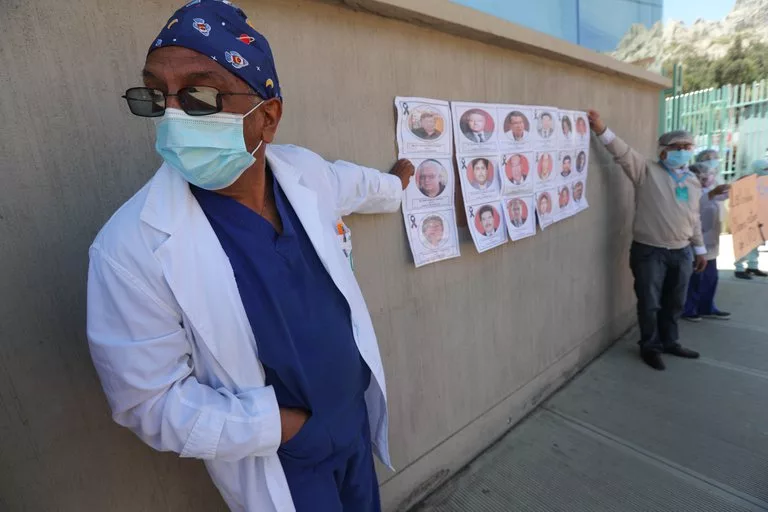
In a press conference, the president of the Bolivian Medical Association, Cleto Cáceres, read the union’s resolution in which “all medical associations are urged to comply with the general strike as defined until February 28th.”
As announced before, the health union pointed out that the pressure measure is the result of “the government’s unwillingness to sit down and dialogue with the sector to meet the demand for better healthcare conditions for the population that demands better medical care every day and that every day has to mourn the death of a relative and ourselves of a colleague.”
The union urged the president Luis Arce’s government to revoke the Health Emergency Law “because it is unconstitutional.”
On Wednesday night, president Luis Arce promulgated the law despite warnings from healthcare professionals of an indefinite strike should the president enact the law, which is also rejected by the opposition.
The opposition forces Comunidad Ciudadana and Creemos argue that the law approves confidentiality clauses and foreign regulation for the purchase of tests, vaccines and medicines, considering that this will reduce transparency in the management of the health crisis and could lead to corruption.
They further cautioned that with the law, the national government strips regional and municipal governments of their autonomy and capability in health management, contrary to what is stated in the Constitution.
The Bolivian Ombudsman’s Office lamented CONASA’s decision and called for dialogue between the parties.
“While recognizing the health sector’s right to protest as a vulnerable group against Covid-19, their demands must be reasonable and all avenues of dialogue must be exhausted,” the Ombudsman’s Office said in a statement.
The agency also alerted that this pressure measure could pose a risk to the health of Bolivians in need of medical attention due to the coronavirus.
The Ombudsman’s Office considers that the agreements and observations made by the Bolivian Medical Association to the law were respected by the Government, and therefore does not find “a point of contention that would justify the measures announced by the health sector.”
However, it does recognize that some biosafety and protection measures for healthcare professionals have been insufficient, so it urged “the government to secure the essential resources to face this type of emergency situations and calls on the Departmental and Municipal Autonomous Governments, within the framework of their jurisdictions, to continue and expand their response to these demands.”
For his part, Senate President Andrónico Rodríguez, a member of the ruling party, urged the government and the health sector to reach a consensus to prepare the regulations under the new norm.
“I am convinced that the Council of Ministers can summon the health sector and that they should be part of this regulation so that it may be more responsible, to benefit not only the people, but also healthcare professionals, by improving their working conditions,” said Rodriguez on Thursday in statements to the media.
And he called on “the conscience of doctors, healthcare professionals should not interrupt services during this healthcare crisis, (…) it is very irresponsible to interrupt health services during a healthcare crisis, it is inconceivable.”
The Health Emergency Law establishes several provisions such as the control of service prices in private facilities, of treatments and medicines, the direct recruitment of foreign doctors and the ban of any form of protest such as strikes by healthcare personnel.
Bolivia has been faced with a second wave of the pandemic since late December, with daily reports of over 50 deaths and 2,000 infections for several days. The country now totals 11,303 deaths and 238,495 infections since March 2020, when the first cases were detected.
Source: Infobae
More: Brazil news in English, every day from The Rio Times.
This article was produced by The Rio Times’ automated newsroom system. How we use AI · Report an error · Editorial responsibility: Matthias Camenzind, Editor-in-Chief