Argentina Inflation Hits 2026 High Ahead of IMF Meetings
Key Facts
— — INDEC publishes March CPI at 4pm Buenos Aires time today — Economy Minister Caputo confirmed it will be “above 3%,” the highest monthly print of 2026
— — Private estimates range from 2.9% to 3.5%, with core inflation at approximately 2.9% — the tenth consecutive month above 2%
— — Caputo heads to IMF/World Bank Spring Meetings in Washington, projecting “disinflation and growth from April” despite annual forecast rising to 29.1%
Argentina inflation March data lands today at 4pm when INDEC publishes the CPI — a number that Economy Minister Luis Caputo has already conceded will exceed 3%, making it the steepest monthly increase since Milei’s government consolidated its disinflation narrative. The admission, made to executives at the Bolsa de Comercio de Rosario, marks the first time the minister has front-run a negative inflation print.
The Rio Times, the Latin American financial news outlet, reports that private consultants cluster their estimates between 2.9% and 3.5%, with the Central Bank’s Relevamiento de Expectativas de Mercado (REM) at 3.0-3.1%. If confirmed, March would be the tenth consecutive month in which monthly inflation stayed above 2% without decelerating — a plateau that complicates the government’s promise of convergence toward single-digit annualized rates.
What Drove Argentina Inflation March Higher
Three factors converged. Fuel prices absorbed the Middle East oil shock, with pump prices rising sharply. Education costs jumped on the start of the school year, and regulated prices including electricity and transport received scheduled adjustments.
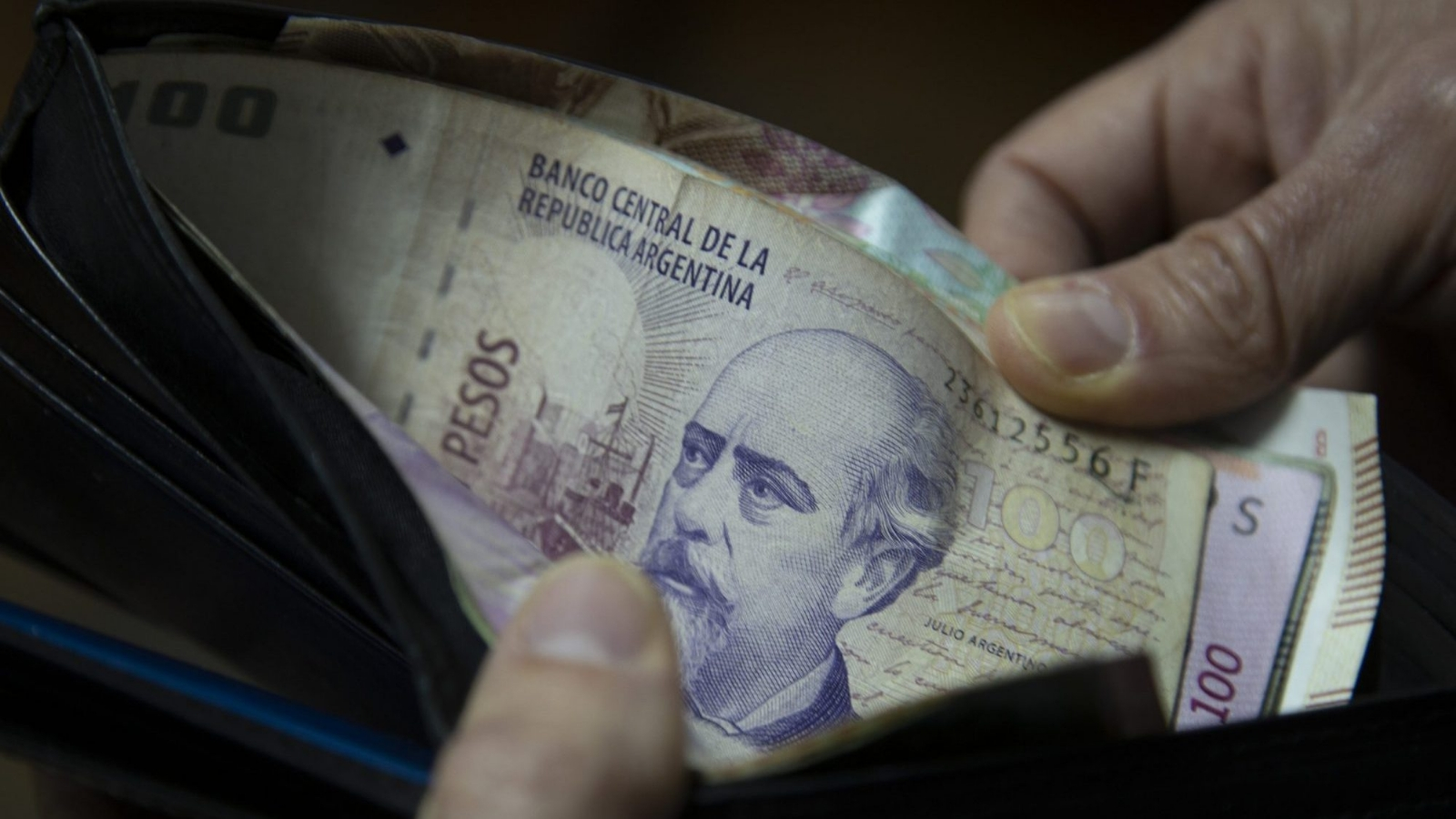
Caputo attributed the spike to “a shock that had an obvious impact on everything related to oil.” Consultancy C-P estimated 3.3% with regulated prices alone rising approximately 4.7%. Core inflation remained around 2.9%, suggesting underlying pressures have not fundamentally worsened.
The Annual Forecast Climbs to 29.1%
The REM’s annual projection for 2026 has jumped to 29.1%, up 3.1 percentage points from the prior survey. The first-quarter accumulation stands at 5.9% through February alone. If March confirms above 3%, the first quarter will have delivered roughly 9% — a pace inconsistent with the government’s stated target.
Caputo promised “disinflation and growth from April,” with the REM projecting a deceleration to 2.6% in April and closer to 2% by mid-year. Whether that materializes depends on oil prices, the dollar’s path — the official rate is forecast at ARS 1,420 for April and ARS 1,700 by December — and the government’s willingness to hold the line on regulated price adjustments.
Live Market IntelligenceArgentina — Live Market Board
Rio Times · Live Market Intelligence
Argentina — Live Market Board
-1.29%
185,229.17
-0.41%
63,375.93
-0.78%
11,381.18
+1.30%
3,021,926
-1.29%
2,548.22
+1.05%
60,023.65
-1.13%
| Instrument | Last | Change | YoY | Prev. | High | Low | Volume |
|---|---|---|---|---|---|---|---|
| MERVAL | 3,021,926 | -1.29% | +30.51% | 3,022,485 | 3,042,365 | 2,991,150 | — |
| USD/ARS | 1,493 | +0.10% | +12.96% | 1,491 | 1,494 | 1,480 | — |
| YPF | 7,810 | +0.26% | +72.84% | 7,790 | 7,850 | 7,600 | 1,763,858 |
| GGAL | 6,980 | -0.78% | +1.82% | 7,035 | 7,115 | 6,920 | 1,564,062 |
| PAMPA | 5,115 | +0.69% | +26.70% | 5,080 | 5,140 | 5,000 | 721,190 |
| TXAR | 747.50 | -2.35% | +18.67% | 765.50 | 770.00 | 742.50 | 771,892 |
| ALUAR | 938.00 | -1.21% | +29.83% | 949.50 | 951.00 | 932.50 | 135,426 |
| TGS | 8,870 | -0.17% | +15.05% | 8,885 | 9,075 | 8,720 | 143,546 |
| CEPU | 2,156 | +1.84% | +28.36% | 2,117 | 2,165 | 2,086 | 404,146 |
| MIRGOR | 1,650 | -1.20% | -92.90% | 1,670 | 1,670 | 1,635 | 20,877 |
| COME | 40.93 | -0.73% | -30.47% | 41.23 | 41.60 | 40.50 | 4,258,884 |
| LOMA NEGRA | 3,130 | +0.08% | +5.80% | 3,128 | 3,205 | 3,090 | 182,992 |
| BYMA | 275.00 | -1.70% | +35.14% | 279.75 | 282.50 | 272.00 | 1,409,575 |
| TELECOM ARG | 4,233 | -0.70% | +55.19% | 4,263 | 4,335 | 4,160 | 31,896 |
| GLOBANT | 38.10 | -2.26% | -49.65% | 38.98 | 38.70 | 36.77 | 793,552 |
| MERCADOLIBRE | 1,870 | -3.59% | -20.71% | 1,940 | 1,927 | 1,870 | 329,640 |
AmCham Summit and Washington Week
Caputo speaks today at the AmCham Summit in Buenos Aires — co-organized by JP Morgan and Bank of America — before heading to Washington for the IMF/World Bank Spring Meetings. President Milei delivers the closing address. The event assembles executives from Chevron, Cargill, Amazon Web Services, and other US multinationals with stakes in Argentina’s deregulation agenda.
The World Bank projects Argentina growing 3.6% in 2026 — far above Brazil’s 1.6% or Mexico’s 1.3% — calling the country “the principal upside exception” in the region. For investors, today’s CPI print will test whether the inflation plateau undermines that growth story or whether Caputo’s promise of April deceleration proves credible enough to sustain the narrative through Washington’s corridors this week.
Deep Dive
More: Argentina news in English, every day from The Rio Times.
This article was produced by The Rio Times’ automated newsroom system. How we use AI · Report an error
In depth
Read More from The Rio Times