Two U.S. Navy Aircraft Down In The South China Sea—And Why It Matters
Within about half an hour on Sunday afternoon, two U.S. Navy aircraft went into the South China Sea and five sailors were pulled from the water alive.
Shortly before 3 p.m. local time, an MH-60R Sea Hawk helicopter from Helicopter Maritime Strike Squadron 73, operating off the carrier USS Nimitz (CVN-68), crashed during routine flight operations.
Search-and-rescue teams from the carrier strike group recovered all three crew members in stable condition. Roughly 30 minutes later, a two-seat F/A-18F Super Hornet from Strike Fighter Squadron 22 also went down during a separate routine mission.
Both aviators ejected and were rescued. The Navy has opened investigations and has not linked the incidents or cited weather or mechanical causes.
The story behind the headlines is where this becomes bigger than two mishaps. The Nimitz—the oldest active U.S. carrier—is on what is widely described as its final operational deployment, sailing in one of the most contested waterways on earth.
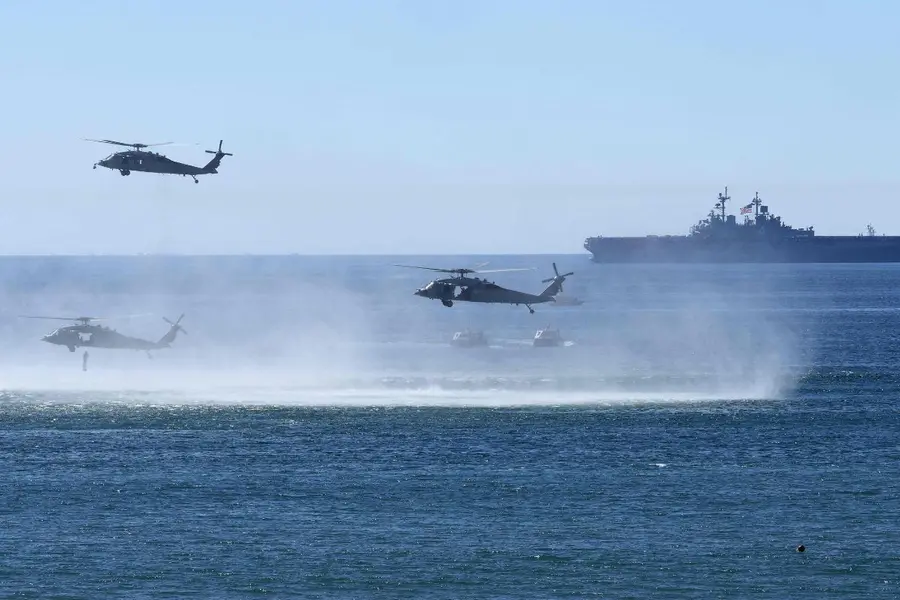
The South China Sea is crowded with overlapping claims, military patrols, and constant signaling. In this environment, even accidents can ripple.
Naval Incidents Test Safety and Diplomacy in Key Trade Waters
The U.S. is likely to mount a controlled recovery to secure sensitive equipment, while nearby countries track every move for signs of escalation—and a single misread message can turn routine operations into a diplomatic problem.
Notably, China’s Foreign Ministry said it was prepared to offer humanitarian assistance, a reminder that cooler heads can sometimes prevail even amid rivalry.
Why readers outside the region should care is simple. A third of global shipping passes through these waters. Carrier aviation is demanding even in peacetime, and high-tempo operations in tight spaces raise the odds of things going wrong.
Quick rescues here show the value of readiness; transparent communication reduces suspicion; careful recovery limits technology leaks.
There is no indication of hostile action, but two losses on the same day will trigger the kind of safety review that helps prevent the next crisis.
In short, this wasn’t just a bad day on deck—it was a real-world stress test in a flashpoint that matters to anyone who relies on stable trade routes and predictable great-power behavior.
This article was produced by The Rio Times’ automated newsroom system. How we use AI · Report an error · Editorial responsibility: Matthias Camenzind, Editor-in-Chief
Read More from The Rio Times