The Economy Nobody Saw Coming: How Paraguay Quietly Outgrew Every Nation in South America
Key Points
- Between 1960 and 2024, Paraguay’s economy expanded 1,519.9% — more than Brazil, Chile, Colombia, or Argentina — powered by massive hydroelectric dams and a soybean boom
- Moody’s awarded the country its first investment grade rating in 2024, yet 85% of teenagers fail basic math and most workers have no formal contract
- The same data that free-market advocates celebrate as a model of low-tax discipline, critics call a textbook case of growth without inclusion
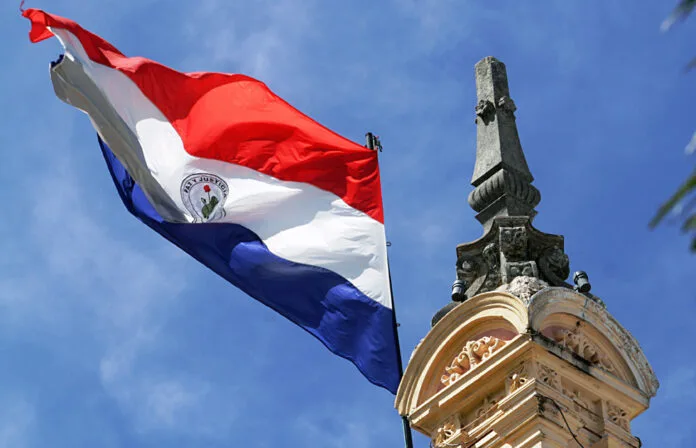
Think of a country with no oil, no coastline, no precious metals, and a population smaller than Hong Kong’s. Now imagine it outgrowing every economy on its continent for more than six decades.
That country is Paraguay, and unless you have been paying close attention to South America, you have probably never heard this story.
World Bank figures show Paraguay‘s GDP went from $2.8 billion in 1960 to $46 billion in 2024 — a 1,519.9% expansion in real terms.
Colombia grew 1,086%. Chile, 997%. Brazil, 976%. Argentina managed 287%. Venezuela, once the richest nation in the region, grew just 28.4% before its economy collapsed by 80% under Maduro.
Two things drive Paraguay’s engine. First, the Itaipu Dam on the Paraná River — one of the Seven Wonders of the Modern World — generates nearly all the country’s electricity from renewable hydropower and exports the surplus to Brazil for over $500 million a year.
Second, Paraguay became the world’s fourth-largest soy exporter and eighth-largest beef shipper, while taxing everything at a flat 10% — corporate, income, and VAT — the lightest burden on the continent.
Paraguay Growth Masks Persistent Inequality
In July 2024, Moody‘s rewarded this with investment grade status. CEPAL forecasts Paraguay will lead South American growth again in 2025 at 5.5%.
Here is where the story splits. Market-oriented analysts see proof that fiscal discipline and open borders work. But walk ten minutes from Asunción’s new glass towers and you find a different reality.
Five percent of landowners hold 90% of the land. The soy boom, largely driven by Brazilian settlers, displaced thousands of small farmers.
Poverty dropped from 51% to 20% since 2003, yet 64% of workers remain informal, and the 2022 PISA assessment found 85% of fifteen-year-olds cannot meet basic standards in mathematics.
Paraguay’s GDP per capita sits at $6,416 — roughly half the Latin American average. The economy grew sixteen-fold, but per person income still trails the region.
Nearly $10 billion in foreign investment arrived in 2024, the EU-Mercosur trade deal promises access to 700 million consumers, and the macro fundamentals are genuinely strong.
What remains unresolved is whether this growth will ever reach the majority — or whether Paraguay will keep producing wealth that most Paraguayans never touch.
Download full report here.
Related coverage: Brazil’s Morning Call | Chile Closes 2025 With a Surprise Growth Beat, but Mining Wo This is part of The Rio Times’ daily coverage of Paraguay affairs and Latin American financial news.
Key Facts
— Deep Dive
— For the complete picture, read our in-depth guide: Paraguay: Washington's Most Valued Ally in Latin America
This article was drafted with automated assistance and reviewed before publication. How we use AI · Report an error · Editorial responsibility: Matthias Camenzind, Editor-in-Chief
Read More from The Rio Times