The Dnieper Gambit: Moscow’s Bid to Break Ukraine
(Analysis) The war in Ukraine, a relentless crucible now in its third year, may have reached its defining moment.
A torrent of evidence suggests Russia has unleashed a major offensive across the breadth of the front, a campaign of steel and fire that could fracture Ukraine’s defenses and upend the fragile U.S.-Russia peace process.
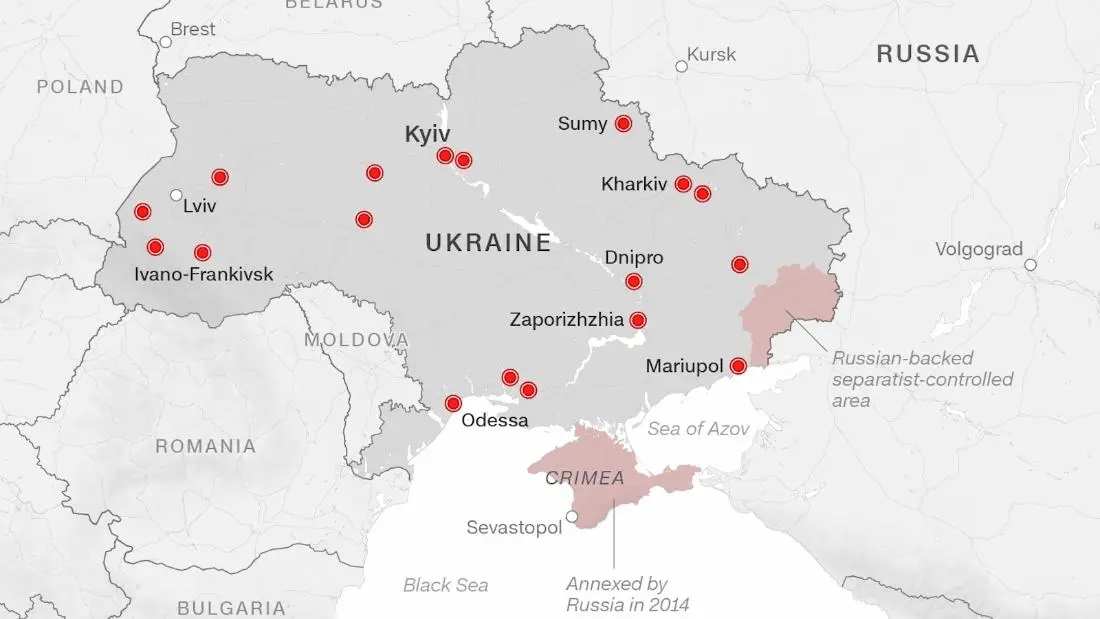
From the northern borderlands of Sumy to the scarred earth of Donbas and the industrial lifeline of the Dnieper River, Russian forces are advancing with a ferocity that echoes the war’s early days.
This is no mere skirmish—it’s a calculated bid to redraw Eastern Europe’s borders and dictate terms to a wavering West, leaving Ukraine’s fate and global stability hanging by a thread.
The Offensive Takes Shape: A Multi-Front Assault
The battlefield tells a stark tale.
Since early April, Russian troops have surged forward, capturing villages at a pace unseen since last summer’s breakthroughs.
In the north, near Sumy—a city of 280,000 teetering on the Russian border—artillery barrages on April 7 brought Moscow’s guns within 40 kilometers, their rumble a grim harbinger.
In Kharkiv, Ukrainian reports confirm Russian forces crossed the Oskil River on April 5 with an estimated 20,000 troops, uniting bridgeheads near Kupyansk and encircling Volchansk after weeks of bitter fighting.
The prize looms large: Kharkiv city, Ukraine’s second-largest, now lies perilously exposed. In Donbas, the tempo is unrelenting.
Chasov Yar, a linchpin town, is nearly lost, its defenders encircled by April 8 amid a failed counterattack in nearby Toretsk.
Further west, Slavyansk and Kramatorsk—the last Ukrainian bastions in this ravaged region—brace for a siege that could seal Russia’s grip on the east.
Yet the south holds the greatest peril.
Russian units, dormant since thwarting Ukraine’s 2023 offensive, have roared to life, outflanking Pokrovsk and driving toward Zaporizhzhia and Dnipro.
These Dnieper River cities, cradles of Ukraine’s industrial might, are now within Moscow’s reach, their steelworks and power plants vital to Kyiv’s survival.
This is a meticulously orchestrated assault.
Hardened ground after the spring thaw favors Russia’s tanks, while the near-resolution of Ukraine’s Kursk incursion—repelled by March—has unshackled thousands of troops.
Unlike Kyiv’s telegraphed 2023 counteroffensive, which stalled against fortified lines, Russia’s advance is a broad-front juggernaut, stretching Ukraine’s dwindling reserves to the breaking point.

Why Now? Power and Pressure
Moscow’s timing is no accident.
Vladimir Putin, fresh from Kursk’s reclamation, declared last week that Russian forces hold the “strategic initiative” and must “finish the job.”
With the ground firm and Ukraine reeling, the Kremlin sees a window to strike before summer rains mire its machines.
Yet this offensive transcends battlefield logic—it’s a geopolitical chess move.
Since January, the U.S. under President Donald Trump has pressed for a ceasefire, with talks limping along in Riyadh.
Russia’s June 2024 “Istanbul Plus” demands—Ukrainian neutrality, demilitarization, and cession of four regions plus Crimea—remain non-negotiable, rejected by Kyiv and its allies.
Now, Moscow wields its military hammer to forge leverage, aiming to possess more territory when negotiations dawn and render Ukraine’s defiance moot.
The Dnieper is the crown jewel.
Seizing Zaporizhzhia and Dnipro would sever Ukraine’s industrial arteries, plunging its war economy into chaos.
“Lose this heartland, and Ukraine ceases to function as a state,” warned a Kyiv-based analyst, a sentiment echoed in Moscow’s rumored threats to industrialists: no deal means a march to Odesa and Mykolaiv.
Russia’s strategy—stretch the enemy, exploit collapse, claim the spoils—mirrors its historical playbook, from Avdiivka’s fall to Crimea’s annexation.
A Peace Process Teetering
For the U.S.-Russia dialogue, this is a thunderclap.
Trump, balancing his base’s disdain for foreign entanglements, has let Biden’s $61 billion aid package—due to expire by July—sustain Ukraine without renewal.
Kyiv’s pleas for an “unconditional ceasefire,” echoed by Britain’s Keir Starmer and France’s Emmanuel Macron, grow shrill as Russian shells fall.
Yet Moscow, emboldened, sees no reason to pause.
Deputy Foreign Minister Sergei Ryabkov’s April 2 rebuke—“none of our key issues have been addressed”—underscores Russia’s stance: why halt when the West wavers?
Sanctions, once a blunt tool, falter against Russia’s oil wealth and China’s tacit support, leaving Washington’s envoy, Keith Witkoff, grasping at straws amid resistance from hawks like Marco Rubio.

Ukraine’s Defiance and Desperation
Ukraine fights on, bloodied but unbowed.
Drone strikes on Russian munitions plants, like Samara on April 7, signal resilience, yet the human toll mounts.
In Kryvyi Rih, a Russian missile killed 12 on April 4, a wound felt deeply in Zelensky’s hometown.
“We need more than words,” a weary Ukrainian commander told reporters, eyeing the eastern front’s collapse.
Civilians flee westward, their exodus a silent plea for salvation.
What Lies Ahead: A World on Edge
This offensive is Russia’s gauntlet—to Ukraine, the West, and history itself.
If Moscow sustains its momentum, reaching the Dnieper or encircling Donbas, Ukraine risks disintegration, its people and leaders facing an existential abyss.
For the U.S. and NATO, the choice is agonizing: escalate aid to force a stalemate, or watch Putin’s “lava flow” consume a sovereign state.
Europe, paralyzed by indecision, and China, quietly complicit, loom as silent players in a drama that could redefine power for decades.
The coming weeks will unveil Russia’s ceiling—whether it halts at the river or presses to the sea.
As Kyiv’s lights flicker under bombardment, the world holds its breath, witnessing a war poised to etch its mark in blood and ruin.
This article was produced by The Rio Times’ automated newsroom system. How we use AI · Report an error · Editorial responsibility: Matthias Camenzind, Editor-in-Chief