Bolsonaro’s Detention Returns to Virtual Plenary; Election Looms

Key Facts
— — Brazil’s Supreme Federal Tribunal (STF) opened a new extraordinary virtual judgment on former President Jair Bolsonaro’s detention this week. The session runs until 23:59 on Friday and will be decided by the Primeira Turma — Alexandre de Moraes (rapporteur), Flávio Dino (panel president), Cristiano Zanin, and Cármen Lúcia — the same four-minister bloc that has delivered every decision on Bolsonaro’s case since Luiz Fux moved to the Segunda Turma in late October 2025.
— — Bolsonaro is serving a 27-year, three-month sentence handed down by the STF in September 2025 for leading the Núcleo 1 of the 2022-2023 coup attempt (Ação Penal 2668). He has been in preventive custody since November 22, 2025 after attempting to violate his ankle monitor, and has had two previous domiciliar requests denied in 2026 — the latest by unanimous vote on March 5.
— — The judgment arrives in a saturated political environment. Brazil’s diplomatic crisis with the United States deepened this week after Brasília expelled US Embassy official Marcelo Ivo de Carvalho in retaliation for the April 13 detention and April 15 release of PF delegate Alexandre Ramagem in Orlando. Six months before the October election, the Bolsonaro file sits at the center of the US-Brazil rift, the Section 301 probe, and the Partido Liberal’s succession calculus.
Runoff · Sunday, 25 October
Brazil Runoff 2026: Lula vs Flávio
Date, polls, debates, odds and how the runoff works, updated every day.
Read our Brazil election 2026 runoff guide →
Brazil election 2026 · Brazil election polls · Who will win: Brazil election odds · Brazil runoff date and results start · Brazil election results · Brazil election poll data (CSV) · All election stories
Prediction markets · who wins the runoff
Implied chance of winning Brazil’s presidency on 25 October, from traders’ prices.
Polymarket
Flávio Bolsonaro 78.6% · Lula 20.5% (US$191 million traded)
Kalshi (regulated in the US by the CFTC)
Flávio Bolsonaro 80% · Lula 21%
As of 21 October, 10:40 pm ET (03:40 Lisbon), updated every 20 minutes. Prices are bets, not polls, and can move fast.
Why we show this: prediction markets turn real-money bets into a live probability that moves within minutes of the news, which is why investors, campaigns and newsrooms in the United States now follow them closely. We show them next to polls and official results, never instead of them.
The STF Bolsonaro detention file has moved from criminal trial to a slow sequence of procedural judgments that each arrive charged with political weight — and this week’s extraordinary virtual session is one more installment in a pattern that will define Brazil’s election year.
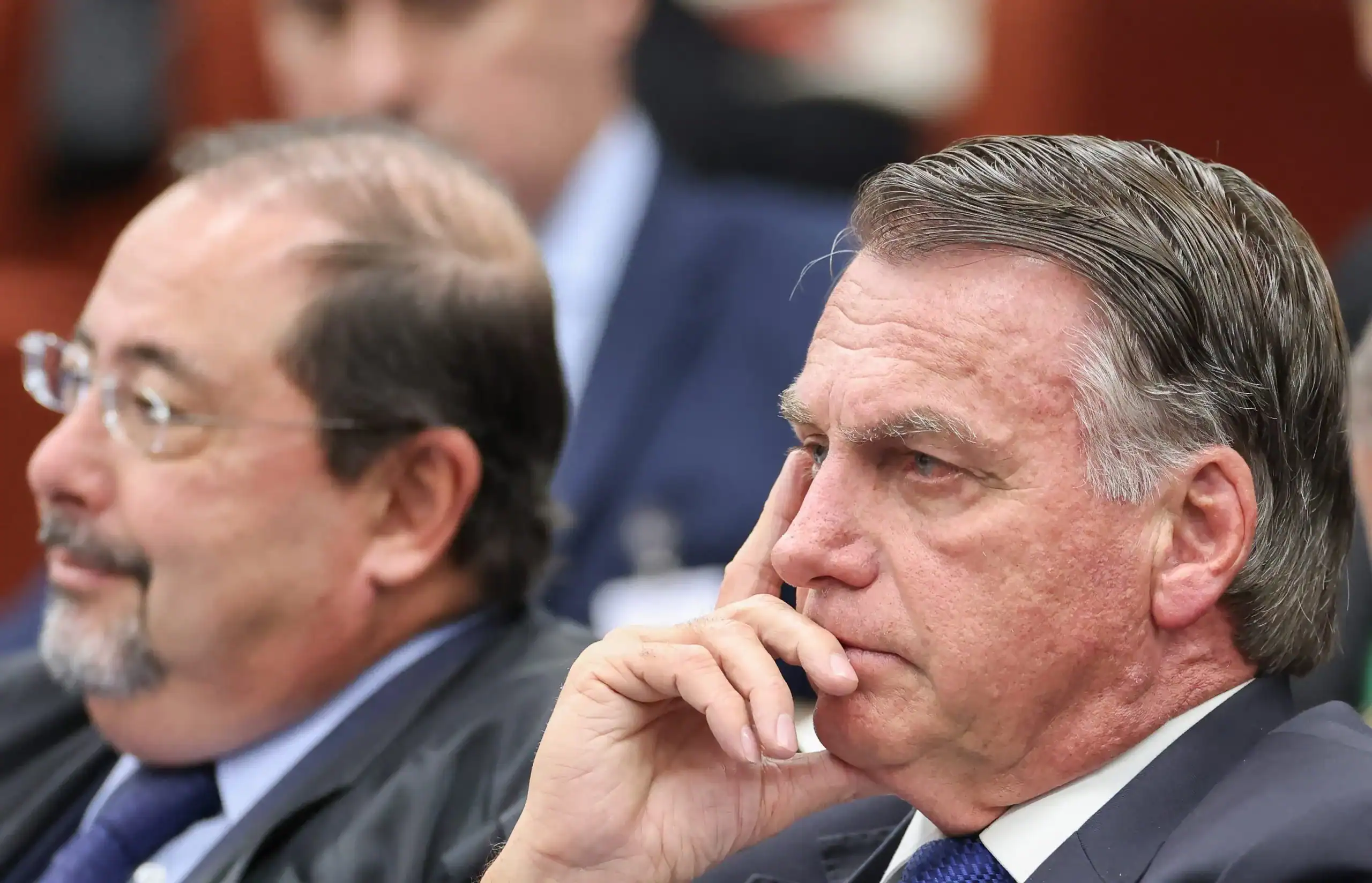
Brazil’s highest court opened another extraordinary virtual session on Jair Bolsonaro’s imprisonment this week, the third such session of 2026 and the latest in a drip-feed of judgments that keep the former president at the center of Brazilian politics even as the October presidential election approaches. The Rio Times, the Latin American financial news outlet, reports that the STF Bolsonaro detention review is scheduled to conclude at 23:59 on Friday, with the Primeira Turma’s four-minister bloc widely expected to maintain Bolsonaro’s current custody at the Federal Police facility in Brasília.
The virtual format, in which ministers record votes electronically without oral arguments, has become the preferred mechanism for resolving defense motions in the Bolsonaro file. It is faster, harder to disrupt, and lower-visibility than a presential plenary session — which is part of why the defense repeatedly asks for the case to be moved to the full 11-minister plenary.
Every such request has been denied.
How We Got Here
Bolsonaro and seven co-defendants in the Núcleo 1 of the coup-attempt case were convicted on September 11, 2025 in a 4-1 verdict, with Moraes as rapporteur joined by Zanin, Cármen Lúcia, and Dino. Fux was the sole dissent, voting for acquittal. Bolsonaro’s sentence — 27 years and 3 months in closed regime — is the longest imposed on a former Brazilian head of state since the end of the military dictatorship.
The defense’s declaratory embargoes were rejected unanimously on November 14, 2025. The published acórdão closed the formal appellate ladder for Bolsonaro within the Primeira Turma, because the conviction was not by the 3-2 margin that would have triggered automatic review by the full plenary.
On November 22, 2025, after Bolsonaro attempted to damage his electronic ankle monitor with a soldering iron in the early hours of that Saturday, Moraes converted his house arrest into preventive detention. The 1st Panel ratified the conversion unanimously on November 24.
The 2026 Sequence
Since the start of 2026, the STF has addressed the Bolsonaro file through virtual sessions roughly once a month. In early February, the Primeira Turma denied a humanitarian house-arrest petition citing the former president’s post-hernia surgery recovery.
On March 5, 2026, the court unanimously rejected another domiciliar request, with Moraes arguing that the specialized Papudinha facility at the 19th Military Police Battalion offers adequate medical care and that the 2025 ankle-monitor tampering episode undermined the defense’s credibility. Cármen Lúcia’s vote, submitted minutes before the 23:59 deadline that day, completed the 4-0 panel.
This week’s session continues the pattern. The defense has filed new petitions citing evolving health concerns and procedural irregularities, but the panel’s composition has not changed and the doctrinal positions of Moraes, Dino, Zanin, and Cármen Lúcia have been consistent across every Bolsonaro-file judgment since late 2024.
The Diplomatic Dimension
The Bolsonaro file is no longer a purely domestic legal matter. The Trump administration has imposed a 50% Section 122 surcharge on Brazilian goods since July 2025, revoked visas for several STF ministers and government officials, and opened a Section 301 investigation covering Pix, ethanol, intellectual property, anti-corruption practices, and deforestation.
The Ramagem expulsion crisis this week is the most acute escalation so far. Brasília’s retaliation — expelling US Embassy official Marcelo Ivo de Carvalho on April 20 after Ramagem’s April 13 detention and April 15 release in Orlando — places Brazilian sovereignty and US prosecutorial reach on a collision course.
Each new STF judgment on Bolsonaro is read in Washington and Brasília simultaneously. A denial is treated by the Trump administration as further evidence of what it has called political persecution; a grant would be read in Brazilian markets as judicial retreat under foreign pressure. The ministers are choosing between those readings, not between them.
Why the STF Bolsonaro Detention File Matters for Markets
Markets have largely decoupled from the Bolsonaro file in 2026 — the Ibovespa closed Monday at 196,132 after briefly touching 199,000 last week, and BofA’s “Brazil: the new gold?” note from April 14 reports that foreign investors have already priced in the structural uncertainty. But the decoupling is not absolute. Each escalation in the US-Brazil rift feeds back into the Section 301 probe and, by extension, into the tariff architecture that US CEOs now treat as permanent.
The PT’s 8th National Congress opens Friday in Brasília, the same day this virtual judgment concludes. Lula’s return from his three-country European tour — Spain, Germany, Portugal — was marked by his sarcastic Nobel Prize comment about Trump and his promise to prevent Iran war fuel-price increases from reaching Brazilian consumers. The president has kept the Bolsonaro file at arm’s length publicly, consistent with his position that the prosecution is an independent judicial matter.
That arm’s-length posture does not prevent the opposition from framing every STF decision as an extension of the Lula government. Six months from the first round of October voting, that framing is now a permanent feature of the political cycle.
The Partido Liberal Succession Question
Bolsonaro remains ineligible until 2030 under the 2023 TSE ruling, regardless of the STF proceedings. His Partido Liberal has publicly maintained him as pre-candidate, but PL president Valdemar Costa Neto has acknowledged that the party will need a backup nominee in place by the June mid-year deadline for alliances.
The main contenders include São Paulo governor Tarcísio de Freitas, Goiás governor Ronaldo Caiado, and Minas Gerais governor Romeu Zema. Tarcísio’s nominations this week — aimed explicitly at the female vote in the SP gubernatorial contest with Haddad — suggest he is preparing for a national run even if Bolsonaro’s succession question is not formally resolved.
Each STF judgment that keeps Bolsonaro in detention clarifies the succession map. Each one that could release him back to any form of house arrest — however unlikely — keeps the PL’s primary political asset nominally mobile.
What to Watch Friday at Midnight
The session closes at 23:59 Friday, April 24. Based on the March 5 and February precedents, a 4-0 outcome rejecting the defense motion is the near-consensus expectation.
The signals worth watching are not the final tally but the written vote texts. Any meaningful language shift from Moraes on the conditions of detention, or from Cármen Lúcia on humanitarian considerations, would be read by defense lawyers as an opening for a future petition. A simple reproduction of prior decisions — as has been the pattern in 2026 — signals the court is locked into its posture through the trânsito em julgado and the start of actual sentence execution.
For Brazilian politics, for US-Brazil diplomacy, and for the 2026 election map, the answer will emerge in written text on the STF portal sometime after midnight Friday. The court that has carried Brazilian democracy through the last four years will offer one more data point — and the country will absorb it alongside everything else happening in the last six months before October.
Related Coverage: Bolsonaro Sentence Deepens US-Brazil Rift • Ramagem Diplomatic Crisis • Lula’s Nobel Sarcasm in Lisbon
More: Brazil news in English, every day from The Rio Times.
This article was produced by The Rio Times’ automated newsroom system. How we use AI · Report an error · Editorial responsibility: Matthias Camenzind, Editor-in-Chief