Key Facts
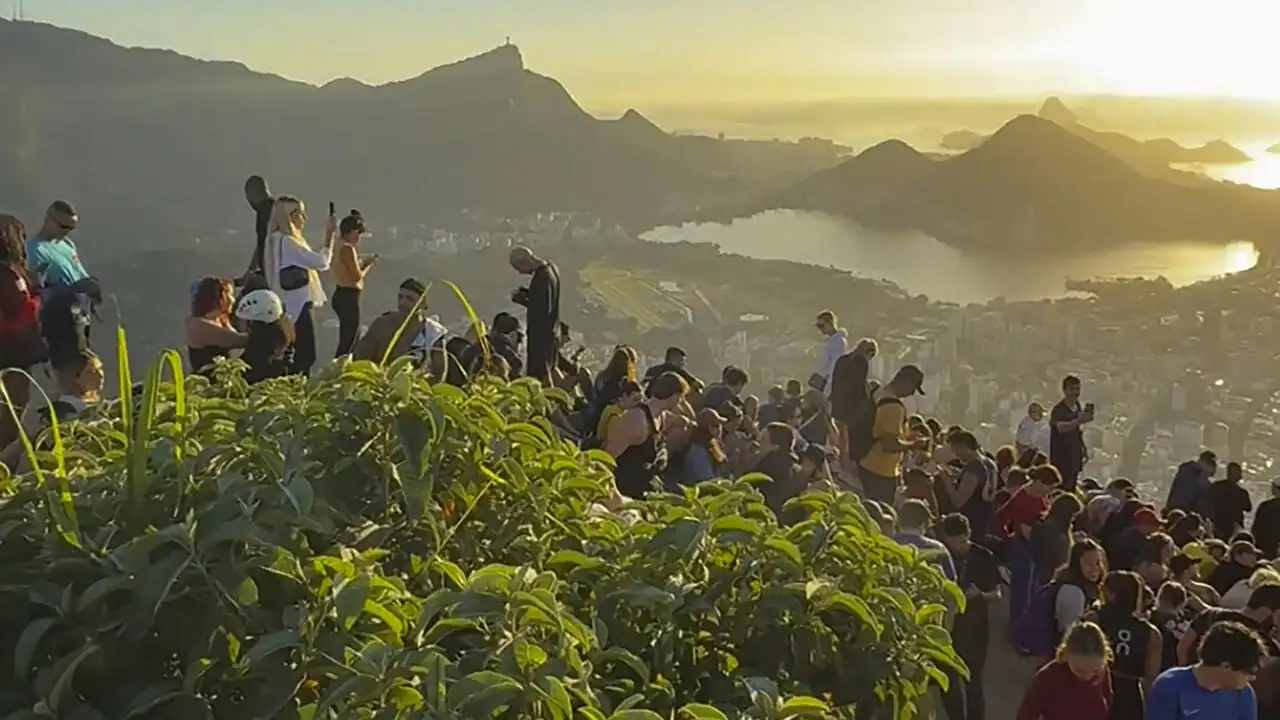
— — Roughly 200 tourists, including Portuguese and other European visitors, were stranded on the summit of Rio’s Morro Dois Irmãos early Monday after a joint Rio-Bahia police operation triggered a heavy firefight at the base of the Vidigal favela.
— — The target was Ednaldo Pereira Souza — “Dadá” — a Comando Vermelho regional chief who escaped a Bahia prison in 2024 with 15 other inmates and had been hiding in the Rocinha and Vidigal favelas in Rio’s South Zone.
— — All tourists were escorted down safely by trail guides, police, and Vidigal residents by 7:20 a.m., two arrests were made, and no injuries were reported; the operation drew international headlines from CNN, Reuters, La Nación and Emol.
The Rio tourist shootout early Monday turned one of the city’s most popular sunrise hikes into a 30-minute shelter-in-place as gunfire echoed up the slope from the Vidigal favela. Visitors who had climbed Morro Dois Irmãos for the view over Leblon and Ipanema found themselves sitting on the summit rocks, instructed by trail guides to stay low as a joint police operation unfolded below.
The Rio Times, the Latin American financial news outlet, reports that the operation was coordinated by the Bahia Public Ministry, Bahia’s Public Security Secretariat, and the civil police forces of both states under the codename Operação Duas Rosas II. The target was Ednaldo Pereira Souza, known as Dadá, described by investigators as a regional trafficking leader in Caraíva and Trancoso on Bahia’s southern coast.
Two people were arrested during the raid, but Dadá escaped. Traffickers responded by hijacking a city bus and Comlurb street-cleaning containers to block Avenida Niemeyer — the coastal road that connects São Conrado and Leblon — creating a diversion until military police cleared the route at approximately 6:50 a.m.
Inside the Rio Tourist Shootout
The summit of Dois Irmãos sits 533 meters above sea level and draws tourists primarily in the early morning hours for sunrise photographs. On Monday, the trail was dense with foreign visitors when the first shots were heard at the base of the climb around 6:30 a.m.
Portuguese tourist Matilda Oliveira told TV Globo the group “suddenly heard gunfire.” Brazilian visitor Stephanie Andrade described the scene as “very terrifying— we heard a helicopter pass close by.” Guides instructed the group to crouch and wait. Police helicopters from the CORE special operations unit passed overhead in low flight patterns while officers coordinated a secure corridor down through the favela with local residents.
By 7:20 a.m., the tourist group was escorted through Vidigal past armored vehicles and police patrols. The Rio Civil Police stated publicly that it “does not choose the confrontation” and that “those who impose the risk are armed criminals.” The Niemeyer roadblock was cleared, trails were ordered closed, and the full evacuation ended without physical injury.
Who Is Dadá
Ednaldo Pereira Souza escaped a prison in Bahia in 2024 along with 15 other inmates and had been on Brazil’s federal fugitive list since. Investigators say he relocated to Rio and alternated between hiding in the Rocinha and Vidigal favelas, both historically aligned with the Comando Vermelho. In the days before the operation he had rented a house in Vidigal and was organising a party for the Tiradentes long weekend.
The Comando Vermelho is Brazil’s oldest major drug trafficking organization, founded in the 1970s inside the federal prison system on Ilha Grande. It currently controls most favelas in Rio’s South and North zones and has steadily expanded into coastal towns on the São Paulo and Bahia littoral. As documented in prior Rio Times investigative reporting from Paraty, the faction’s tourism-corridor expansion has redrawn the security map of southern coastal Brazil over the past decade.
Dadá’s control of the Caraíva-Trancoso corridor is part of that same pattern. Both destinations are among Brazil’s most internationally popular beach towns. Bahia’s Public Security Secretariat has coordinated with Rio authorities on previous CV extraditions, but the fugitive’s continued evasion means the cross-state cooperation is now almost permanent operational infrastructure.
Why the Rio Tourist Shootout Matters Beyond the Day
Vidigal occupies a unique position in Rio’s tourism map. The community sits on the slope facing Leblon, hosts internationally-reviewed guesthouses, and the trail through it to Dois Irmãos is listed on every major Rio tourism platform. It was pacified under the UPP program in January 2012, briefly became a destination that attracted celebrities including Will Smith, Kanye West and Kim Kardashian, and then lost that status as UPP funding collapsed and factions returned.
As the Rio Times 2026 safety review noted, Vidigal retains an established tourism sector but remains subject to rapid change when police operations unfold. Monday’s events are the operational version of that warning. Eighty-five percent of foreign-visitor incidents now trace back to GPS navigation into uncontrolled areas or unexpected police activity, according to the 2026 report.
The international press coverage matters because it feeds the narrative that shapes tourism decisions in Europe and North America. CNN, Reuters, La Nación, Emol and Ámbito all carried the story within hours, alongside Portuguese, Spanish and German wire feeds. The zero-injury outcome is important but does not fully neutralize the brand damage.
What Happens Next
The manhunt for Dadá will continue as a joint Bahia-Rio operation. The Ministry of Public Security has not indicated whether additional federal resources will be committed, but the Tiradentes holiday weekend increased both tourism density and trafficker visibility, making the escape politically costly.
For Rio, Monday’s event lands inside an ongoing state-level effort to reassert security control in key favelas. As Rio Times coverage of the court-supervised reoccupation plan documented late last year, the governor’s office has been pushing a new model in which specific communities are retaken under judicial oversight to prevent the boom-and-bust cycle that has defined UPP-era policing.
The broader question is whether Rio can keep its South Zone tourism industry functional while major Bahia faction operatives continue to use Vidigal and Rocinha as safehouses. The tourism sector contributes approximately 5.4% of Rio’s GDP; repeated Dois Irmãos-style incidents threaten that revenue channel in the run-up to peak international visitor season.
More: Brazil news in English, every day from The Rio Times.
This article was produced by The Rio Times’ automated newsroom system. How we use AI · Report an error
Read More from The Rio Times