Braskem Sale Becomes Binding: IG4 Fund Secures 50.1% Stake
Key Facts
— — Novonor and NSP Investimentos have signed a definitive, court-supervised contract to sell Braskem’s controlling stake to the Shine I investment fund advised by IG4 Capital, with the buyer taking 50.1% of voting shares and 34.3% of total capital.
— — Braskem shares rose 3.4% to R$9.15 on Monday as the contract moves the deal from regulatory approval to an enforceable transfer, triggering Shine I’s obligation to register a mandatory tender offer for remaining common and preferred shares.
— — The transfer arrives as Braskem carries R$51.8 billion in debt, evaluates judicial protection from creditors, and faces R$14 billion in Alagoas environmental liabilities — meaning the new controller inherits Latin America’s most stressed petrochemical balance sheet.
— Related: Brazil tax reform guide.
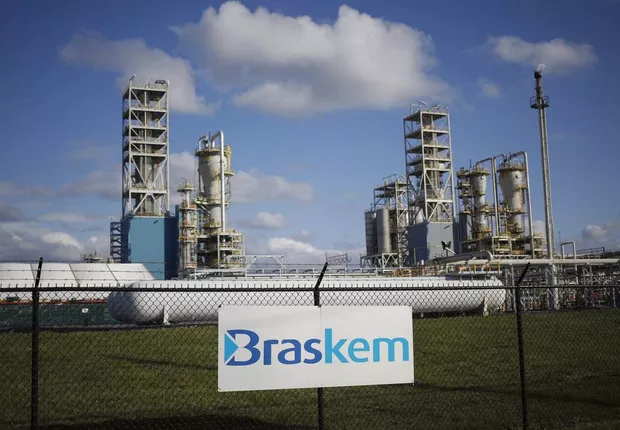
The Braskem control sale that has hung over Brazilian corporate markets since 2019 became legally binding on Monday. Braskem (BRKM5) announced that shareholders Novonor and NSP Investimentos signed the definitive contract transferring their controlling stake to Shine I FIP, the private equity vehicle advised by Paulo Mattos’s IG4 Capital.
The Rio Times, the Latin American financial news outlet, reports that the agreement covers the judicial sale by NSP to the fund of common shares and Class A preferred shares representing approximately 50.1% of Braskem’s voting capital and roughly 34.3% of total share capital. Braskem shares opened the week up 3.39% at R$9.15 on the news.
The contract also requires Shine I to register an Oferta Pública de Aquisição (OPA) — a mandatory tender offer under Brazilian securities law — to purchase up to the entirety of Braskem’s outstanding common and preferred shares. That tender offer is the public-markets minority protection that was triggered the moment the controlling stake changed hands.
What the Braskem Control Sale Actually Transfers
Monday’s contract is the operational trigger on a structure that has been assembled in public view since December 2025. IG4 acquired roughly R$20 billion (US$3.5 billion) of Novonor debt held by five creditor banks — Itaú, Bradesco, Santander, Banco do Brasil and BNDES — that had been collateralized by Braskem shares.
Those claims are being channeled through two separate vehicles. The Shine I FIDC, administered by Vórtx Capital with IG4 Sol advisory, holds the bank credits that will be satisfied through eventual Braskem share sales. The Shine I FIP is the equity-side fund into which the controlling Braskem shares are now being transferred — the legal owner of record after closing.
As documented in prior Rio Times analysis of the CADE approval, the unusual feature of this transaction is that IG4 did not buy the shares on the open market. Bank claims convert to equity; the equity channels into the fund; the fund inherits control. Novonor retains a residual 4% stake and gives up its seat at Braskem’s control table.
Petrobras Shares Governance, Not Capital
Petrobras holds 47% of Braskem’s voting capital and 36.1% of total capital, and has declined to exercise its right of first refusal over the Novonor stake. Petrobras CEO Magda Chambriard is expected to chair Braskem’s new board, which under the emerging shareholders’ agreement will have 10 seats split evenly: four for Petrobras, four for IG4, two independent.
That structure gives Petrobras direct operational influence for the first time since Braskem’s current ownership model was established in 2010. Under Novonor, Petrobras had funded the petrochemical input chain but did not participate in day-to-day management. Chambriard has signaled she wants synergies on feedstock supply, logistics, and the Duque de Caxias complex expansion.
Critically, Petrobras has not yet committed to a capital injection or to participating in debt restructuring. The state company wants IG4 in place first, then negotiates the new shareholders’ pact that defines each side’s capital responsibility. That sequencing is the real explanation for why today’s contract is the event that unlocks the next phase.
Live Company IntelligenceBraskem S.A — the full investor dossier
Valuation & profitability
Price & risk
$3.5252-wk high
$13.78
Revenue trend · 6y
Ownership
Dividend
The Balance Sheet IG4 Inherits
The financial picture is grim. Braskem reported a 2025 net loss of R$10.9 billion, carries R$51.8 billion in total debt (R$47.6 billion denominated in foreign currency), and closed December with roughly US$2.1 billion in cash against US$1.5 billion in 2026 debt maturities. KPMG flagged material uncertainty over going-concern in the audit.
The Alagoas salt-mining subsidence disaster in Maceió has generated R$14 billion to R$18 billion in provisioned compensation and environmental remediation liabilities, with CVM opening a fresh sanction proceeding over how the company disclosed the exposure. As Rio Times reporting in early April documented, management was openly evaluating a cautelar protective filing or full judicial recovery.
Braskem Idesa, the Mexican joint venture, is running a parallel track and negotiating with bondholders over a potential Chapter 11 filing in the United States. That restructuring has not reached consensus either. Bank of America has a sell recommendation on BRKM5 and has publicly questioned whether the IG4 transaction can close before either parent or subsidiary enters formal proceedings.
Why the Braskem Control Sale Matters
For Brazilian markets, the contract closes the longest-running governance overhang in the petrochemical sector. Novonor — the rebranded remnant of Odebrecht — has been under judicial recovery since 2019, and Braskem has cycled through failed sale processes involving Adnoc, Apollo, LyondellBasell, J&F and Nelson Tanure before landing on the IG4 debt-conversion structure.
For IG4 — a private equity firm specialized in distressed assets — the transaction is its largest-ever single deployment and a test of whether a Brazilian manager can execute an operational turnaround at petrochemical scale. IG4 is known in the market for handling complex court-supervised situations, but Braskem’s combination of cyclical petrochemical compression, environmental liability, and currency-mismatched debt is an extreme case.
For Petrobras, this is the clearest path in years to exerting real operational influence over Brazilian downstream chemistry. Chambriard has framed the move as industrial policy continuity, positioning Braskem inside the broader Petrobras petrochemical strategy that the state company laid out earlier this year.
What Happens Next
Three items now sit on the critical path. The first is European antitrust clearance — expected by May at the earliest — which is the last regulatory approval outside Brazil before closing can occur. Without it, the contract remains binding but not executable.
The second is the new shareholders’ agreement between IG4 and Petrobras, which will codify the 4-4-2 board structure, financial commitments, and governance on debt restructuring. Chambriard has called the CADE clearance “an absolutely necessary step” toward that pact, but the negotiation itself is still open.
The third is Braskem’s own debt restructuring. IG4 now owns the governance to negotiate with bondholders and bank creditors on terms that include a potential haircut and new capital. Whether that proceeds as an out-of-court negotiation or forces a formal restructuring depends on how quickly the new shareholder pact is signed and whether Alagoas payments stay on schedule.
More: Brazil news in English, every day from The Rio Times.
This article was produced by The Rio Times’ automated newsroom system. How we use AI · Report an error · Editorial responsibility: Matthias Camenzind, Editor-in-Chief
LatAm Markets: Live Signals → — real-time movers, turnover leaders and FX across Latin America.