Mexico Jobs March 2026: 32,930 Created, Slowest Since 2010

Key Facts
— —Mexico’s formal job creation fell 8.4% year-on-year in Q1 2026, with IMSS recording 207,604 new positions versus 226,731 in Q1 2025.
— —March added just 32,930 formal jobs — a seasonally adjusted monthly growth rate of 0.04%, the weakest March reading since 2010 according to BBVA.
— —More than 45,000 microenterprises and nearly 4,000 small enterprises have closed since December 2022. Manufacturing jobs have contracted year-on-year for 15 consecutive months.
— —Annual employment growth is 1.2% — but only 0.5% when digital-platform workers are excluded, signalling a markedly weaker underlying trajectory.
Mexico’s official employment numbers are not collapsing. They are stalling — and the composition of the stall points to something harder to fix than a cyclical slowdown.
The Rio Times, the Latin American financial news outlet, reports that Mexico jobs Q1 2026 data released by the Mexican Social Security Institute (IMSS) and analysed by BBVA this week confirm the weakest start to a year for Mexican formal employment since 2010. The first quarter generated 207,604 net new formal jobs, down 8.4% from the 226,731 created in Q1 2025.
The monthly pattern within Q1 is the harder signal. January lost 8,104 formal positions — only the second negative January since 2009.
February recovered sharply with 182,778 new jobs. March added 32,930, representing a seasonally adjusted monthly growth rate of 0.04% — the lowest March reading BBVA has tracked since 2010.
Why Mexico jobs Q1 2026 reveals a structural problem
The aggregate data is only part of the story. IMSS now records 22,724,680 formal jobs — the highest March reading on record. But the share attributable to digital-platform workers is now 155,520, and headline growth is heavily lifted by that cohort.
Annual employment growth sits at 1.2% including platform workers. Excluding them, it drops to 0.5%. That gap between 1.2% and 0.5% is what BBVA’s economic research team calls the “underlying trajectory” — and it is the weakest reading in years.
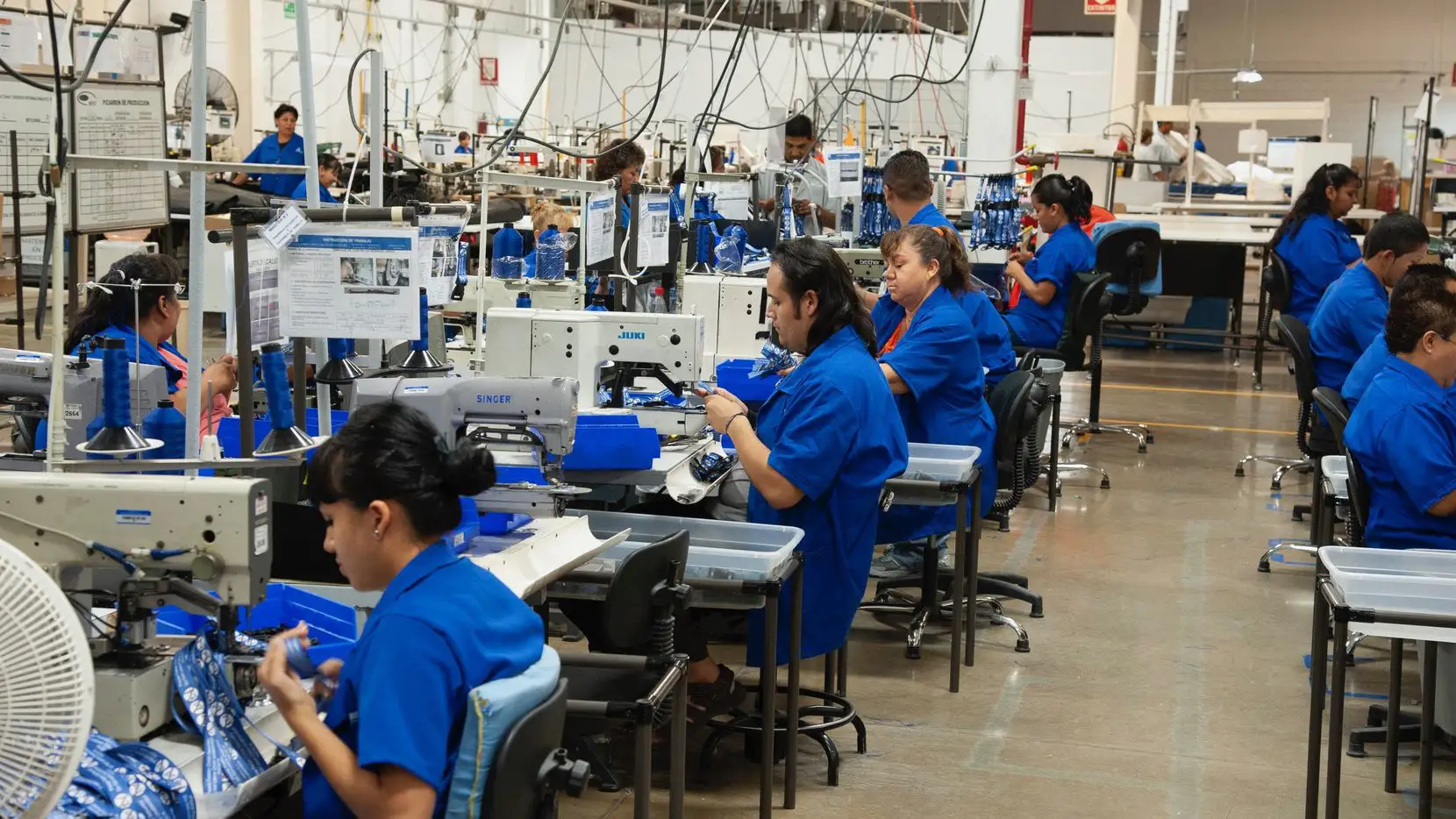
The sectoral breakdown reinforces the signal. Manufacturing has contracted year-on-year for 15 consecutive months, including a 2.1% decline in March.
The agricultural sector registered a 3.9% annual decline, and commerce posted monthly retreats.
The only structural bright spot was services, growing 1.9% annually.
The microenterprise closure wave
The deeper driver of the weakness, according to BBVA, is the cumulative closure of small employers. Since December 2022, more than 45,000 microenterprises and almost 4,000 small enterprises have disappeared from the IMSS employer registry.
The employer base has been shrinking for longer than the employment number has been slowing. The average annual contraction in the number of registered employers was 0.3% in 2024, deepened to 2.5% in 2025, and widened again to 1.9% in Q1 2026 versus the previous year’s average.
As of March 31, Mexico had 1,020,270 registered employers — a monthly loss of 1,726 from February. The annual variation is -2.7%. The IMSS attributes part of the decline to tighter security measures in the registration process for individual employers, but the underlying trend of formal business closures predates those measures.
Investment weakness and business confidence
Investment numbers show the same pattern. Mexico‘s gross fixed capital formation registered an annual decline of 2.2% in January 2026. Business confidence has been below the 50-point threshold for 13 consecutive months, indicating caution in investment decision-making.
BBVA’s read is that the sustained minimum-wage increases, in a context of low productivity and weak demand, may be generating additional pressures on small employers. The minimum wage has risen substantially under both the López Obrador administration and Sheinbaum’s first year in office.
ManpowerGroup noted earlier in the year that the typical Q1 recovery pattern — where Mexican formal employment usually rebuilds positions lost in December — has now broken. “January numbers reveal that there is no clear recovery trend,” said Alberto Alesi, ManpowerGroup’s director general for Mexico, Caribbean and Central America.
The context: Mexico enters the USMCA review weak
Mexico’s labor-market slowdown lands 10 weeks before the formal July 1 joint review of the USMCA trade agreement. A weaker domestic labor market reduces Sheinbaum’s political space to absorb concessions to Washington — particularly on rules of origin for autos, where Mexican factory employment is most exposed.
Manufacturing has been the single weakest sector for 15 months running. As the Rio Times documented in its Mexico 2026 economic outlook, the sector’s weakness is concentrated in autos and consumer durables — precisely the categories that will be on the USMCA renegotiation table in July.
Sheinbaum has responded with diplomatic de-escalation. Her government approved tariffs of up to 50% on hundreds of China-origin goods in December 2025, strengthened customs enforcement via Ley Aduanera amendments, and accepted early technical discussions with USTR. The labor-market weakness is now a binding constraint on what else she can offer Washington.
What to watch after Mexico jobs Q1 2026
Three variables will define the next quarter. The first is Q2 manufacturing employment. Breaking the 15-month streak of annual declines would signal that the USMCA-review uncertainty has not fully frozen investment decisions in the auto and electronics sectors.
The second is employer registration. If the microenterprise closure wave continues into Q2, the damage compounds regardless of aggregate IMSS headline numbers. Small and micro employers create the bulk of new formal employment, and their absence reduces the ceiling on how fast the economy can create jobs when demand recovers.
The third is platform-worker integration. The January 2026 formalisation rules shifted platform workers into IMSS coverage, lifting headline numbers but distorting the underlying employment picture. How IMSS and BBVA track that integration going forward will determine how useful the official statistics remain as a barometer of the underlying economy.
For investors reading Mexico into the USMCA review window, the Q1 data is a warning. Sheinbaum’s government enters the July 1 negotiation with a labor market that is decelerating, a business confidence indicator that has been below the expansion threshold for more than a year, and a manufacturing sector that has been contracting annually since late 2024.
That is not a negotiating position of strength. It is the economic backdrop against which every concession to Washington will be measured.
Related coverage: Mexico economy 2026 outlook • Sheinbaum names Lazzeri US ambassador • Sheinbaum, Chihuahua and the CIA deaths
More: Latin America news in English, every day from The Rio Times.
This article was produced by The Rio Times’ automated newsroom system. How we use AI · Report an error · Editorial responsibility: Matthias Camenzind, Editor-in-Chief