Magazine Luiza (B3: MGLU3), Brazil’s largest domestic e-commerce and physical retail platform, reported a Q1 2026 adjusted net loss of R$33.9 million ($6.7M), reversing the R$11.2 million profit from Q1 2025 and coming in worse than Bloomberg’s R$29 million loss consensus, according to the CVM filing released Thursday May 7.
Without adjustments, the GAAP loss was R$55.2 million, missing the R$22 million Bloomberg estimate, per Money Times. Total ecosystem sales fell 5.6 percent to R$15.1 billion, with e-commerce down 11 percent and marketplace collapsing 14.3 percent, while physical stores grew 7 percent — the only positive segment.
Revenue declined 2 percent to R$9.2 billion, adjusted EBITDA fell 5.4 percent to R$717.6 million (missing the R$742 million estimate), and financial expenses surged 16.5 percent to R$568.7 million as Selic jumped from 12.25 to 15 percent year-on-year. IR chief Lucas Ozório told InfoMoney the company is “not participating in irrationalities in the online market.”
Key Points
What Magalu Did in Q1 2026
Magazine Luiza is Brazil’s largest domestic e-commerce retailer and the country’s most widely followed consumer stock, operating 1,245 stores across all 26 Brazilian states with an integrated physical + digital ecosystem spanning 1P (own inventory) e-commerce, 3P marketplace, Luizacred (financial services JV with Itaú), MagaluPay (nascent SCFI), MagaluAds, and logistics. CEO Fred Trajano, the grandson of founder Luiza Trajano, has led the company’s digital transformation since 2016. The Q1 result marks the sharpest single-quarter deterioration in Magalu’s post-pandemic recovery, per Gazeta Mercantil analysis.
The 14.3 percent marketplace decline is the central data point. While Mercado Libre grew Brazilian items sold 56 percent and Shopee continued aggressive expansion, Magalu deliberately retreated from the low-ticket 3P marketplace war. IR chief Ozório stated the Q1 competition was “marked by irrationally low tickets sold by other platforms,” a direct reference to the Mercado Libre/Amazon/Shopee subsidy-driven volume strategies that Brazilian-only players like Magalu cannot match. CEO Trajano reinforced in the call: “Our result is in Brazil, our cost too. If we produce a very negative result, there is no foreign parent company that will send money to pay the bills at year-end.” The strategic calculus is clear: preserve margins and cash (R$6.2B total, R$1.2B net) over market share, and wait for the Cup-driven H2 consumption surge, per management commentary.
Why Magalu’s Q1 Matters for Brazil Retail
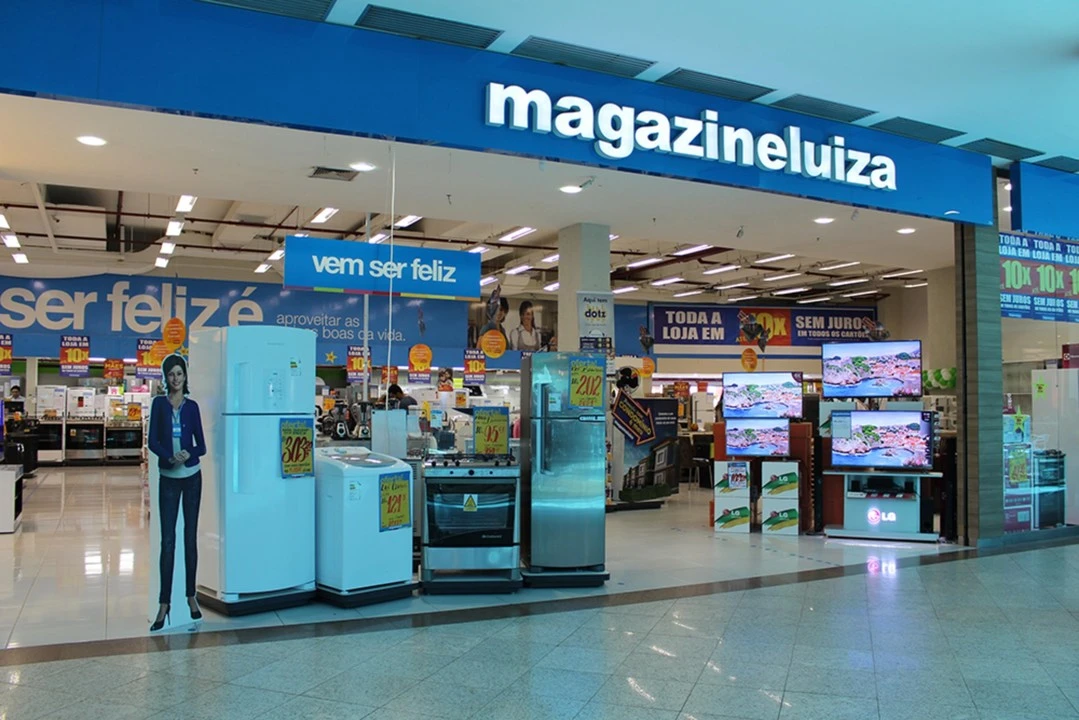
Magalu’s loss is the bellwether for Brazilian consumer sentiment under 15 percent Selic. When the country’s most operationally disciplined domestic retailer — with R$2 billion in trailing operating cash flow and R$6.2 billion in total cash — cannot produce a profit, it confirms that the interest rate regime is structurally hostile to consumer-facing businesses that rely on financed purchases. Financial expenses of R$568.7 million (6.2 percent of revenue, +16.5% YoY) consumed the entire EBITDA margin, leaving the company in loss territory despite flat underlying operational performance. JP Morgan maintains Underweight on MGLU3, noting “weaker-than-expected revenue dynamics with online sales 6 percent below estimates,” per their research note. The contrast with Mercado Libre’s Q1 — where 49 percent revenue growth and 56 percent Brazilian items-sold growth demonstrate the scale advantages of cross-border marketplace operators — highlights that the Brazilian e-commerce war is being won by companies with foreign balance sheets that can absorb years of investment losses.
Magalu Q1 2026 Snapshot
| Indicator | Q1 2026 | Chg YoY |
|---|---|---|
| Adj. Net Loss | -R$33.9M (missed -R$29M est) | Reversed +R$11.2M |
| Adj. EBITDA | R$717.6M (missed R$742M) | -5.4% |
| Revenue | R$9.2B | -2% |
| Total Sales | E-com | Physical | R$15.1B | -5.6% | -11% | +7% |
| Marketplace | — | -14.3% |
| Financial Expenses | R$568.7M (6.2% of rev) | +16.5% (Selic 12.25%→15%) |
| Stores | Cash | 1,245 | R$6.2B total | — |
What Happens Next for Magalu
World Cup catalyst: Management expects H2 consumption to benefit from the FIFA World Cup, historically a strong driver of electronics and TV sales — Magalu’s core categories.
MagaluPay scaling: The nascent SCFI (financial institution) reached ~R$100M in credit book and began issuing CDBs. If this unit scales, it could provide proprietary funding and reduce dependence on Luizacred.
Selic sensitivity: Every 100bp Selic cut saves approximately R$60-70M in annual financial expenses. The Copom’s 25bp cut in May signals the beginning of easing, but the pace toward 12% will determine whether Magalu returns to profitability in 2026.
More: Brazil news in English, every day from The Rio Times.
Frequently Asked Questions
Why did Magalu reverse from profit to loss?
Two factors: financial expenses surged 16.5 percent to R$568.7 million as Selic rose from 12.25 to 15 percent, consuming the operational margin. Simultaneously, e-commerce revenue fell 11 percent and marketplace dropped 14.3 percent as Magalu refused to match the subsidy-driven pricing of Mercado Libre, Amazon, and Shopee.
Is Magalu losing the e-commerce war?
Magalu is deliberately retreating from low-ticket marketplace competition. CEO Trajano stated the company will not “participate in irrationalities in the online market.” Physical stores grew 7 percent, demonstrating the omnichannel model’s resilience. The strategic bet is that margin preservation and cash generation will outlast competitors’ willingness to subsidise growth.
When will Magalu return to profitability?
Profitability depends primarily on Selic trajectory. At 15 percent, financial expenses consume most operational gains. Management expects the World Cup to boost H2 sales, and Copom’s rate-cutting cycle should progressively reduce interest costs. Analysts project breakeven or small profit by Q3-Q4 2026 if Selic reaches 13 percent by year-end.
Updated: 2026-05-08T16:00:00-03:00 by Rio Times Editorial Desk
Magalu Q1 2026 | MGLU3 earnings | Brazil retail e-commerce marketplace | Latin American financial news | The Rio Times
This article was produced by The Rio Times’ automated newsroom system. How we use AI · Report an error
LatAm Markets: Live Signals → — real-time movers, turnover leaders and FX across Latin America.
Read More from The Rio Times