Brazil Healthcare Megacap vs Mid-cap Polarization Q1 2026
Rede D'Or São Luiz (B3: RDOR3), Brazil's largest publicly traded private hospital network and one of Latin America's most prominent healthcare
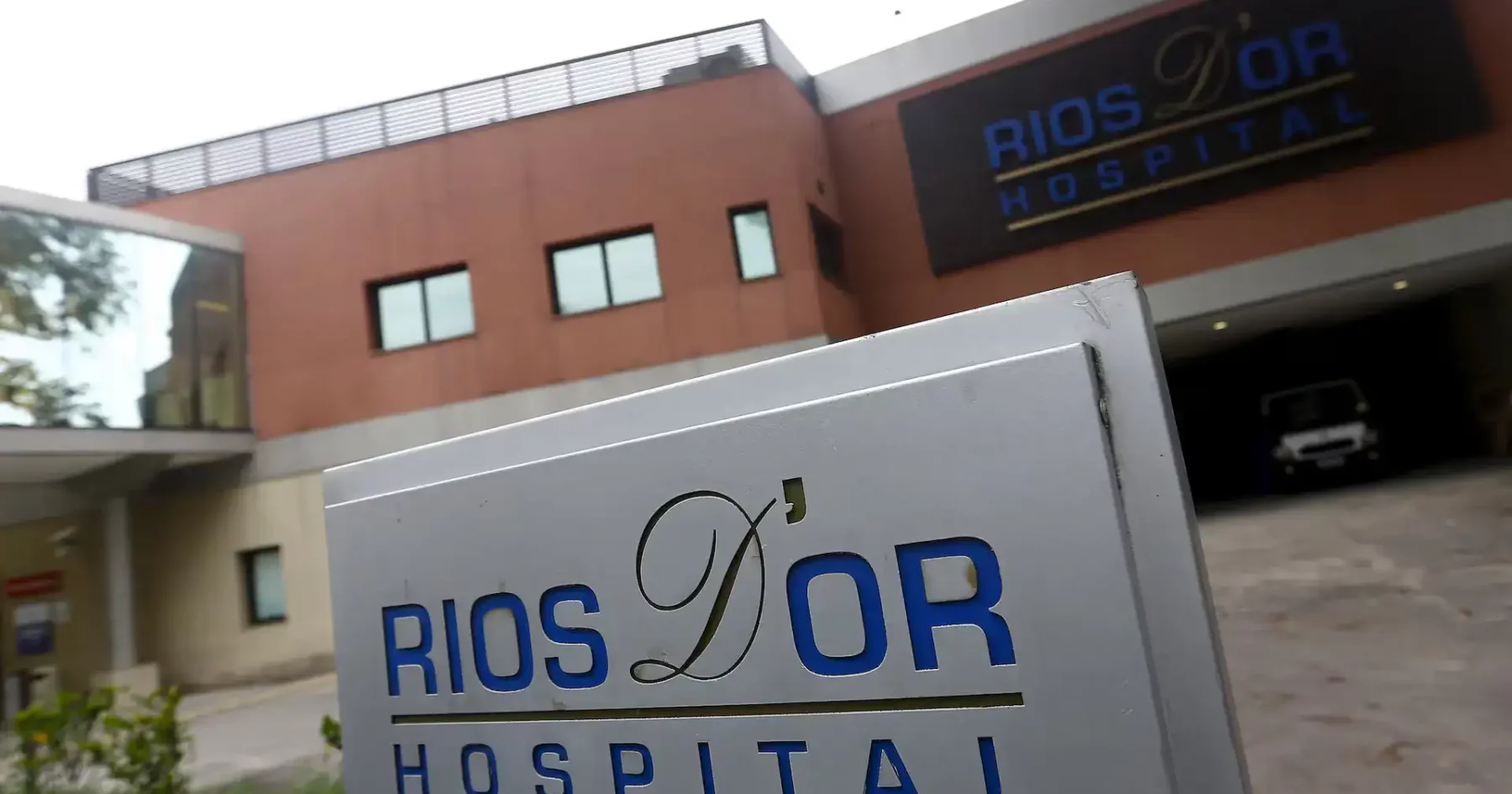
Rede D’Or São Luiz (B3: RDOR3), Brazil’s largest publicly traded private hospital network and one of Latin America’s most prominent healthcare investments, reported Q1 2026 net income of approximately R$1 billion ($198 million) — down 5.5 percent year-on-year, according to the earnings release published Wednesday May 6 after market close.
The Rede D’Or Q1 earnings show a sharp operational/bottom-line divergence. Adjusted EBITDA jumped 23.2 percent to R$3.3 billion ($654 million), comfortably beating the LSEG consensus of R$2.64 billion ($524 million). Net revenue grew 10.5 percent to R$14.3 billion ($2.83 billion), driven by SulAmérica health-insurance expansion, hospital growth and the oncology segment. The headline profit decline was driven by a specific bottom-line dynamic, not operational deterioration.
Two factors absorbed the operating outperformance: net financial expenses worsened nearly 60 percent year-on-year to negative R$1.37 billion ($271 million), reflecting Brazil’s 15 percent Selic policy rate and elevated leverage. More importantly, the effective tax rate jumped to 30.5 percent — well above the ~20 percent rate analysts had projected and the comparison-period level. The combined effect compressed reported earnings despite the operational beat.
Market reaction was sharp. Shares fell 6.47 percent to R$37.74 ($7.47) on May 7 — the worst single-day performance on Ibovespa that session — with an intraday low of R$37.12 ($7.35). The reaction was less a verdict on operations than on the gap between the adjusted-EPS print and BTG Pactual’s projection. BTG framed it concisely: “Not a beat this time, but still a great quarter,” reiterating Buy.
Key Points
What Rede D’Or Reported in Q1 2026
Rede D’Or São Luiz, listed on B3 as RDOR3, is Brazil’s largest publicly traded private hospital network and one of the most prominent healthcare investments in Latin America. Founded in 1977 in Rio de Janeiro by cardiologist Jorge Moll Filho as a diagnostic-imaging clinic (Cardiolab), the company has expanded into a vertically integrated platform operating approximately 79 hospitals with 13,054 beds, an oncology network, and — through the December 2022 acquisition of SulAmérica — one of Brazil’s largest health-insurance operations.
CEO Paulo Moll leads the group, with founder Jorge Moll Filho remaining a central reference figure for the multi-decade healthcare-platform strategy. Rede D’Or’s 2020 IPO at R$57 billion ($11.3 billion) was one of Brazil’s largest healthcare equity listings, and the SulAmérica acquisition transformed the company into Brazil’s most integrated private-healthcare-and-insurance combination.
Q1 2026 net income reached approximately R$1 billion ($198 million), down 5.5 percent from the same period in 2025. Analyst consensus, per LSEG, had projected net income of R$1 billion ($198 million) and EBITDA of R$2.64 billion ($524 million) — meaning Q1 met the bottom-line expectation but materially exceeded the operating expectation. The market reaction reflected the gap between adjusted-EPS estimates from sell-side desks (notably BTG Pactual’s R$1.10 billion / $218 million projection) and the reported figure.
Adjusted EBITDA totalled R$3.3 billion ($654 million), up 23.2 percent year-on-year — the headline operational data point. Adjusted EBITDA on the consolidated business line (BTG reporting basis) reached R$3.1 billion ($614 million), up 23.5 percent year-on-year. The R$700 million ($139 million) EBITDA beat versus LSEG consensus was driven by both hospital operations and the SulAmérica integration.
Consolidated net revenue grew 10.5 percent year-on-year to R$14.3 billion ($2.83 billion). The growth was driven primarily by SulAmérica’s operational expansion plus organic hospital and oncology growth. SulAmérica delivered net revenue of R$8.7 billion ($1.72 billion), up 8 percent year-on-year, with adjusted EBITDA jumping 29 percent to R$1.27 billion ($251 million).
The hospital operation itself was robust. Hospital occupancy reached 77.5 percent in Q1 — a healthy utilisation level supported by the 13,054-bed footprint. Patient volumes increased year-on-year, with the oncology segment continuing to scale alongside the broader hospital base. Hospital EBITDA grew 18 percent year-on-year per Bradesco BBI estimates — slightly below the bank’s projection but still a strong absolute number.
The SulAmérica medical-loss ratio (MLR, or sinistralidade in Portuguese) improved meaningfully. Consolidated MLR fell to 77.2 percent in Q1, a 140-basis-point improvement from 78.6 percent a year earlier. The MLR improvement is the structural operational story at SulAmérica — lower the number, the more profitable each premium dollar.
Bradesco BBI commentary added detail: “SulAmérica EBITDA was 7 percent above our forecast, supported by other operational positives, possibly non-recurring. Sinistralidade fell 1.4 percentage points year-on-year to 77.9 percent, possibly benefited by technical provisions (IBNR).” The cautious framing from sell-side analysts reflects uncertainty about whether MLR improvement is structural or aided by reserve releases.
The net financial result was the principal pressure point. Net financial expense was negative R$1.37 billion ($271 million), worsening nearly 60 percent year-on-year. BTG Pactual measured the year-on-year deterioration in financial expenses at 42 percent. The driver is Brazil’s 15 percent Selic policy rate combined with Rede D’Or’s R$22.1 billion ($4.37 billion) net debt position — CDI-linked debt servicing costs are structurally elevated.
The effective tax rate jumped to 30.5 percent — well above BTG’s 20 percent projection and Bradesco BBI’s 18 percent estimate. This single line item drove the headline disappointment relative to sell-side forecasts. The Q1 2025 effective rate had been approximately 20 percent. The Q1 2026 print was therefore approximately 1,000 basis points higher than the comparison period, absorbing roughly R$300 million ($59 million) of pre-tax income.
Cash generation was the structural reassurance. Rede D’Or generated R$2.9 billion ($574 million) of operating cash flow in Q1, with cash conversion at 97.2 percent of EBITDA. This is among the highest cash-conversion rates in Brazilian listed healthcare and provides the capital-deployment flexibility supporting the multi-year expansion plan.
The balance sheet improved. Net debt closed at R$22.1 billion ($4.37 billion). Leverage compressed to 1.75x EBITDA — improved from a higher base — and remains comfortably within capital-allocation thresholds for the investment-grade capital structure. Average debt cost runs CDI+1.10 percent, reflecting strong creditor confidence in the post-IPO and post-SulAmérica capital structure.
The trailing-12-month ROIC reached 32.6 percent — up from 29.6 percent at the start of 2025. This is one of the highest capital-return ratios among Brazilian listed companies, reflecting the integrated hospital-plus-insurance model’s structural margin advantage and the scale efficiencies of operating Brazil’s largest private hospital network.
The strategic investment programme remains on track. Rede D’Or has committed to invest R$7.5 billion ($1.49 billion) by 2028 to add 5,400 new hospital beds — a 46 percent increase over the current capacity. As the Rio Times reported in June 2025, this expansion plan represents a measured adjustment from earlier projections, with the company prioritising organic growth through expansion of existing units over major acquisitions.
Live Company IntelligenceRede D'Or São Luiz S.A. — the full investor dossier
Valuation & profitability
Price & risk
$32.1752-wk high
$45.10
Revenue trend · 6y
Ownership
Dividend
Why Rede D’Or Q1 Matters
Rede D’Or is Brazil’s flagship listed private-healthcare investment and the most directly relevant proxy for the structural integration of Brazilian hospitals with health insurance. The Q1 print encapsulates the central question facing the company in 2026: how do the operational gains from scale and the SulAmérica integration translate to bottom-line earnings when Brazil’s 15 percent Selic compresses financial-expense lines and tax effective rates spike unexpectedly?
The healthcare-sector context elevates this print. As the Rio Times reported in late April 2026, Kora Saúde filed an out-of-court restructuring covering roughly R$1.3 billion ($257 million) of financial debt — the largest hospital-chain restructuring filing in Brazilian history. The Rio Times analysis noted explicitly: “Dasa, Hapvida-NotreDame, and Rede D’Or have managed their leverage through equity issuance and asset sales — Kora’s much smaller scale gave it less optionality.”
This is the cluster context that makes Rede D’Or’s Q1 meaningful: the pandemic-era leveraged-buyout healthcare consolidation is cracking at the mid-cap level under 15 percent Selic, while the megacap integrated players (Rede D’Or, Hapvida, Dasa) demonstrate the scale and integration advantages that allow them to absorb the rate cycle and continue expanding.
The SulAmérica integration thesis is the structural narrative. Rede D’Or acquired SulAmérica in December 2022 — at the time, one of Brazil’s largest healthcare M&A transactions. As the Rio Times reported in August 2024, the SulAmérica integration drove Rede D’Or to its first R$1 billion ($198 million) quarterly profit milestone in Q2 2024, a +129.9 percent year-on-year increase. The Q1 2026 SulAmérica EBITDA of R$1.27 billion ($251 million) confirms the synergy capture has continued.
Goldman Sachs had upgraded RDOR3 from Neutral to Buy in June 2024 at R$38 ($7.52) price target, as the Rio Times reported. The bull case at the time emphasised the SulAmérica integration optionality and the company’s premium positioning amid sector consolidation. The Q1 2026 print broadly validates that thesis at the operational level — SulAmérica MLR continues improving and consolidated EBITDA outperformed.
The expansion-plan execution is the medium-term operational story. As covered in the Rio Times analysis, Rede D’Or’s plan to invest R$7.5 billion ($1.49 billion) by 2028 adds 5,400 hospital beds — pushing average hospital size from 150 beds to 200 beds. The economics matter: Rede D’Or runs administrative expenses at 3 percent versus 10 percent for independent hospitals, creating a structural scale moat that the Q1 R$2.9 billion ($574 million) operating cash generation funds.
The joint venture with Bradesco Seguros is a meaningful strategic anchor. Rede D’Or and Bradesco Seguros are jointly investing R$1.1 billion ($218 million) to launch three new hospitals in São Paulo and Rio de Janeiro. This collaboration spreads execution risk and reinforces the long-term Brazilian healthcare-finance ecosystem integration that has been the strategic narrative since the SulAmérica acquisition.
The Brazilian private-healthcare market opportunity remains structurally attractive despite cyclical pressures. Brazil’s health-insurance penetration is approximately 25 percent of the population — meaningfully lower than developed markets. As founder-CEO Paulo Moll has noted publicly, declining unemployment rates could drive expansion, as Brazilian employers use quality health plans to attract talent. The 5,400-bed expansion is partly bet on this structural penetration upside.
The Q1 effective tax rate spike — to 30.5 percent — is the variable to watch through 2026. If this is a one-off (timing of tax-credit utilisation, deferred-tax adjustments, or extraordinary items), the Q2-Q3 prints will normalise the effective rate. If it reflects a structural shift in tax treatment, sell-side EPS estimates for 2026-2027 will need rebasing — and the May 7 stock reaction was a partial down-payment on that scenario.
The relative valuation matters in context. Rede D’Or trades at P/E 18.09 with trailing dividend yield of 11.15 percent. The 11.15 percent yield reflects active capital-return policy (R$350 million / $69M JCP announced March 2026) alongside the operational profitability. Few large-cap Brazilian listed companies offer this combination of growth, capital returns, and 32.6 percent ROIC.
For foreign investors, Rede D’Or has long been a benchmark Brazilian healthcare equity but does not currently trade through a US ADR programme. Direct exposure requires B3 access or healthcare-focused emerging-markets funds. The combination of integrated insurance, premium hospital positioning, and 32.6 percent ROIC makes Rede D’Or one of the most differentiated Brazilian large-cap healthcare exposures available.
The Selic-easing path is the macro variable that completes the thesis. Brazil’s 15 percent policy rate compresses Rede D’Or’s R$1.37 billion ($271 million) quarterly financial expense materially. Each 100-basis-point reduction in Selic translates to direct EPS expansion for the company. Rede D’Or, like Brazilian banks and consumer-credit names, is structurally levered to the Copom path — making it a high-quality cyclical-rate-recovery exposure alongside its underlying secular healthcare-penetration growth thesis.
EBITDA beat consensus by 25%. R$3.3B ($654M) vs R$2.64B ($524M) LSEG. Hospital +18%, SulAmérica EBITDA +29%. Operating engine roaring.
ROIC 32.6% trailing 12M. Up from 29.6% start-2025. One of highest capital-return ratios in Brazilian large-cap. Compounding intact.
Sector consolidation winner. Kora restructuring marks the LBO crack. Megacaps (RDOR, HAPV, DASA) demonstrate scale advantage at 15% Selic.
Selic easing optionality. Each 100 bps of easing compresses R$1.37B ($271M) financial expense materially. Rate-sensitive recovery exposure.
Effective tax rate jump. 30.5% vs ~20% expected. If structural, 2026-2027 EPS estimates need rebasing materially.
Financial expense +60% YoY. R$1.37B ($271M). At 1.75x leverage with R$22.1B ($4.37B) net debt, Selic stays bad until Copom acts.
Valuation full. P/L 18, P/VP 4.22. Bradesco BBI notes “demanding valuation” and slower bed-opening pace. Limited near-term catalysts.
SulAmérica MLR sustainability. Bradesco BBI flagged “possibly non-recurring” reserve effects in MLR improvement. Q2 will test true run-rate.
Sell-Side View
| Bank | Stance | View on Rede D’Or |
|---|---|---|
| BTG Pactual | Buy (reiterated) | “Not a beat this time, but still a great quarter.” Adj profit 14% below estimate on tax + financial expense. Strong operating thesis intact. |
| Bradesco BBI | Constructive medium-term | Q1 slightly below expectations. Tax rate 30% vs 18% BBI projection. Hospital EBITDA +18% solid; SulAmérica +7% above estimate. |
| Goldman Sachs (June 2024) | Buy | R$38 ($7.52) PT | Upgrade from Neutral. Premium positioning + SulAmérica integration. Beneficiary of sector consolidation. |
| Consensus (LSEG) | In line / EBITDA beat | Pre-print NI estimate R$1B ($198M), EBITDA R$2.64B ($524M). EBITDA beat by ~25%; NI in line. |
The sell-side narrative is uniformly constructive on the medium-term operating thesis with near-term caution on the tax-rate variable. BTG Pactual’s “great quarter but not a beat” framing captures the buy-side dilemma: a R$700 million ($139 million) EBITDA outperformance does not show up in the headline EPS once a 30.5 percent tax rate compresses the income statement. Q2-Q3 will resolve whether the tax rate normalises.
Financial Snapshot Q1 2026
| Indicator | Q1 2026 | Chg YoY |
|---|---|---|
| Net Income | ~R$1B ($198M) | -5.5% |
| Net Revenue (consolidated) | R$14.3B ($2.83B) | +10.5% |
| Adjusted EBITDA | R$3.3B ($654M) | +23.2% (beat consensus) |
| Net Financial Expense | -R$1.37B (-$271M) | ~+60% worse YoY |
| Effective Tax Rate | 30.5% | vs ~20% expected |
| Operating Cash Flow | R$2.9B ($574M) | 97.2% cash conversion |
| Net Debt | R$22.1B ($4.37B) | Leverage 1.75x EBITDA |
| ROIC (trailing 12M) | 32.6% | vs 29.6% Q1 25 |
Segment Detail and Operational Metrics
| Metric | Q1 2026 | Comment |
|---|---|---|
| SulAmérica Revenue | R$8.7B ($1.72B) | +8% YoY |
| SulAmérica Adj EBITDA | R$1.27B ($251M) | +29% YoY |
| SulAmérica MLR (Sinistralidade) | 77.2% | -140 bps YoY |
| Hospital Occupancy | 77.5% | Healthy utilisation |
| Hospital EBITDA Growth | +18% YoY | Per Bradesco BBI |
| Hospitals / Beds | ~79 hospitals / 13,054 beds | 5,400 beds added by 2028 |
| Expansion Capex (2026-2028) | R$7.5B ($1.49B) | +46% bed capacity |
Peer Benchmark — Brazilian Listed Healthcare
| Company | Profile | Strategic Read |
|---|---|---|
| Rede D’Or (RDOR3) | Hospitals + SulAmérica insurance | Integrated megacap leader |
| Hapvida (HAPV3) | Vertically integrated HMO model | Largest Brazilian HMO |
| Dasa (DASA3) | Diagnostics + hospitals | Restructured 2024-2025 |
| Kora Saúde (KRSA3) | Regional hospital chain | Filed R$1.3B ($257M) restructuring Apr 2026 |
What Happens Next for Rede D’Or
Tax-rate normalisation test: The Q2 effective tax rate is the single most important variable. A return toward 20 percent would validate Q1 as a one-off; persistence at 30 percent forces structural EPS rebasing across sell-side models. This is the resolution point.
SulAmérica MLR sustainability: Bradesco BBI flagged “possibly non-recurring” benefit from technical reserves in Q1’s 140-bps MLR improvement. Q2 will reveal whether the SulAmérica run-rate MLR is structurally at 77 percent or rebounds toward 78-79 percent.
Bed expansion pace: Bradesco BBI noted a “slower pace of bed openings” in the Q1 commentary. The R$7.5 billion ($1.49 billion) 2028 plan timing matters — delayed openings push operating-leverage gains into later quarters. Watch quarterly bed-addition disclosure.
Bradesco Seguros JV milestones: Three new hospitals in São Paulo and Rio under the R$1.1 billion ($218 million) joint venture. Project status, opening dates, and operational pre-launch metrics matter for the 2027-2028 EPS trajectory.
Copom path inflection: Each 100 basis points of Selic easing compresses Rede D’Or’s financial-expense burden by approximately R$220 million ($44 million) annualised. The Copom path from 15 percent toward 12-13 percent through 2026 is the structural macro driver for Brazilian rate-sensitive equity exposures.
Frequently Asked Questions
How much did Rede D’Or earn in Q1 2026?
Rede D’Or reported Q1 2026 net income of approximately R$1 billion ($198 million), down 5.5 percent from the same period in 2025. Adjusted EBITDA jumped 23.2 percent to R$3.3 billion ($654 million), comfortably beating the LSEG analyst consensus of R$2.64 billion ($524 million). Net revenue grew 10.5 percent year-on-year to R$14.3 billion ($2.83 billion).
Operating cash flow reached R$2.9 billion ($574 million), with cash conversion at 97.2 percent of EBITDA — among the highest cash-conversion rates in Brazilian listed healthcare. Net debt closed at R$22.1 billion ($4.37 billion), with leverage compressed to 1.75x EBITDA. Trailing 12-month ROIC reached 32.6 percent, up from 29.6 percent at the start of 2025.
Why did Rede D’Or shares fall 6.47 percent after results?
The market reaction reflected a specific gap between adjusted-EPS estimates from sell-side desks and the reported figure. Two factors drove the disappointment: net financial expenses worsened nearly 60 percent year-on-year to R$1.37 billion ($271 million) reflecting Brazil’s 15 percent Selic policy rate, and the effective tax rate jumped to 30.5 percent — well above the 20 percent rate BTG Pactual had projected.
BTG Pactual framed the print as “Not a beat this time, but still a great quarter” and reiterated its Buy rating. Bradesco BBI maintained a constructive medium-term view while flagging the same near-term tax and financial-expense pressure. Shares fell 6.47 percent to R$37.74 ($7.47) on May 7 — the worst single-day performance on Ibovespa that session — with an intraday low of R$37.12 ($7.35) from a pre-print close near R$40.00 ($7.92).
How is SulAmérica performing within Rede D’Or?
SulAmérica, acquired by Rede D’Or in December 2022, delivered Q1 2026 net revenue of R$8.7 billion ($1.72 billion), up 8 percent year-on-year, with adjusted EBITDA jumping 29 percent to R$1.27 billion ($251 million). The medical-loss ratio (MLR, or sinistralidade) improved 140 basis points to 77.2 percent — the structural operational metric for health insurance.
Bradesco BBI noted that the MLR improvement may be “possibly non-recurring,” supported by technical-reserve provisions (IBNR). The structural integration thesis — combining Rede D’Or’s hospital network with SulAmérica’s insurance distribution — remains the core investment narrative. The Q1 SulAmérica contribution to consolidated EBITDA (R$1.27 billion / $251 million) represents approximately 39 percent of the group’s R$3.3 billion ($654 million) total adjusted EBITDA.
What is the Rede D’Or expansion plan?
Rede D’Or has committed to invest R$7.5 billion ($1.49 billion) by 2028 to add 5,400 new hospital beds — a 46 percent increase over the current capacity of approximately 13,054 beds across 79 hospitals. The expansion plan prioritises organic growth through expansion of existing units over major acquisitions, with average hospital size moving from 150 beds toward 200 beds.
A separate joint venture with Bradesco Seguros covers a R$1.1 billion ($218 million) commitment to launch three new hospitals in São Paulo and Rio de Janeiro. The economics underlying this strategy reflect scale efficiency: Rede D’Or runs administrative expenses at 3 percent versus 10 percent for independent Brazilian hospitals.
The Q1 2026 R$2.9 billion ($574 million) operating cash generation provides the internal-funding base for the multi-year expansion. Rede D’Or does not currently trade through a US ADR programme; foreign-investor access is via B3 direct or healthcare-focused emerging-markets funds.
Updated: 2026-05-14T07:30:00-03:00 by Rio Times Editorial Desk | Originally published: 2026-05-06
Rede D’Or Q1 2026 | RDOR3 earnings | Brazil hospital network | Paulo Moll | Jorge Moll Filho | SulAmérica integration | sector consolidation winner | The Rio Times
This article was produced by The Rio Times’ automated newsroom system. How we use AI · Report an error
In depth
LatAm Markets: Live Signals → — real-time movers, turnover leaders and FX across Latin America.