Colombia’s Foreign Investment Falls 8.7% to $921 Million in April
Colombia · Foreign Investment
Key Facts
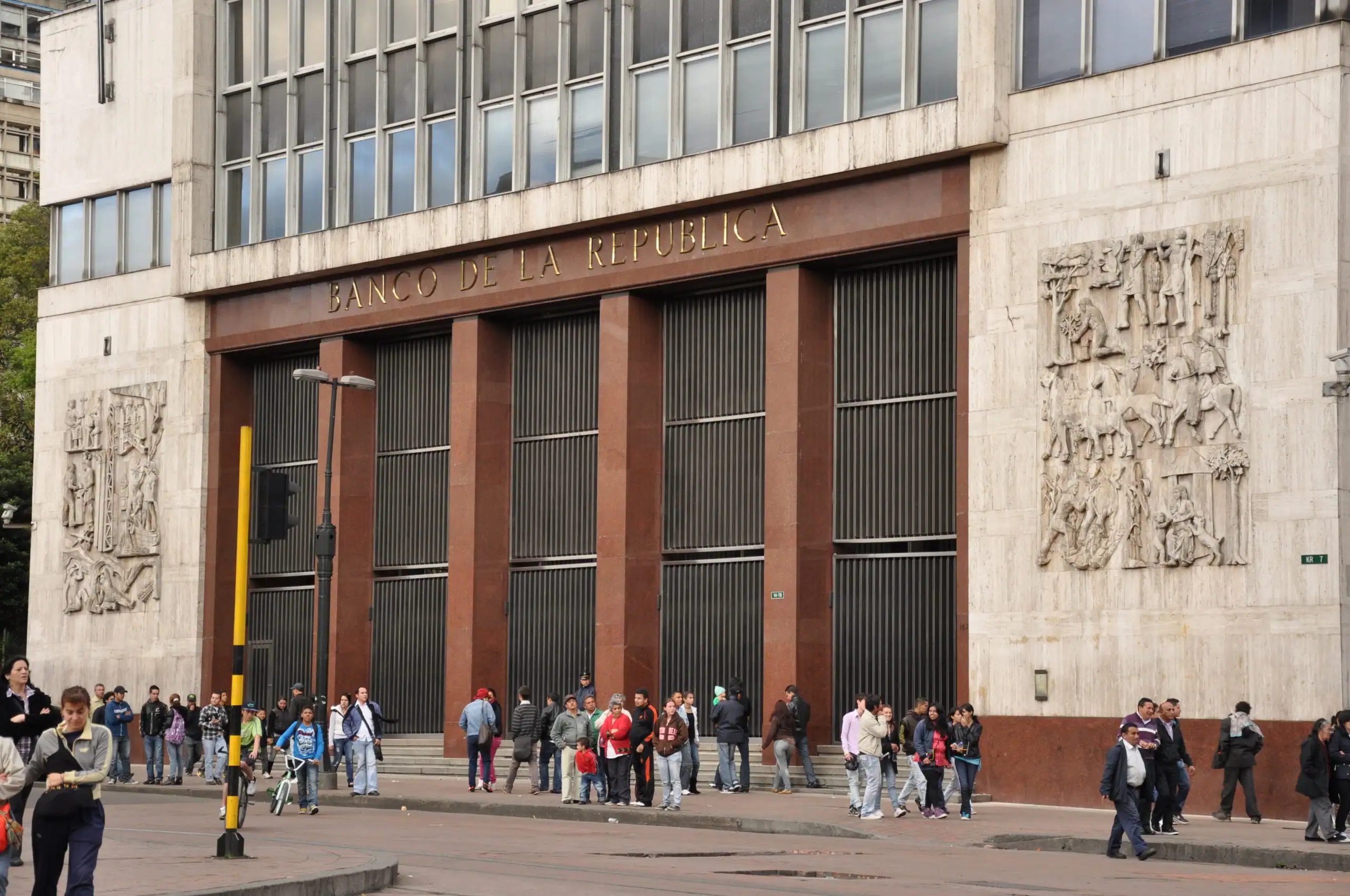
—Colombia’s Foreign Direct Investment registered $921 million in April. The Banco de la República published the balance figure as part of its updated cambiaria balance. The reading represents an 8.7% decline from April 2025, when FDI reached $1.009 billion.
—Oil and mining concentrated $741 million — about 80% of total FDI. The extractive sectors continue to dominate foreign-capital inflows into Colombia despite the broader macroeconomic pressures and the Petro administration’s stance toward fossil-fuel exploration.
—Other sectors received $180 million combined. The non-extractive economy continues to attract limited foreign investment relative to the country’s economic scale. The contrast with the oil and mining concentration highlights the structural composition challenge of Colombian FDI.
—Non-traditional exports grew 13% to $908 million. The export diversification story is one bright spot — non-traditional exports rose from $803 million in April 2025. Coffee exports rose 45% to $45 million from $31 million. These categories partially offset the decline in traditional commodity exports.
—Coal, ferronickel and petroleum exports declined in April. The traditional commodity-export base showed weakness against the broader global growth slowdown and the Iran-war energy-supply uncertainty. The decline contrasts with the non-traditional export performance.
—The August 2026 election is the variable for FDI trajectory. The presidential transition will determine whether the policy framework remains hostile to extractive investment or pivots toward a more investor-friendly orientation. Multiple major mining and petroleum projects are paused awaiting policy clarity.
Colombian Foreign Direct Investment fell 8.7% in April to $921 million according to Banco de la República data — the latest indicator that the country’s appeal to foreign capital is eroding under the combined pressure of policy uncertainty, depreciating peso, and the broader emerging-market pressure from US Treasury yields hitting 19-year highs. Oil and mining concentrated $741 million — about 80% of total FDI — confirming the structural concentration that has long defined Colombian foreign investment. Non-traditional exports provided some offset with 13% growth, but the headline figure tells a clear story: 2026 has not been an FDI year for Colombia, and the August presidential transition will be the determining variable for whether the trajectory recovers in 2027.
What did the data actually show?
The Rio Times, the Latin American financial news outlet, reports that the Banco de la República published Colombian FDI for April 2026 at $921 million — an 8.7% decline from the $1.009 billion recorded in April 2025. The data is part of the central bank’s cambiaria balance reporting, which tracks both trade flows and capital movements. The reading shows mixed signals across the broader balance: non-traditional exports grew 13% to $908 million, suggesting some diversification momentum, while traditional commodity exports including coal, ferronickel and petroleum declined. The combination of declining FDI and weakening traditional export performance is a worrying pattern for an economy whose external position has historically depended on commodity revenues and concentrated foreign investment. The FDI decline is meaningful in scale — $88 million represents 8.7% of a $1 billion baseline.
Why does oil and mining dominate so heavily?
Oil and mining concentrated $741 million of the $921 million total — roughly 80% of FDI. The dominance reflects Colombia’s long-established position as one of Latin America’s major hydrocarbon and mineral producers. Ecopetrol, Drummond, Cerrejón, Anglo Gold Ashanti and others have substantial Colombian operations that continue to require capital expenditure for ongoing operations and selective expansion. The Petro administration’s policy stance — including a moratorium on new oil exploration contracts and tighter environmental review of mining projects — has constrained the upside in this sector. The 80% concentration is structurally high and reflects the limitations of FDI inflow to non-extractive sectors. Manufacturing, technology, retail and financial services attract proportionally less foreign investment than would be expected based on Colombia’s macroeconomic scale.
What is driving the decline?
Multiple factors are working in the same direction. First, policy uncertainty: the Petro administration’s regulatory stance on mining and hydrocarbons has paused multiple major project decisions. Second, currency volatility: the Colombian peso has been the worst-performing emerging-market currency in May 2026, depreciating 3.84% in the first half of the month. The currency uncertainty affects the local-currency return calculation for foreign investors. Third, global FDI environment: the rising US Treasury yields and broader risk-off positioning have reduced FDI flows to emerging markets generally, with Colombia not spared. Fourth, regional alternative: Latin American FDI is increasingly competing for the same global capital pool. Argentina under Milei has attracted significant FDI commitments. Brazilian Petrobras-related opportunities are absorbing energy-sector capital. The competition for global FDI is fierce.
What about the non-traditional export bright spot?
Non-traditional exports grew 13% to $908 million in April. This category includes flowers, fruits, processed foods, manufactured goods and services — the diversified export base that policy efforts have long sought to expand. The 13% growth significantly outpaces the broader economy’s 2.2% Q1 expansion. Coffee exports rose 45% to $45 million from $31 million in April 2025 — a notable reversal from the broader coffee sector pressure, suggesting that exporters are capturing whatever volume they can ahead of the broader supply pressure from Brazil’s harvest recovery. The non-traditional export performance is genuinely positive and demonstrates that Colombia’s economic-diversification efforts are producing results. However, the scale of non-traditional exports remains relatively modest compared to traditional commodities and FDI.
What does this mean for the broader external position?
Colombia’s external position depends on three sources of dollar inflows: commodity exports, FDI, and remittances. The April data shows traditional commodity exports declining (coal, ferronickel, petroleum), FDI falling 8.7%, with only non-traditional exports growing. Remittance flows from Colombians abroad — particularly from the US — continue to support the external position but face their own pressure from US economic conditions. The Colombian current account deficit, projected at roughly 3% of GDP for 2026, requires continuous capital inflows to fund. The combined weakness in FDI and commodity exports tightens that financing constraint. The peso depreciation reflects this dynamic — markets are pricing in the structural deterioration of Colombia’s external position. The August election outcome will determine whether the next administration can reverse the trajectory or whether the dynamic continues to deteriorate through 2027.
What should investors and analysts watch next?
- May 2026 FDI data: the next monthly reading will reveal whether April’s decline is a one-month volatility or a sustained trend through the election uncertainty.
- August presidential election outcome: a market-friendly candidate’s victory could trigger pent-up FDI announcements; continuity outcome would compound the current trajectory.
- Major mining and petroleum project decisions: Ecopetrol, AngloGold Ashanti, Cerrejón and other major operators have project-level decisions pending. Any major announcements will signal the broader FDI environment.
- Non-traditional export sustainability: the 13% growth needs to extend through Q2 and Q3 to validate the diversification narrative.
- Remittance flows: Colombian remittances primarily from the US could moderate as US economic conditions tighten, removing one of the supporting factors in the external position.
More: Colombia news in English, every day from The Rio Times.
Connected Coverage
The Colombian peso depreciation context is in our peso readout. The Colombia Q1 GDP 2.2% reading is in our Q1 PIB readout. The Colombian coffee export performance is in our coffee readout. The US Treasury 30-year yield surge affecting global FDI flows is in our Treasury readout.
Reported by Sofia Gabriela Martinez for The Rio Times — Latin American financial news. Filed May 19, 2026 — 17:30 BRT.
This article was produced by The Rio Times’ automated newsroom system. How we use AI · Report an error · Editorial responsibility: Matthias Camenzind, Editor-in-Chief
In depth
Frequently Asked Questions
What is the Cambiaria Balance?
The Balanza Cambiaria is the Banco de la República’s monthly tracking of foreign-exchange-relevant transactions in Colombia. It captures trade flows (exports and imports), portfolio investment, foreign direct investment, and remittance flows. The cambiaria balance is distinct from the full balance of payments — it’s based on actual currency transactions rather than the broader accrual-based measures used in balance of payments accounting. The cambiaria balance provides more timely data for monitoring external-position dynamics.
How does this compare to past Colombian FDI?
Colombian FDI has historically been concentrated in the $10-15 billion annual range, with significant volatility tied to commodity price cycles. The 2023 first-half FDI of $7.5 billion was one of the strongest periods in recent years, driven by elevated commodity prices and constructive global capital flows. The 2026 trajectory is significantly weaker at the monthly run-rate. The 80% concentration in oil and mining is a long-standing structural feature — though the absolute level of monthly FDI has fluctuated, the sectoral composition has been remarkably stable.
What is the Petro administration’s approach?
The Petro administration has pursued a complex approach to foreign investment. The government has explicitly stated commitment to clean energy investment, with major renewable projects attracting limited but real foreign capital. Simultaneously, the administration has imposed a moratorium on new oil and gas exploration contracts and tightened environmental review of mining projects. The result is a mixed signal to foreign investors — strong rhetorical commitment to economic transformation alongside policies that constrain traditional FDI flows. The August transition will reset this framework regardless of which candidate wins.
How does Colombia compare to Mexico and Brazil on FDI?
Mexico has been a significant beneficiary of nearshoring FDI in 2022-2025, with annual flows substantially above Colombia. Brazilian FDI is also significantly larger in absolute terms given the country’s economic scale. Colombia’s $11-12 billion annual FDI runs about half of Mexico’s nearshoring-driven pace and significantly below Brazil. The competition for emerging-market FDI is fierce — Colombia’s structural FDI position has weakened relative to peers over the past five years. Regaining ground requires both global tailwinds and domestic policy clarity.
Could FDI recover under the next administration?
Possible but not guaranteed. The August 2026 transition could produce a market-friendly center-right candidate committed to reopening oil and gas exploration, accelerating mining project approvals, and signaling regulatory predictability. Such a shift could trigger significant pent-up FDI announcements over 2027. Alternatively, a Pacto Histórico continuity outcome would maintain the current trajectory. The peso market is pricing in some probability of each scenario, with the depreciation reflecting the weighted expectation of less-favorable outcomes for FDI recovery.