Colmbia’s Petro Targets $5.4 Billion in New Taxes After $201 Billion Debt Reveals
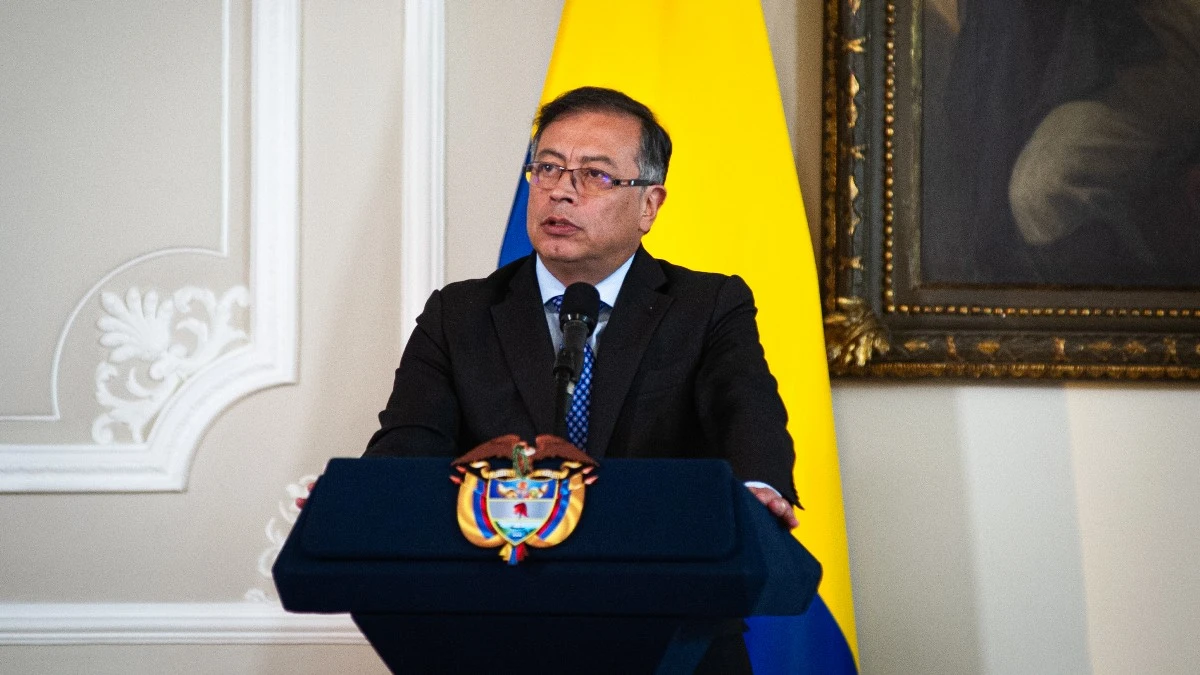
Colombian President Gustavo Petro’s push to tax dividends, inheritances, and international remittances has collided with congressional resistance as external debt nears 50% of GDP, central bank data reveals.
The proposed reforms aim to collect $5.4 billion annually by raising dividend taxes from 10% to 19-39% for individuals and 20% for foreign entities, targeting wealth concentration.
Critics argue these measures risk stifling investment while failing to address a fiscal deficit reaching 6.1% of GDP. Petro’s administration attributes rising public debt—$201.76 billion by late 2024—to predecessors’ borrowing, particularly during the pandemic.
The central bank’s 9.25% interest rate, though lowered in May 2025, remains contentious, with Petro accusing the institution of inflating debt costs through restrictive policies. Private sector liabilities also climbed to $88.56 billion, driven by corporate borrowing and stagnant tax revenues.
A landmark pension reform, approved in June 2024, shifts Colombia to a hybrid system combining state-managed payouts and private savings.
Workers earning above 2.3 times the minimum wage must split contributions, while mothers gain reduced qualifying periods—50 weeks per child. The overhaul aims to cover 2.5 million additional retirees by 2025 through state subsidies, despite warnings of strained public coffers.
Petro’s Economic Gamble
Fossil fuel subsidies and highway privatizations remain focal points, with Petro claiming these policies funnel $11.4 billion yearly to high-income groups.
His push to redirect funds toward healthcare and education faces hurdles as GDP growth projects hover at 2.5% for 2025, per BBVA Research.
Remittances, critical for dollar inflows, show signs of decline, widening the current account deficit to an estimated 3.1% of GDP by 2026. Business leaders express skepticism over tax hikes on equity and digital services, fearing reduced foreign investment.
A 5% surtax on financial sectors and 1.5% levy on large equity holdings, active until 2026, compound these concerns. Meanwhile, 40% poverty rates and double-digit unemployment persist, underscoring the stakes of Petro’s gamble to balance equity gains with economic stability.
More: Colombia news in English, every day from The Rio Times.
This article was produced by The Rio Times’ automated newsroom system. How we use AI · Report an error · Editorial responsibility: Matthias Camenzind, Editor-in-Chief