Cury (B3: CURY3), one of Brazil’s largest publicly traded affordable-housing developers and a benchmark name in the Minha Casa Minha Vida (MCMV) program, reported Q1 2026 net income of R$302.9 million (US$60 million at R$5.05), up 41.9 percent year-on-year, with record net revenue of R$1.613 billion (+32.6%), according to the earnings release published Tuesday May 12.
Adjusted EBITDA reached R$411.4 million (+42.9% YoY), with the EBITDA margin expanding 180 basis points to 25.5 percent. The result was driven by an accelerated launch and sales cycle combined with controlled costs and average unit prices that rose 5 percent year-on-year to R$325,400, per the management presentation.
Return on equity reached a record 79.5 percent in Q1 2026, up from 67.55 percent a year earlier — by some distance the highest ROE on the Ibovespa and a level that reflects both operational discipline and the asset-light low-equity nature of Cury’s project-finance structure, per data tracked by Investidor10.
Net sales reached R$2.3 billion in Q1 — the largest single-quarter volume in the company’s 63-year history — while launches totalled R$2.6 billion. Cury closed the quarter with R$406.9 million in net cash (+28.8% versus end-2025) and completed its 28th consecutive quarter of operating cash generation.
Key Points
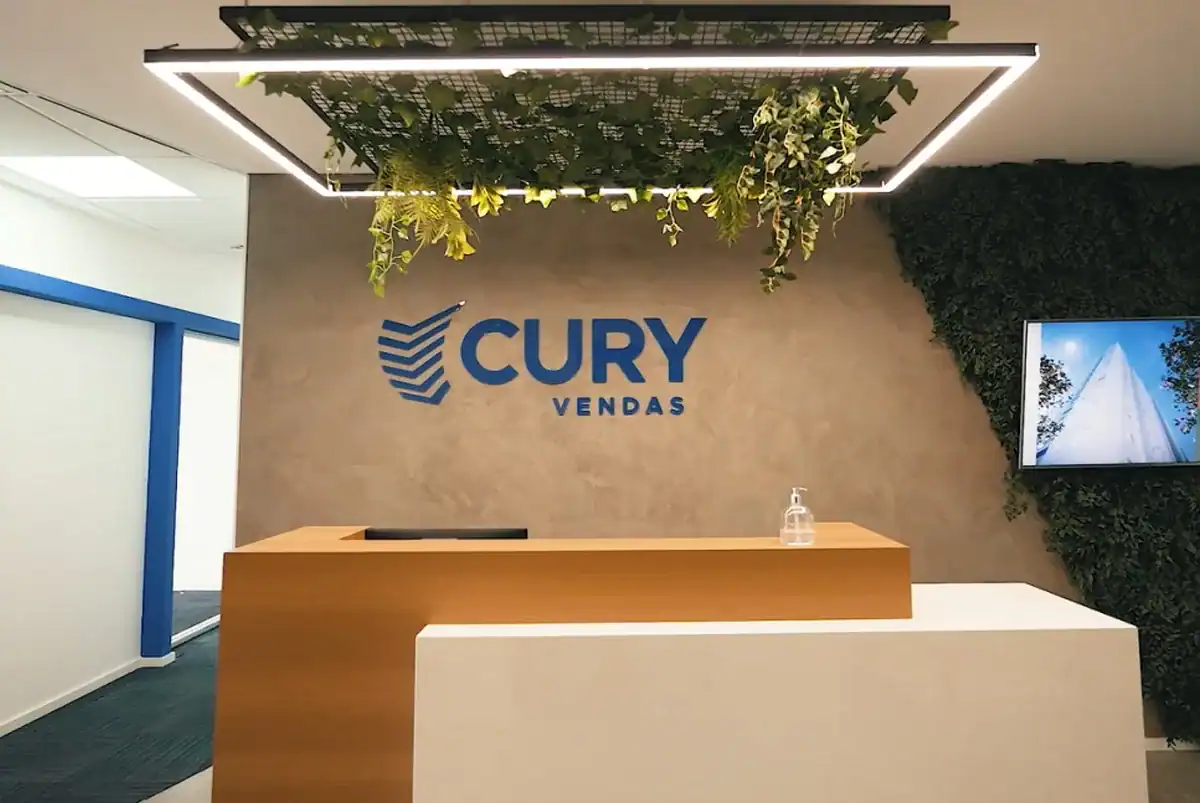
What Cury Reported in Q1 2026
Cury Construtora e Incorporadora is a Brazilian homebuilder founded in 1963 in São Paulo, focused on residential developments under the Minha Casa Minha Vida program and the middle-income segment served by the Sistema Brasileiro de Poupança e Empréstimo. The company is listed on B3 as CURY3 and concentrates its developments in the metropolitan regions of São Paulo and Rio de Janeiro.
The Q1 2026 print delivered Cury’s third consecutive quarter of strong year-on-year growth. Net income reached R$302.9 million, up 41.9 percent versus R$213.4 million in Q1 2025. Net margin expanded to 18.8 percent from 17.6 percent a year earlier, supported by operating leverage as fixed costs were diluted over higher revenue volumes.
Net revenue grew 32.6 percent year-on-year to R$1.613 billion — a record for the company. The acceleration was driven by an active launch and sales cycle combined with 5 percent average unit-price increases (R$325,400 per unit in Q1 2026 versus approximately R$310,000 a year earlier) and continued cost discipline that kept input inflation contained.
Adjusted EBITDA was R$411.4 million, up 42.9 percent year-on-year, with the EBITDA margin expanding 1.8 percentage points to 25.5 percent. Gross margin held steady at 39.0 percent versus a year earlier; adjusted gross margin ticked up 0.1 percentage points to 39.3 percent. The Results of Exercises Future margin, which forecasts profitability of contracted-but-not-yet-recognised revenue, was 42.9 percent — down a marginal 0.4 percentage points.
Selling, general and administrative expenses ran higher: G&A at R$64.9 million (+28.8% YoY) and selling expenses at R$119.1 million (+12.1%). Both lines grew below the 32.6 percent revenue expansion rate, supporting margin leverage. Other expenses totalled R$44.8 million (+12.8%), and the net financial line generated a R$10.7 million expense, 26.2 percent lower than Q1 2025.
Net sales for the quarter reached R$2.3 billion — a record. Launches totalled R$2.6 billion. The landbank closed the period with R$24.9 billion in potential general sales value (VGV), providing extensive forward visibility on supply pipeline.
Operating cash generation totalled R$93.4 million in Q1, completing 28 consecutive quarters of positive operating cash flow — a streak that distinguishes Cury within the homebuilder peer set and reflects the company’s relatively short construction-to-delivery cycle. Net cash closed at R$406.9 million, up 28.8 percent versus end-2025.
Total gross debt was R$1.35 billion at end-Q1, down 8.4 percent from the close of 2025. Approximately 87 percent of the debt is long-term, maturing around 2035, which reduces refinancing risk and protects against potential rate volatility through the cycle.
Return on equity reached 79.5 percent in Q1 2026, up from 67.55 percent in Q1 2025. The level is by some distance the highest among Ibovespa constituents and reflects the combination of high project IRRs, equity-light financing structures common in Brazilian project finance, and the very rapid construction-to-cash cycle that Cury has built around its standardised affordable-housing model.
Live Company IntelligenceCury Construtora e Incorporadora S.A — the full investor dossier
Valuation & profitability
Price & risk
$26.6352-wk high
$40.97
Revenue trend · 6y
Ownership
Dividend
Why Cury Q1 Matters
The Q1 print is strong on its own merits, but the more important story is the trajectory into Q2 and beyond. Cury management explicitly flagged that the second quarter “started strong” already incorporating the recent adjustments to the Minha Casa Minha Vida program that “increased the population’s purchasing power” and expanded the identifiable program-eligible population.
The policy reference matters because the new MCMV rules that took effect April 22 created a fourth income bracket — Faixa 4 — that extends eligibility to households earning up to R$13,000 per month and properties priced up to R$600,000. The previous structure capped MCMV at three income tiers and Faixa 3 properties at R$400,000.
Cury’s product mix is positioned squarely inside this addressable expansion. The Q1 average unit price of R$325,400 sits inside the prior Faixa 3 ceiling and well below the new Faixa 4 cap. The metropolitan São Paulo and Rio de Janeiro geographic concentration overlaps exactly with the markets where Faixa 4 effectively opens a new middle-class mortgage channel at subsidised rates around 10 percent annually.
The competitive read-across to other listed homebuilders is mixed. Santander’s Q1 preview flagged “mixed results” across the sector, with most names pressured by construction-cost inflation tied to higher oil prices. Direcional (DIRR3), MRV (MRVE3) and Tenda (TEND3) were expected to deliver relatively stable gross margins. Cury’s combination of pricing power, controlled costs and superior operational execution has separated it from the peer set in the current cycle.
The 79.5 percent ROE deserves context. Brazilian homebuilders typically run leveraged equity structures where each project finances itself through pre-sales and construction-loan facilities tied to specific developments, meaning very little corporate equity is tied up in any single project at any time. Cury’s elevated ROE reflects the efficiency of that capital cycle — but it also indicates that asset-light returns are vulnerable to any structural change in the financing channel (FGTS or SBPE) that supports the affordable-housing model.
The Q1 net sales record of R$2.3 billion is the operational anchor of the equity story. The 63-year history reference is not corporate boilerplate: Cury has been operating since 1963 and has weathered multiple Brazilian housing cycles, including the 1990s collapse of the BNH and the 2014-2016 recession that severely tested the original Minha Casa Minha Vida programme.
Cash discipline remains the structural differentiator. 28 consecutive quarters of operating cash generation, combined with R$406.9 million in net cash and gross debt that is 87 percent long-term, give Cury substantial flexibility to fund landbank acquisitions, return capital to shareholders, or absorb a Selic shock without compromising the project pipeline.
Capital returns have been generous. The most recent declared dividend of R$0.36 per share was paid in April. Cury’s trailing 12-month dividend yield has run above 12 percent based on the prior 12 months of distributions, putting the stock in the upper tier of Ibovespa dividend payers despite the high ROE profile.
CURY3 has been a structural outperformer. As the Rio Times reported in January, builders led the Ibovespa rebound from the year’s lows, with CURY3 rising 4.44 percent in that single session alongside MRV (+6.09%), Cyrela (+5.47%) and Direcional (+5.14%) on housing-credit policy support.
For investors, the structural questions are political and fiscal: whether FGTS funding for the expanded MCMV programme is sustained at the levels announced through the 2026-2030 plan, and whether Lula’s housing target of two million units across the mandate translates into actual contracts at Caixa Econômica Federal and Banco do Brasil. Both questions sit outside Cury’s operational control and represent the risk that headline ROE moderates as the cycle matures.
Cury Q1 2026 Financial Snapshot
| Indicator | Q1 2026 | Chg YoY |
|---|---|---|
| Net Income | R$302.9M (US$60M) | +41.9% |
| Net Revenue | R$1.613B (record) | +32.6% |
| Adjusted EBITDA | Margin | R$411.4M | 25.5% | +42.9% | +1.8 pp |
| Net Margin | 18.8% | +1.2 pp |
| Gross Margin (adjusted) | 39.3% | +0.1 pp |
| ROE | 79.5% (record) | +11.95 pp |
| Operating Cash Flow | R$93.4M | 28th consecutive Q |
| Net Cash | R$406.9M | +28.8% vs Q4 25 |
Operational Records Q1 2026
| Metric | Q1 2026 | Context |
|---|---|---|
| Net Sales | R$2.3B | Largest in 63-yr history |
| Launches | R$2.6B | Accelerated cycle |
| Average Unit Price | R$325,400 | +5% YoY |
| Landbank (VGV potential) | R$24.9B | Multi-year pipeline |
| Gross Debt | R$1.35B | -8.4% vs end-2025 |
| Long-term debt share | 87% | Maturing ~2035 |
What Happens Next for Cury
Q2 MCMV Faixa 4 catalyst: Management flagged that Q2 has started strong, incorporating the new MCMV rules that took effect April 22. The R$13,000 monthly income ceiling and R$600,000 property cap directly expand Cury’s addressable market in São Paulo and Rio de Janeiro.
Landbank deployment: The R$24.9B VGV pipeline supports multi-year launch volumes at the current pace. Watch for whether Cury accelerates landbank acquisition in 2026 to extend the runway, or holds disciplined to current levels and returns more cash to shareholders.
Construction cost watch: Santander’s Q1 sector preview flagged construction-cost inflation tied to higher oil prices. Q2 results will show whether Cury’s pricing power offsets material cost pressure on subsequent units.
FGTS funding sustainability: The MCMV programme’s FGTS funding allocations through 2026 and the 2026-2030 plan determine the structural addressable market. Any reduction in FGTS contributions would compress the entire affordable-housing pipeline.
Election cycle: Lula’s housing target of two million units across the 2023-2026 mandate aligns with the political calendar of the June presidential election cycle. Whether the next administration sustains the same MCMV envelope is the major risk factor that sits outside Cury’s operational control.
Frequently Asked Questions
How much did Cury earn in Q1 2026?
Cury reported net income of R$302.9 million (US$60 million at R$5.05) in Q1 2026, up 41.9 percent year-on-year. Net revenue reached a record R$1.613 billion, up 32.6 percent. Adjusted EBITDA was R$411.4 million (+42.9% YoY), with the EBITDA margin expanding 180 basis points to 25.5 percent.
Return on equity reached 79.5 percent — a company record and among the highest on the Ibovespa. Net cash closed at R$406.9 million, up 28.8 percent versus end-2025, with the company completing its 28th consecutive quarter of operating cash generation.
What is Cury’s exposure to Minha Casa Minha Vida?
Cury is one of the largest publicly traded developers focused on the Minha Casa Minha Vida programme. The company’s average Q1 2026 unit price of R$325,400 sits inside the MCMV envelope, and its metropolitan São Paulo and Rio de Janeiro geographic focus aligns with the major MCMV markets.
The new MCMV Faixa 4 rules that took effect April 22 expanded the eligible buyer base to households earning up to R$13,000 per month and properties priced up to R$600,000. Cury management explicitly flagged that the second quarter has started strong, incorporating these new rules.
Why is Cury’s ROE so high?
Cury’s 79.5 percent ROE in Q1 2026 reflects three structural factors. First, high project IRRs on affordable-housing developments where Caixa Econômica Federal and Banco do Brasil provide pre-sale buyer financing. Second, the equity-light project-finance structure common in Brazilian homebuilding, where each project funds itself through construction-loan facilities tied to specific developments.
Third, Cury’s standardised affordable-housing model produces a very rapid construction-to-cash cycle, allowing equity to recycle quickly into new projects. The combination produces a 79.5 percent ROE that is structurally distinct from the lower returns typical of premium homebuilders working with longer construction cycles.
What are the risks to Cury’s growth story?
Two structural risks sit outside Cury’s operational control. First, the sustainability of FGTS funding allocations for MCMV through 2026 and the 2026-2030 plan. Any contraction in FGTS contributions would compress the affordable-housing pipeline across all listed developers.
Second, the June 2026 presidential election outcome will determine whether the next administration sustains the MCMV envelope. Construction-cost inflation tied to higher oil prices is the immediate operational risk; Santander flagged this as a sector-wide pressure in its Q1 preview. Cury’s pricing power has so far offset cost pressure but the trend bears watching.
Updated: 2026-05-13T07:30:00-03:00 by Rio Times Editorial Desk
Cury Q1 2026 | CURY3 earnings | Brazil affordable housing | Minha Casa Minha Vida | MCMV Faixa 4 | São Paulo Rio de Janeiro | The Rio Times
This article was produced by The Rio Times’ automated newsroom system. How we use AI · Report an error
LatAm Markets: Live Signals → — real-time movers, turnover leaders and FX across Latin America.
Read More from The Rio Times