

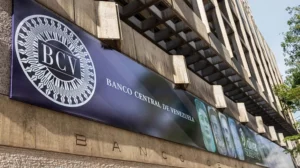
The Central Bank of Venezuela (BCV) announced Thursday that the country’s Gross Domestic Product grew by 9.32% in the first quarter of 2025. This figure surpasses the 9.13% reported for the same period in 2024, according to official government statements.
Venezuela’s government claims this growth continues a recovery trend spanning sixteen consecutive quarters. The BCV highlighted notable sectoral performances, with oil activities expanding by 18.23% and mining operations increasing by 13.46% during this period.
Maduro’s administration attributes these results to effective economic policies and collective participation from all sectors. Independent economists paint a drastically different picture of Venezuela’s economic reality.
The Venezuelan Finance Observatory (OVF) estimates the economy actually contracted by 2.7% in the first quarter of 2025. Their analysis points to a significant 5% decline in the non-oil sector that outweighed modest growth in petroleum activities.
These contradictory assessments emerge against a backdrop of intensified international sanctions. Venezuela’s oil exports plummeted 20% in the second quarter as sanctions triggered widespread cargo cancellations.
Production fell to 700,000 barrels per day in April, marking the lowest output level in nearly a year. The Trump administration’s decision to revoke Chevron’s license to operate in Venezuela created immediate economic repercussions.
Chevron previously delivered approximately 250,000 barrels daily to the United States and injected vital dollars into Venezuela’s economy. Currency stability has collapsed alongside oil revenues.
Venezuela’s Economic Struggles
The bolivar has depreciated 81% against the dollar since September 2024. The widening gap between official and black market exchange rates reflects diminishing confidence in government economic management.
Inflation signals have returned with alarming intensity. January 2025 saw inflation jump to 7%, while March figures reportedly reached 136% as currency values plummeted.
These indicators directly contradict the prosperity narrative promoted through official GDP statistics. The International Monetary Fund projects Venezuela’s economy will contract by 4% in 2025.
This assessment aligns with other independent forecasts predicting inflation could surpass 150% this year. Economists estimate that Venezuela would need sustained double-digit growth for several years to recover its former economic position.
President Maduro recently declared an “economic emergency” to implement protective measures. The government blames external factors while avoiding acknowledgment of structural economic weaknesses.
Venezuelans continue to experience some of the lowest wages in Latin America despite official growth claims. The stark contrast between government figures and independent assessments highlights the difficulty in obtaining reliable economic data from Venezuela.
Actual conditions on the ground, including widespread business closures and restricted access to foreign currency, suggest the official narrative significantly diverges from economic reality experienced by ordinary Venezuelans.