Mexico’s Third U.S. Troop Authorization This Year Lands in Scandal Week

Key Facts
— — President Claudia Sheinbaum sent the Mexican Senate on April 20 a request to authorize 23 US Navy SEAL Team 8 members for SOF 4 training (August 1 to October 15) plus a separate permit for the Fénix 2026 multinational amphibious exercise (May 8 to 30 in Campeche).
— — The request arrived hours after Sheinbaum publicly told reporters she was “not informed” of the Chihuahua state operation that killed two US Embassy instructors and two Mexican officers returning from a methamphetamine-lab raid in the Sierra Tarahumara.
— — SOF 4 will take place in Campeche, Estado de México, Hidalgo and CDMX — the first time US special forces will train in the central Mexican highlands, including the national capital, under the Sheinbaum government.
— Deep Dive
— For the complete picture, see our guide: Mexico Economy 2026.
The Mexico US troop authorization request transmitted by the Secretaría de Gobernación to Senate President Laura Itzel Castillo Juárez on April 20 is the third such petition the Sheinbaum administration has sent since February, and the first to cover the Central Mexican highlands and the capital. The timing — within hours of a public rupture over the Chihuahua deaths — makes the two stories inseparable.
The Rio Times, the Latin American financial news outlet, reports that the request packages two distinct authorizations. SOF 4 (“Fortalecer la Capacidad de las Fuerzas de Operaciones Especiales”) will bring 23 members of the US Navy SEAL Team 8 into Mexico from August 1 to October 15. Fénix 2026, the multinational amphibious exercise, will run May 8 to 30 in Campeche with US Northern Command forces training alongside the Armada de México.
The SEAL Team 8 contingent will enter with weapons and equipment aboard a C-130 Hercules aircraft of the US Air Force, with point of entry at the Adolfo López Mateos International Airport in Toluca. The Toluca port of entry is itself a political signal — previous authorizations routed US military aircraft through Campeche. Toluca is a 90-minute drive from the Palacio Nacional.
Why the Mexico US Troop Authorization Timing Matters
The Chihuahua incident on the night of April 19 exposed a cooperation channel the federal government says it did not authorize. Two US Embassy instructors and two Chihuahua State Investigation Agency officers — including AEI director Pedro Román Oseguera Cervantes — were killed when their vehicle went over a ravine on the Chihuahua-Ciudad Juárez highway returning from a raid that destroyed six meth labs near Morelos and Guachochi.
Sheinbaum’s Monday mañanera response was unusually sharp. “It was not an operation that the security cabinet was aware of. We were not informed; it was a decision by the Chihuahua government,” she told reporters.
She added that collaboration with foreign agents must be authorized by the federal government “as established by the Constitution.”
Sending the Fénix 2026 and SOF 4 request to the Senate the same afternoon converted the political frame. Sheinbaum’s message is that authorized, federally controlled US military training cooperation is expanding — while unauthorized state-level cooperation is the breach she will pursue. The distinction is legally coherent and politically risky.
The Third Authorization in a Sequence
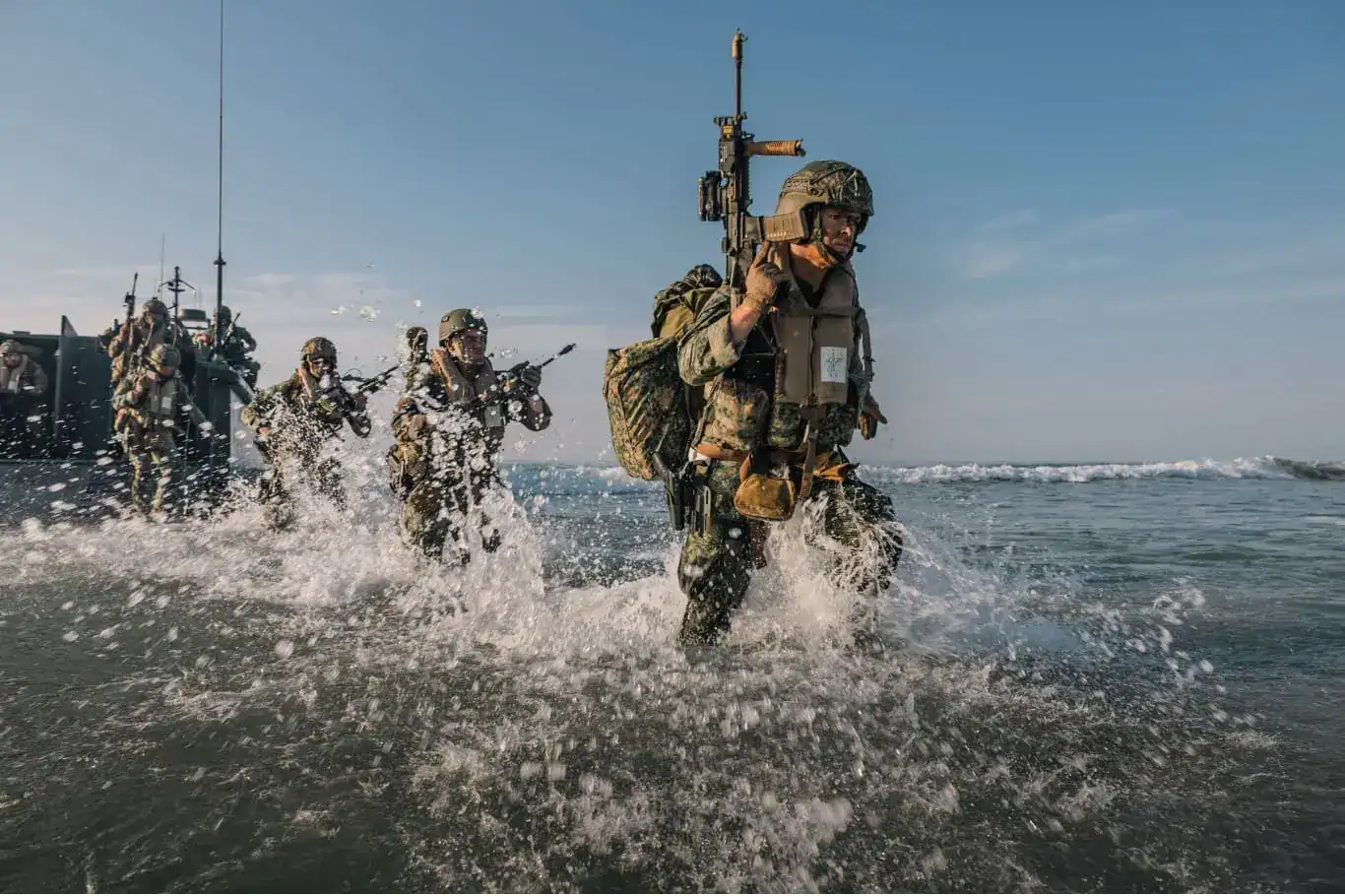
The April 20 request follows two prior authorizations already approved in 2026. On February 11 the Senate cleared 19 members of Navy SEAL Team 2 by 105 votes to none with one abstention — Morena senator Gerardo Fernández Noroña — for a training rotation at San Luis Carpizo, Campeche. On March 25 the Senate authorized 35 US military personnel for the SOF-32 “Adiestramiento en Preparación para la Copa Mundial de la FIFA 2026 y Ejercicio VITAL ARCHER” by 110-1-5.
Together the three 2026 authorizations will bring approximately 77 US military personnel into Mexican territory for training and interoperability exercises across February through October. That is the densest US-Mexico military-training calendar in at least fifteen years, and it began under a president who campaigned explicitly on defending Mexican sovereignty against Trump-era pressure.
As Rio Times coverage of Trump’s Latin America troop posture documented, the Trump administration has kept open the possibility of deploying US forces directly against Mexican cartels. The Sheinbaum government’s response has been to channel all cooperation through Senate-authorized training frameworks — rejecting direct US military action while accepting a steadily expanding training footprint.
The Ambassador Ronald Johnson Factor
The US interlocutor on both the Chihuahua inquiry and the Senate authorizations is Ambassador Ronald Johnson, a former US Army officer and CIA veteran confirmed by the Senate 49-46 in April 2025. Johnson previously served as ambassador to El Salvador during the first Trump administration and built a close personal relationship with President Nayib Bukele.
Johnson’s statement on X about the Chihuahua deaths described the fallen US personnel as confronting “one of the greatest challenges of our time” and did not identify their specific roles or agency. Sheinbaum announced a meeting between Johnson and Foreign Minister Juan Ramón de la Fuente for Monday to establish the factual record.
For Latin American observers, the Johnson appointment itself was a signal. A CIA veteran with a Bukele-style security portfolio in the ambassador’s chair in Mexico City has brought a different cooperation model than previous US diplomatic assignments, and the Chihuahua deaths — whatever their specific circumstances — were the first public test of where that model’s limits sit.
The Domestic Politics
Senator Noroña’s lone abstention on the February SEAL Team 2 authorization captures the sovereignty argument that still exists inside Morena. During that debate he said that “at this time, the entry of armed forces from the United States should not be accepted even if they only come to plant little trees.” His argument cited the Trump administration’s Venezuela operation, the Cuba pressure campaign, and Washington’s failure to address drug consumption domestically.
The opposition has been quieter than Noroña. PAN and PRI have mostly voted in favor of the training authorizations, though some PAN senators have questioned why state governments like Chihuahua — under PAN Governor Maru Campos — are being described by the president as operating outside the constitutional framework when they cooperate with the same US partners the federal government invites.
Governor Campos said Sunday that the Chihuahua operation was an accident and that there is no evidence of an attack. Her government has not publicly addressed whether it sought federal authorization for the US Embassy instructors’ participation. Attorney General César Jáuregui described the US role as “routine training, advisory work, and courses.”
What This Means for Latin America
The Mexico framework is now the regional template for what federally controlled US military cooperation looks like under Trump-era pressure. Colombia, Peru, Chile and Argentina are each watching the sequence closely. Argentina under Javier Milei has signaled openness to a deeper US defense footprint, and the Chilean Kast administration has accelerated security cooperation talks in its first months.
As Rio Times reporting on Trump’s Venezuela operation noted, the precedent set by the Maduro capture has conditioned every other regional negotiation about US military presence. Sheinbaum’s framework — extensive training, no joint operations, federal-only authorization — is the most explicit alternative any LATAM government has articulated.
Whether it holds depends on three variables: Senate approval of Fénix 2026 and SOF 4 in the next two weeks, the outcome of the Chihuahua inquiry, and whether other state governments are found to have been cooperating with US partners outside the federal framework. Sheinbaum’s 79% approval rating gives her political cover for the expanded authorizations; it does not protect her from the contradiction if more state-level cooperation comes to light.
What to Watch
The Senate Defense Commission will take up both the Fénix 2026 and SOF 4 authorizations in the coming days. Given the May 8 start date for Fénix, the vote is likely within two weeks. Expect the same roughly 110-vote majority as on previous authorizations, with Noroña’s abstention likely to repeat.
The Chihuahua inquiry will produce its first findings within the month. Two questions will dominate: whether the US Embassy instructors had federal authorization to be on the operation, and whether the Ley de Seguridad Nacional was violated. A finding against Chihuahua would politically validate Sheinbaum’s sovereignty framing; a finding that the federal government was in fact aware would damage it severely.
Trump’s response will also matter. He has not yet posted publicly on the Chihuahua deaths as of Tuesday morning. A Truth Social post that validates Sheinbaum’s sovereignty argument would defuse the scandal; one that contradicts her account of “no joint operations” would escalate it into the most serious US-Mexico diplomatic breach of the Sheinbaum presidency.
More: Latin America news in English, every day from The Rio Times.
This article was produced by The Rio Times’ automated newsroom system. How we use AI · Report an error · Editorial responsibility: Matthias Camenzind, Editor-in-Chief