

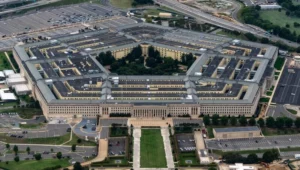
Operation Southern Spear is no longer a maritime interdiction campaign. That was the unmistakable message from the Pentagon’s testimony to Congress on March 18, when acting assistant secretary of defense for homeland defense John Humire told the House Armed Services Committee that the U.S. military’s operations against Latin American drug cartels are “just the beginning” and that the deterrence effect of the strikes “raises the risks with their movement.” His remarks left explicitly open the possibility of ground force deployments — a signal that transformed what began as boat strikes in the Caribbean into something far broader and more consequential for the hemisphere.
The numbers Humire presented are stark. Since September 2025, U.S. forces have conducted 45 strikes on 46 vessels, killing at least 157 people the administration classifies as narco-terrorists. The campaign has expanded from Caribbean and Eastern Pacific maritime strikes to land targets — first inside Venezuela during the January 3 operation that captured Nicolás Maduro, and then into Ecuador on March 6, when U.S. and Ecuadorian forces jointly bombed a camp attributed to the Comandos de la Frontera, a FARC dissident group operating along the Colombia-Ecuador border. That strike marked the first acknowledged U.S. land combat operation on South American soil since the 1989 Panama intervention.
From Boat Strikes to Ground Operations in Six Months
The operational escalation has been remarkably rapid. Operation Southern Spear was formally named by Defense Secretary Pete Hegseth on November 13, 2025, though the strikes had begun in September under a U.S. Southern Command framework integrating robotic surface vessels, MQ-9 Reaper drones, and P-8 Poseidon patrol aircraft. The initial framing was counter-narcotics interdiction. By December, the campaign had expanded to oil tanker seizures under a Venezuelan embargo. On January 3, it produced the capture of a sitting head of state. By March, it had placed U.S. special forces on South American soil conducting joint combat operations.
The Shield of the Americas coalition, signed at Trump’s Doral resort on March 7 with 17 nations including Argentina, Ecuador, Chile, Paraguay, and El Salvador, gave the escalation an institutional framework. White House Deputy Chief of Staff Stephen Miller set the tone at the preceding Americas Counter Cartel Conference, telling Latin American military leaders that cartels are “the ISIS and al-Qaeda of the Western Hemisphere and should be treated just as brutally.” Miller emphasised that the U.S. had invited military leaders, not lawyers, because “these organisations can only be defeated with military power.”
Ecuador as the Ground-War Template
Ecuador has become the proving ground for what Southern Spear’s land phase looks like. President Daniel Noboa decreed a nighttime curfew across four coastal provinces on March 15, warning of imminent operations with U.S. logistical support. The FBI opened its first permanent office in Quito on March 11. MQ-9 Reaper drones are operational over Ecuadorian territory, and the Ecuadorian Army has begun integrating ALT-6 ISR platforms. U.S. special forces are training and operating alongside Ecuadorian commandos in operations against designated terrorist organisations.
The human cost of Noboa’s security campaign was thrown into sharp relief this week when an unexploded military-grade bomb — possibly a U.S.-manufactured Mark-82 — was found in Colombian territory near Nariño, prompting President Gustavo Petro to accuse Ecuador of bombing Colombian soil and announce a formal diplomatic protest on March 18. Noboa denied any cross-border incursion. The two countries formed a binational commission to investigate, but the incident underscored the risks inherent in expanding aerial bombing operations in a densely populated, poorly demarcated frontier zone where armed groups operate on both sides.
Congressional Pushback and Legal Questions
Humire’s testimony sharpened the already intense debate in Congress. Democrats on the Armed Services Committee raised concerns about whether the strikes have meaningfully reduced drug flows into the United States, whether the administration possesses legal authority for an expanding lethal campaign without explicit congressional authorisation, and whether Southern Spear risks becoming an open-ended conflict. The administration has framed the operations under a 2025 presidential declaration to Congress asserting a “non-international armed conflict” with “unlawful combatants” — language that critics argue stretches executive war powers beyond constitutional limits.
Pentagon officials have previously acknowledged that they do not need to positively identify individuals on targeted vessels as specific cartel members before conducting lethal strikes. Civil rights attorneys filed a federal lawsuit in January on behalf of families of two people from Trinidad and Tobago killed in an October 2025 strike, challenging the legal basis of the entire campaign. The Republican-controlled Senate has twice rejected resolutions that would limit the administration’s authority to continue strikes.
What It Means
Humire’s testimony to Congress represents a threshold moment. The Pentagon is no longer describing Southern Spear as a targeted counter-narcotics campaign with a defined scope — it is signalling an open-ended, expanding military posture across the Western Hemisphere in which interdiction at sea, land strikes in partner nations, joint combat operations with coalition allies, and the possibility of unilateral ground deployments coexist within a single operational framework. For Latin American governments inside the coalition, the question is whether alignment with Washington’s military architecture produces genuine security gains or draws them into a conflict whose escalation trajectory they cannot control. For those outside it — notably Brazil, Mexico, and Colombia — the question is whether abstention remains sustainable as the operational facts accumulate around them.
This is part of The Rio Times’ daily coverage of Latin American news and Latin American financial news.
For more context, read the Latin America Defense Monitor — Mar 9–16 and the Shield of the Americas analysis.