

— Paraguay ratified a Status of Forces Agreement (SOFA) with the US by 53-8, granting American military and civilian defense personnel diplomatic-equivalent immunity on Paraguayan soil
— Crimes committed by US personnel will be tried in American courts, not Paraguayan ones — the most contested provision in a deal the State Department called a “gold standard” for military cooperation
— The agreement explicitly prohibits permanent US bases but allows aircraft, ships, and vehicles to enter freely for training, joint exercises, and humanitarian operations
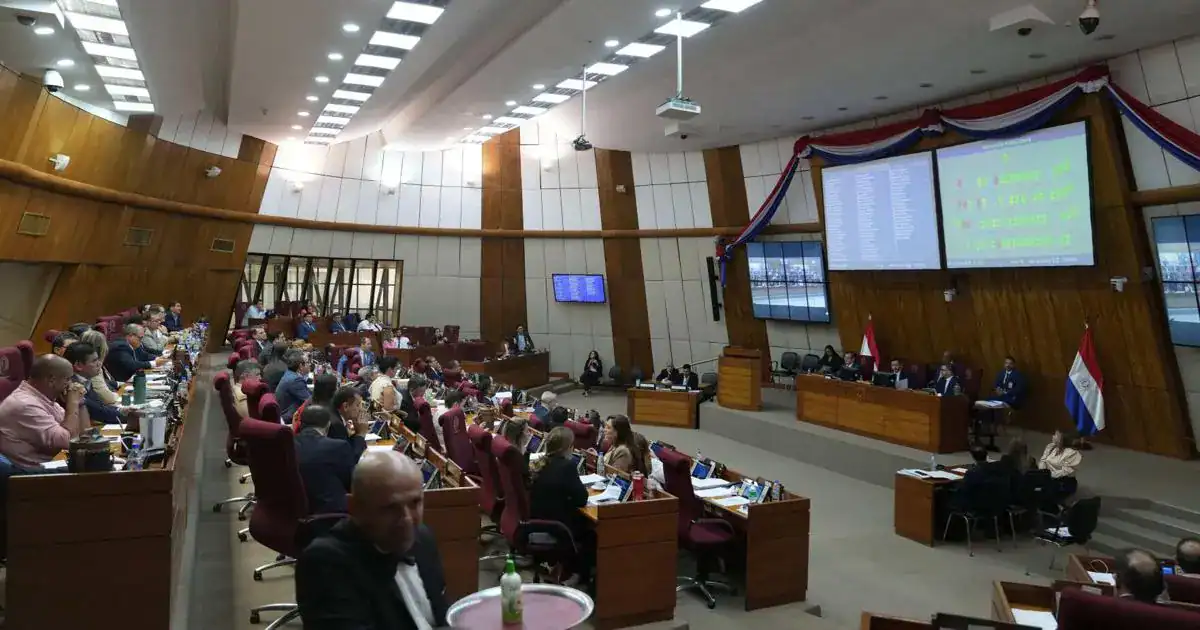
A Paraguay US military pact that grants American troops diplomatic-level immunity is now law. President Santiago Peña signed the Status of Forces Agreement after Congress ratified it on March 10 by 53 votes to 8, with four abstentions — making Paraguay one of roughly 50 countries worldwide with such an arrangement with Washington.
The deal, signed in Washington on December 15 by Secretary of State Marco Rubio and Foreign Minister Rubén Ramírez Lezcano, is widely seen as the Trump administration’s most significant defense achievement in South America. The Rio Times, the Latin American financial news outlet, examines what the agreement permits, what it restricts, and why it has unsettled Brazil while deepening Washington’s footprint in the heart of the continent.
What the Paraguay US Military Pact Allows
Under the SOFA, US Defense Department personnel and contractors receive privileges modeled on the 1961 Vienna Convention on Diplomatic Relations. They may enter Paraguay using American identification, carry weapons and wear uniforms, import military and technological equipment without customs controls, and operate private telecommunications systems without spectrum fees. They pay no local taxes.
The most controversial provision is criminal jurisdiction: offenses committed by US personnel on Paraguayan territory will be prosecuted in American courts, not local ones. The agreement covers training missions, joint exercises, humanitarian assistance, disaster response, and security cooperation against narcotrafficking, transnational crime, and cyberattacks.
US military aircraft, ships, and ground vehicles may enter and move freely within Paraguayan territory for these purposes. The text explicitly prohibits permanent bases or the cession of Paraguayan land to the United States.
Security Need Versus Sovereignty Cost
Supporters see the SOFA as overdue. Colorado Party lawmaker Juan Manuel Añazco argued it simply formalizes cooperation that previously required bespoke arrangements for each deployment — including recent US special forces training and medical missions. Security analyst José Amarilla said Paraguay lacks the capacity to fight narcotrafficking alone, particularly along the triple border with Brazil and Argentina where Brazilian criminal organization PCC operates with an estimated 699 members inside Paraguay.
Critics reject that framing. Independent congressman Raúl Benítez said his bloc believes in cooperation “but also in strong states, respected institutions, and real democratic sovereignty.” The Latin American civil society network Peace and Justice Service called the deal “the formalization of a geopolitics of impunity.” US Chargé d’Affaires Robert Alter denied the agreement foresees any long-term troop presence, telling local radio: “What it does is facilitate existing collaboration.”
The Bigger Picture
The pact fits a broader Trump administration pattern. Ecuador signed a SOFA in 2023, and US Air Force personnel deployed there this month despite voters rejecting permanent bases in a referendum. Washington also lifted sanctions on former Paraguayan president Horacio Cartes — Peña’s political mentor — in what analysts read as a reward for maintaining Paraguay’s recognition of Taiwan over China, making it the last holdout in South America.
Brazil has watched with concern. President Lula is reportedly uneasy about the possibility of US troops operating near the Brazilian border, particularly targeting criminal networks that Brasília refuses to classify as “terrorists.”
For Paraguay — a landlocked nation of 6.4 million bordered by three larger neighbors — the calculation is that alignment with Washington brings security cooperation, economic leverage, and geopolitical insurance in a hemisphere where US-China competition is only intensifying.
The Paraguay US military agreement may be modest in scale today, but its legal architecture is designed for expansion — and that is what makes both allies and neighbors pay close attention.