Panama Canal’s Next Expansion: A $8.5 Billion Bet To Stay Essential In A New Shipping Era
Key Points
- Panama is mapping up to $8.5 billion in upgrades to protect year-round reliability and expand canal-zone logistics.
- Two new ports and a 76-kilometer energy pipeline are designed to free scarce transit slots for cargoes that cannot reroute easily.
- Freshwater is the canal’s binding constraint, so new reservoirs and water-saving operations now matter as much as engineering.
The Panama Canal Authority is preparing a new expansion cycle built around ports, pipelines, and water security, as cargo mixes tilt toward containers and energy products.
On the commercial side, the authority plans two new container terminals—Corozal on the Pacific and Telfers on the Atlantic—through an international process. Construction is estimated at about $2.6 billion.
The aim is to raise annual container handling from roughly 9.5 million TEUs to about 15 million, with service expected from 2029. A second pillar is an interoceanic pipeline slated to start construction in 2027.
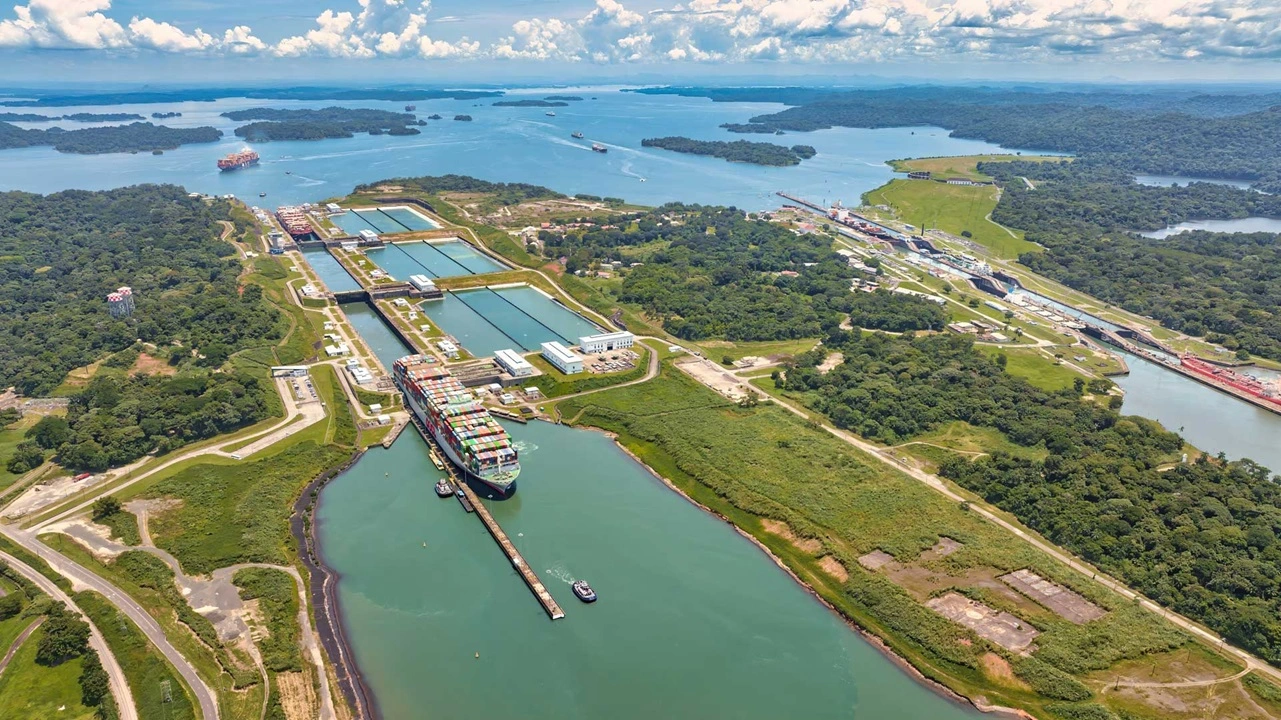
It would run about 76 kilometers along the canal corridor, moving fuel products across Panama without using the locks.
Panama Canal faces water, cost pressures
Officials cite potential capacity of 2.5 million barrels per day. Costs range from about $2 billion to $8 billion, depending on whether it carries one product or several.
Water, however, is the strategic story. The canal uses freshwater locks, and the 2023 drought forced daily transits down to about 22 from a typical 36 to 38. To manage scarcity, the canal expanded auctions and longer-term booking options.
The most famous auction saw Japan’s Eneos pay about $3.97 million in November 2023 to secure a slot, on top of the normal toll. Long-term slot packages now start at $200,000.
To reduce vulnerability, the canal is pursuing a Río Indio reservoir of about 4,600 hectares, budgeted around $1.5–$1.6 billion, targeting completion in 2031, with about a year needed to fill.
Modern locks already recycle about 60% of water per cycle, and further efficiency projects are planned. The expansion also lands in a geopolitical crossfire over port ownership and influence.
Panama’s canal authority argues the answer is more competition, more transparency, and strict neutrality—so the canal keeps serving all flags.
Related coverage: Brazil’s Morning Call | U.S. Hits ISIS Targets Across Syria After Deadly Palmyra Att This is part of The Rio Times’ daily coverage of Latin American news and financial markets.
This article was produced by The Rio Times’ automated newsroom system. How we use AI · Report an error · Editorial responsibility: Matthias Camenzind, Editor-in-Chief
Read More from The Rio Times