Mexico Arrests ‘El Jardinero’, Second CJNG Boss Felled Since February
Key Facts
— — Mexican Navy Special Forces (SEMAR) captured Audias Flores Silva, alias “El Jardinero,” in Nayarit Monday April 27 — confirmed by Security Secretary Omar García Harfuch on social media. The Mexico CJNG capture was the result of 19 months of surveillance and a coordinated operation involving SEMAR Special Forces, the SSPC, and the Federal Prosecutor’s Office (FGR). No injuries or shots fired were reported in the operation itself.
— — Flores Silva, 45, was a top regional commander of the Cártel Jalisco Nueva Generación (CJNG) and considered one of the leading candidates to succeed Nemesio Oseguera Cervantes “El Mencho,” killed in a February 22 operation. The US Treasury sanctioned him in April 2021. The State Department offered a US$5 million reward for information leading to his capture. He is wanted in the United States with extradition pending.
— — Aftermath: narcobloqueos and arson attacks broke out across Nayarit Monday evening as CJNG cells responded. The Nayarit state government asked residents to “shelter preventively” in their homes. Vehicles and businesses were set on fire across multiple Nayarit municipalities. CJNG was designated a Foreign Terrorist Organization by the Trump administration in February 2025.
The Mexico CJNG capture of “El Jardinero” Monday is the second top boss of the world’s largest synthetic-drug cartel taken down in 60 days — and it was done cleanly by Mexican forces alone, the day Maru Campos faces the Senate over CIA agents who died trying to do something similar.
Mexico’s federal security apparatus is having its best month in years. The Rio Times, the Latin American financial news outlet, reports that the Mexico CJNG capture announced Monday April 27 by Security Secretary Omar García Harfuch — Audias Flores Silva, alias “El Jardinero,” apprehended by Mexican Navy Special Forces in Nayarit — represents the second top boss of the Cártel Jalisco Nueva Generación taken down in two months, following the February 22 operation that killed founder Nemesio Oseguera Cervantes “El Mencho.”
“In a planned, developed and executed operation by the Secretariat of the Navy through its Special Forces, Audias Flores Silva, alias ‘El Jardinero,’ was detained in Nayarit,” García Harfuch posted on X. The operation was the product of 19 months of surveillance and intelligence work coordinated between SEMAR, the Security Ministry, and the Federal Prosecutor’s Office. Critically, no shots were fired and no injuries were reported in the capture itself.
Who is “El Jardinero”
Born November 19, 1980 in Huetamo, Michoacán, Audias Flores Silva — operating under aliases including “Comandante,” “Bravo 2,” “Audi,” “Mata Jefes,” and the secondary identity Gabriel Raigosa Plascencia — held one of the most senior operational roles in the CJNG. The Mexican-born trafficker spent five years in a US prison early in his career on drug-trafficking charges.
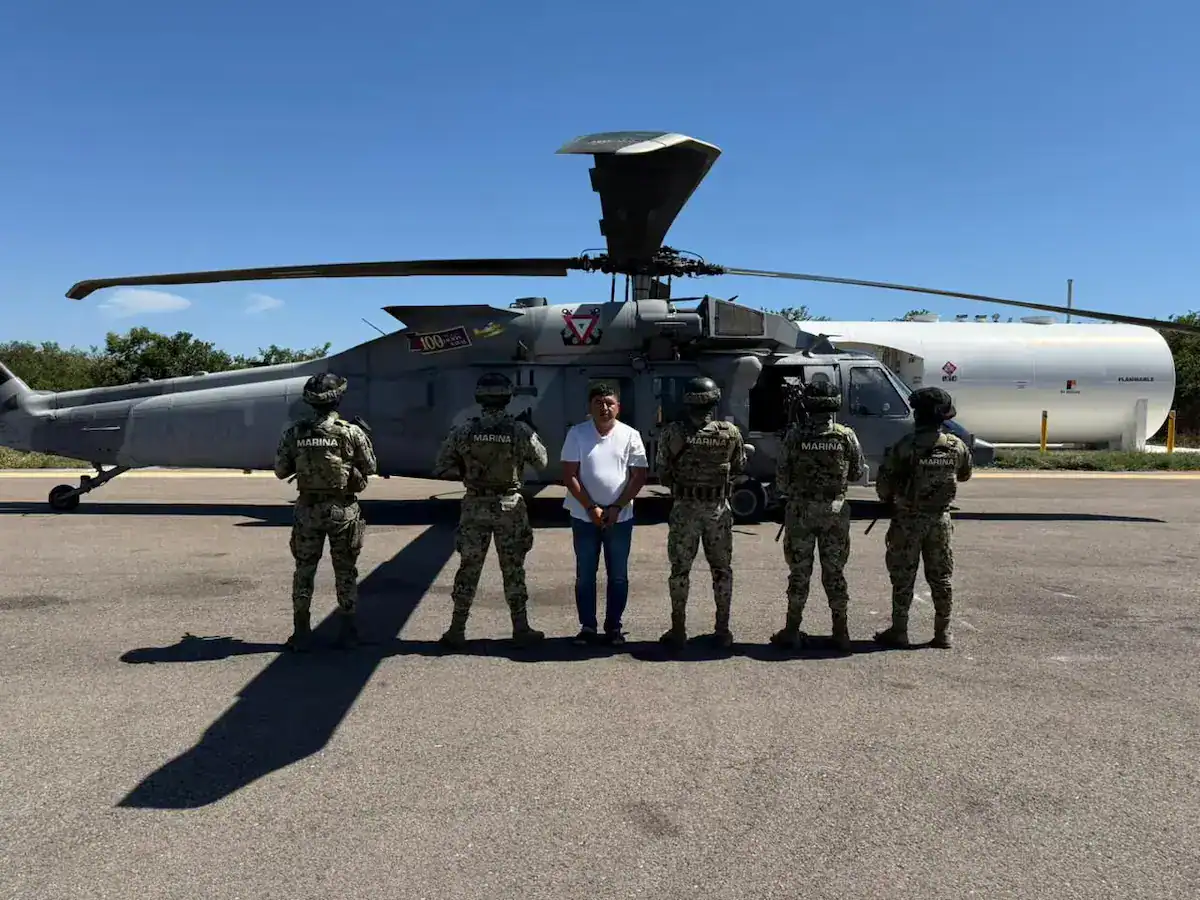
After release, he returned to Mexico and rose through the CJNG hierarchy, becoming El Mencho’s personal security chief and a senior regional commander. Mexican press has identified him as the de facto power broker of Puerto Vallarta, controlling tourist-zone operations and trafficking routes across Pacific Coast states.
US authorities track Flores Silva’s territorial reach across Nayarit, Jalisco, Zacatecas, Michoacán, and Guerrero. According to the DEA and HSI, his operations included clandestine landing strips for cocaine, methamphetamine, and heroin air shipments; trailer-truck routes for cocaine moving from Central America through Mexico; and passenger-vehicle networks for narcotics distribution to CJNG cells in California, Texas, Illinois, Georgia, Washington, and Virginia.
Why the Mexico CJNG Capture Matters
The strategic significance is double. First, Flores Silva was widely considered the leading candidate to succeed El Mencho at the head of CJNG. His capture leaves the cartel without an obvious replacement — the second consecutive succession blow within 60 days disrupts internal command-and-control at a structural level.
Second, the operational cleanliness contrasts sharply with February’s El Mencho takedown — which involved drone strikes, helicopter evacuations, and a wounded capo dying in transport. The El Jardinero capture was a precision arrest. No firefight, no civilian casualties, no escalation pretexts for the Trump administration to argue Mexican forces are insufficient.
The political timing is sharper still. The capture was announced Monday April 27 — the same day President Claudia Sheinbaum was confronting Chihuahua Governor Maru Campos over CIA agents who died in an unauthorized operation. The federal security model is delivering visible wins through Mexican forces alone, while opposition-state experiments with foreign agencies are producing constitutional crises.
The Nayarit Aftermath
The capture triggered immediate retaliation. Within hours, vehicles and businesses were set on fire across multiple Nayarit municipalities. The state government issued a public alert asking residents to “shelter preventively” in their homes and follow official news channels for further instructions.
Narcobloqueos — coordinated road blockades using burned vehicles — are the standard CJNG response to high-value arrests. The pattern was previously seen after El Mencho’s takedown in February and after major captures in Guanajuato and Michoacán in 2024 and 2025. The blockades typically last 24-48 hours before security forces clear the roads.
Nayarit is a strategic state for CJNG: Pacific coastline access for maritime drug shipments, proximity to US-bound highway routes, and tourist infrastructure that masks the financial flows. Flores Silva had operated personally from Nayarit for years. The security forces’ presence in the state is now expected to remain elevated through the immediate stabilization period.
The Trump-Sheinbaum Security Test
The bilateral context matters. Trump has repeatedly criticized Sheinbaum’s security strategy and threatened US military strikes on Mexican cartels — he reiterated last month that Sheinbaum “should not have rejected” his offer of US “help” against the cartels. CJNG has been a designated Foreign Terrorist Organization since February 2025.
Two top-level CJNG captures in 60 days, executed by Mexican forces alone with US intelligence cooperation through formal channels, undercut the argument that unilateral US action is necessary. Sheinbaum’s “no foreign intervention” position is being validated by results, not just rhetoric. The federal model is delivering at the precise moment Washington is testing it.
Whether El Jardinero is extradited to the United States remains the next bilateral signal. He is wanted with extradition pending, the US$5 million reward was a State Department offering, and the Trump administration would view his transfer to US custody as a major win. Sheinbaum’s calculus will balance evidence flow, sovereignty signaling, and the broader political narrative around the Maru Campos hearing happening in parallel.
What This Means for Investors and Markets
For markets, the Mexico CJNG capture is positive on multiple fronts. The peso (USD/MXN) is supported by reduced narrative pressure for US unilateral action — which had been a tail risk for cross-border trade and investment. Mexican government bonds are supported by a security-narrative that strengthens Sheinbaum’s federal authority.
For nearshoring strategy, the capture is structural. The dominant question for foreign investors evaluating Mexican production capacity has been security — specifically whether the state can establish credible control over cartel-influenced regions. Two clean top-level operations in 60 days improve that perception measurably.
The deeper question is whether CJNG can rebuild command-and-control after losing both El Mencho and his designated successor inside two months. The historical pattern in Mexican cartel disruption is fragmentation rather than dissolution: smaller, more violent successor groups competing for territory.
The next 90 days will determine whether CJNG consolidates around a new leader or fractures into competing cells. Either outcome shapes the operational risk landscape for Mexican production zones into 2027.
More: Latin America news in English, every day from The Rio Times.
This article was produced by The Rio Times’ automated newsroom system. How we use AI · Report an error
Read More from The Rio Times