

Key Points
— Maduro and Flores returned to a New York courtroom on Thursday for their second hearing, where the defense filed a new motion to dismiss all charges
— Prosecutors asked the judge to block evidence from being shared with four co-defendants still at large in Venezuela, citing the risk of witness intimidation through state power
— The defense argues that U.S. Treasury sanctions on Venezuelan funds violate Maduro’s constitutional right to choose his own lawyer, threatening to derail the case on procedural grounds
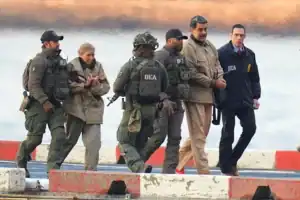
The Maduro trial reached a critical juncture on Thursday as Nicolás Maduro and his wife Cilia Flores appeared before Judge Alvin Hellerstein in New York for their second hearing since being captured in January. The Rio Times, the Latin American financial news outlet, reports that the session opened two parallel legal battles: a fight over evidence access and a constitutional challenge to how the defense is funded.
Both defendants face four charges including narcoterrorism conspiracy, to which they pleaded not guilty in January. The hearing had originally been scheduled for March 17 but was postponed to allow prosecutors more preparation time.
Prosecutors Seek to Shield Witnesses in Maduro Trial
Manhattan U.S. Attorney Jay Clayton, the former Securities and Exchange Commission chairman leading the prosecution, asked Judge Hellerstein to issue a protection order restricting how evidence is shared. The request targets four co-defendants named in the superseding indictment who remain at large: Interior Minister Diosdado Cabello, former interior minister Ramón Rodríguez Chacín, Maduro‘s son Nicolás Maduro Guerra, and Héctor Guerrero Flores, alleged leader of the Tren de Aragua criminal network.
Clayton argued that these individuals could use state power to identify, arrest, or threaten witnesses and their families. The prosecution cited a 2006 case in which Venezuelan military officers were allegedly detained to divert attention from a cocaine shipment linked to Maduro and Cabello.
Maduro’s legal team, led by Barry Pollack, accepted most of the proposed order but rejected Paragraph 13, which would bar sharing evidence with the four fugitive co-defendants. The defense has until March 30 to formally challenge that provision.
Defense Funding Becomes a Constitutional Question
The defense filed a new motion on Thursday arguing that all charges should be dismissed on constitutional grounds. Pollack and Mark Donnelly, representing Flores, contend that the Treasury Department’s Office of Foreign Assets Control revoked a license on February 9 that had authorized Venezuelan government funds to cover legal fees, violating the Sixth Amendment right to choose one’s own attorney.
Both defendants claim they have no personal resources to pay for counsel, and that Venezuelan law obligates the state to cover a former president’s defense. Prosecutors have countered that sanctions prohibit such payments and that public defenders remain available.
A Widening Case Against Venezuela’s Power Circle
The Maduro trial sits at the center of a broader legal offensive against Venezuela’s former ruling circle. Hugo Carvajal, the former military intelligence chief, pleaded guilty last June to all four counts including narcoterrorism. His cooperation could strengthen the prosecution’s evidence against the remaining defendants.
Meanwhile, acting president Delcy Rodríguez has been overhauling Venezuela’s cabinet, replacing 14 of 32 ministers and firing longtime defense chief Vladímir Padrino after eleven years. The U.S. has separately drafted corruption charges against Rodríguez herself, creating what analysts describe as a framework of calibrated coercion to keep Venezuela’s post-Maduro government cooperative.
Maduro’s son appeared in a video from Caracas this week saying his father was in high spirits and exercising daily at Brooklyn’s Metropolitan Detention Center. Maduro Guerra described Flores as alert and resilient ahead of the hearing.
Legal experts estimate that a full trial remains one to two years away, by which time Judge Hellerstein would be 94. The coming weeks will determine whether the evidence protection order and the defense funding challenge reshape the timeline — or whether the case proceeds toward what would be one of the most consequential criminal trials in U.S. history.